

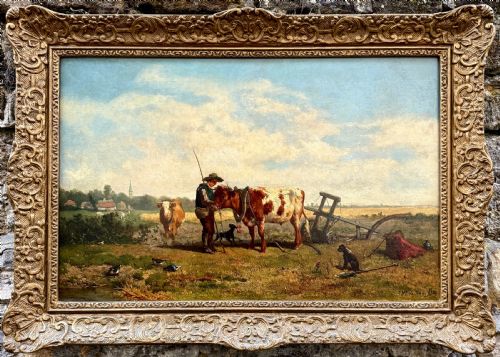


Cattle in Landscape Oil
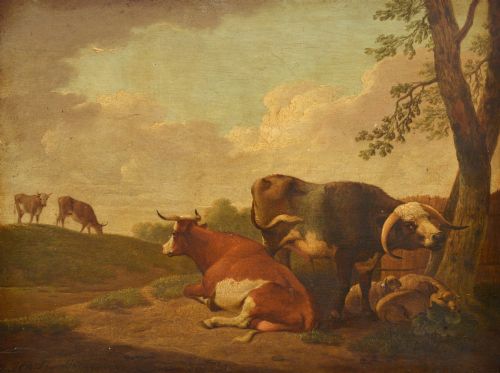
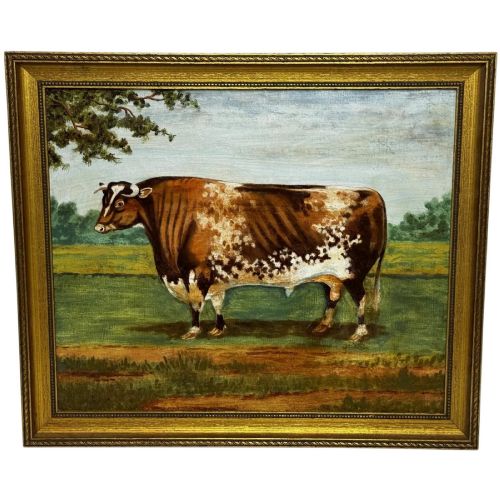
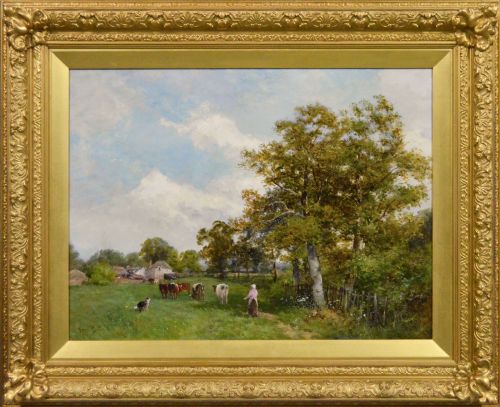
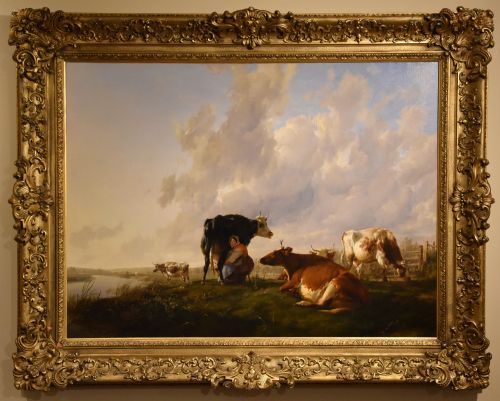
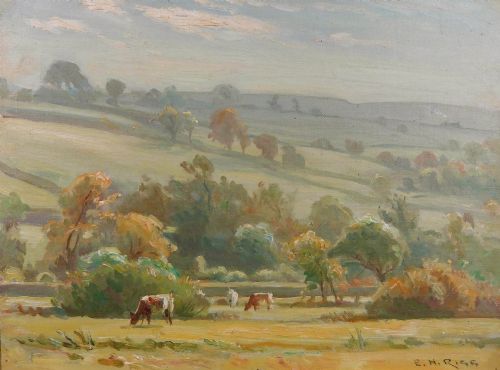
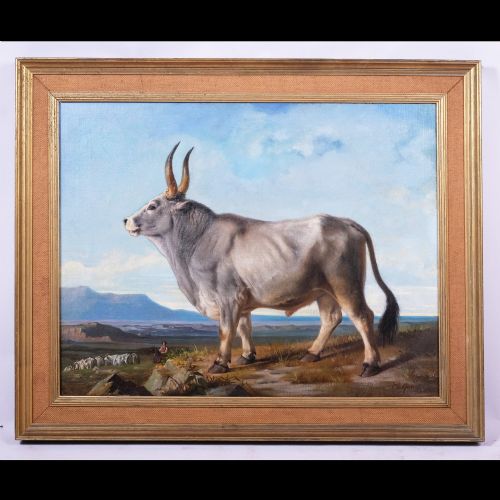
These cattle in landscape oil paintings capture pastoral idylls and Highland terrains across the nineteenth and early twentieth centuries.
Cattle in Landscape Oil
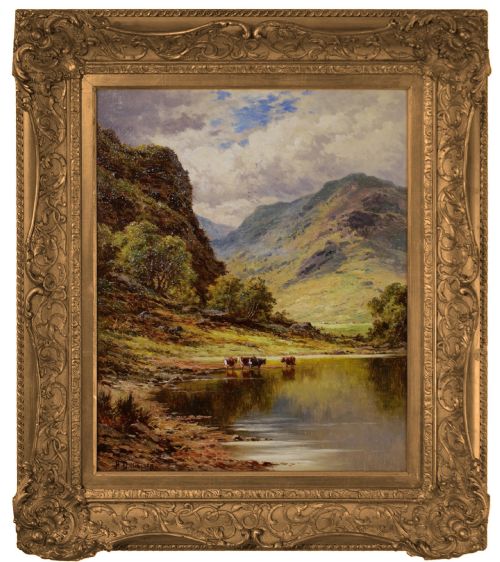
When browsing for cattle in landscape oil, collectors encounter pastoral scenes, riverbanks, and rugged Highland vistas rendered during the Victorian and Edwardian eras. The selection spans quiet English pastures with grazing shorthorns to dramatic Scottish lochs shadowed by longhorns.
Most pieces date from the nineteenth century up to the early twentieth century, reflecting a period when pastoral art held immense popularity among British and European buyers. These works vary from intimate panel paintings to large canvases framed in period giltwood.
How They Were Made
Artists painted primarily with oil paint on stretched canvas, wood panels, or occasionally milk glass and copper. Canvases were secured within wooden stretcher frames and housed in decorative gesso and gilt wood frames.
Makers applied oil pigment using varied brushwork, building up rich textures for the animals and smoothing fluid glazes for skies and waterways. Gold leaf and carved gesso ornamented the surrounding frames to complement the rural subjects.
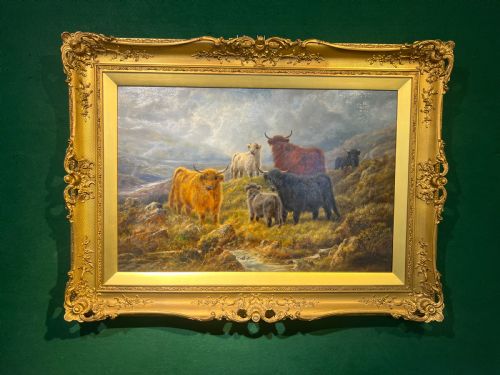
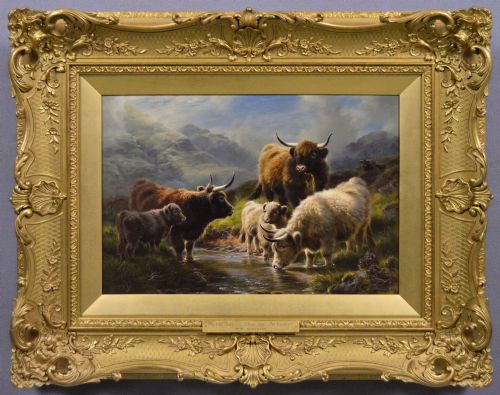
Several shaggy Highland cattle pause by misty Scottish lochs, wearing their fringes like Victorian poets.
What Varies in Quality
Mastery in anatomy and naturalistic lighting distinguishes the finest paintings from simpler commercial works. Superior compositions demonstrate careful rendering of the cattle's musculature and coat texture alongside atmospheric depth in the surrounding landscape.
The craftsmanship of the original frame also influences the overall standard of a piece. Elaborate, hand-carved giltwood and gesso frames preserved from the period elevate the presentation of the artwork significantly.
William H Myers·Hendrik Willem Schweickhardt·David Bates·Thomas Sidney Cooper·Ernest Higgins Rigg·Henry H Parker·Robert Watson·William Watson Jnr·Robert Cleminson·Johann Friedrich Voltz·T C Hofland·Johannes de Haas·A M Gauci·Henry Robinson Hall·Samuel Joseph Clark·Sidney Richard Percy·Frederick James Knowles·Heinrich Harder·James de Rijk·Eugene Verboeckhoven·Pierre Emmanuel Dielmans·George Cole·Thomas Baker·Sidney Pike·T H McKay
The Cattle in Landscape Oil Glossary
- Giltwood
- Wood that has been thinly coated with gold leaf or gold paint. This finish frequently adorns traditional nineteenth-century picture frames.
- Gesso
- A plaster-like mixture applied to wooden frames as a base for moulding and gilding. Artisans carved intricate decorative patterns into this substance before applying gold leaf.
- Oil on Canvas
- Pigment mixed with drying oil applied to a woven fabric support stretched over a wooden frame. This combination provides durability and a flexible surface for varied brush techniques.
- Pastoral
- Relating to the countryside, rural life, and agriculture, particularly depicted in a romanticised or peaceful manner. Such scenes commonly feature cattle, sheep, and herdsmen.
- Shorthorn
- A distinct breed of cattle frequently featured in nineteenth-century agricultural and pastoral paintings. Artists often highlighted their prized physical traits for rural landowners.
Cattle in Landscape Oil: Frequently Asked Questions
How do I care for antique oil paintings?
Keep paintings away from direct sunlight, excessive moisture, and rapid temperature shifts to protect the canvas and pigment. Dust the surface and frame gently with a soft, dry brush without applying pressure.
Avoid using water, chemical cleaners, or damp cloths on the paint layer or the giltwood frame. Professional conservators should handle any deep cleaning or canvas repairs.
What subjects appear alongside cattle?
Herdsmen, milkmaids, and drovers frequently accompany the animals, guiding them through pastures, woodland paths, or toward watering holes. Other farm animals such as sheep, goats, and geese also populate these rural settings.
Natural elements like rivers, streams, mountainous backdrops, and country cottages frame the composition. These details establish a specific regional atmosphere, from English river valleys to Scottish highlands.
Are original frames important?
Period frames contribute historical context and aesthetic balance to nineteenth-century and early twentieth-century canvases. Original giltwood and gesso settings often feature maker stamps or design traits matching the era of the painting.
Matching the frame to the date of the artwork preserves its traditional appearance. Collectors value pieces retained in their initial decorative housings.
How can I identify the period?
Examine the canvas preparation, stretcher construction, and framing style for clues regarding the age of the piece. Nineteenth-century works often utilise hand-hammered tacks, dense linen canvas, and heavy gesso frames.
Signatures, artist plaques, and inscription labels on the reverse provide documentation for dating. Stylistic traits, such as Victorian realism or early twentieth-century impressionism, also help narrow the timeline.