



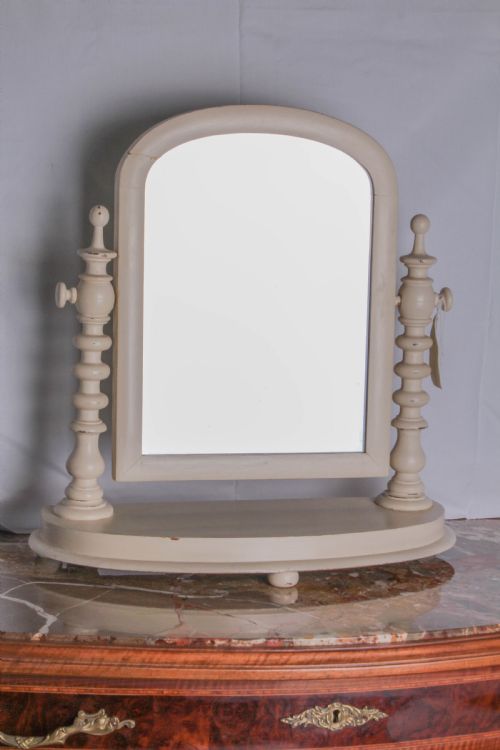


White Vanity Mirror
These white vanity mirror pieces combine painted wood, glass, and brass across Victorian and Art Deco periods for practical dressing.
White Vanity Mirror
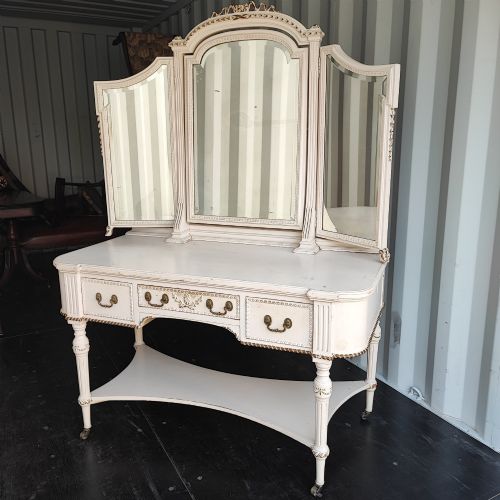
A white vanity mirror encompasses dressing table mirrors, dressing mirrors, and shaving stands originating from the Victorian, Edwardian, and Art Deco periods. These objects serve personal grooming needs through adjustable frames and tabletop swings, often incorporating painted wood and brass components.
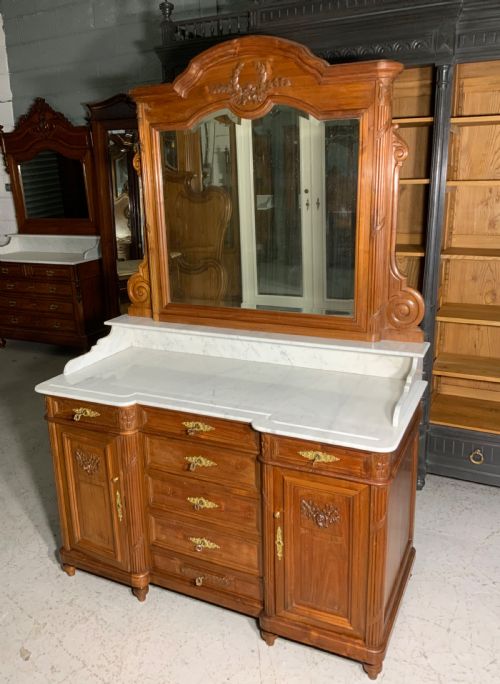
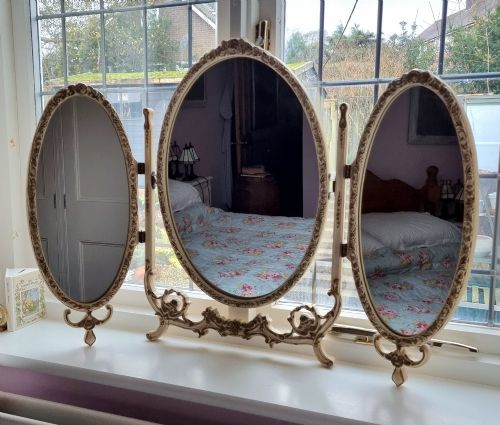
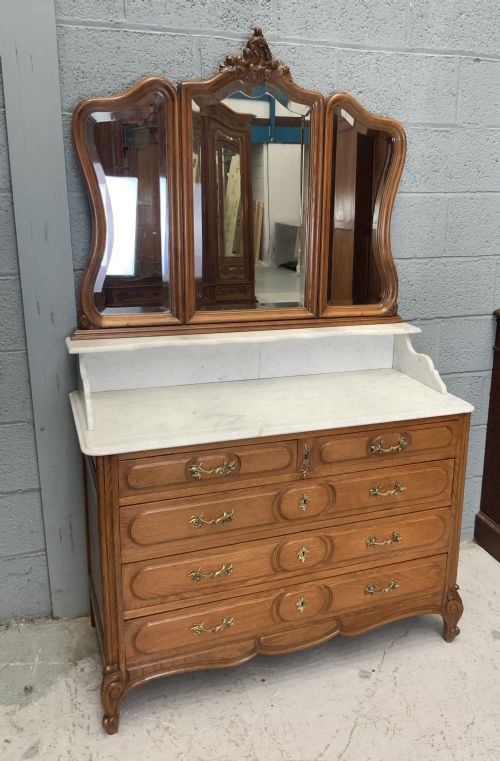
The version most commonly met on this page is the painted Victorian or Edwardian dressing mirror, alongside continental porcelain easel mirrors and French provincial styles. Many examples accompany washstands or dressing tables, functioning as integrated elements of bedroom furniture from the nineteenth and early twentieth centuries.
Materials and construction
Makers utilised painted wood, mahogany, oak, and walnut, often applying gesso and original paint finishes to achieve the characteristic white and light-toned surfaces. Brass fittings provide the adjustable mechanics for swing mirrors, whilst marble tops and majolica panels occasionally appear on related washstands and cabinets.
Construction techniques combine traditional cabinetmaking with decorative carving, particularly in French Rococo Revival and Louis XVI Revival pieces. Glass plates are bevelled or flat, secured within carved wooden frames or supported by brass easel backs.
White Vanity Mirror Retail Price Guide 2026
Typical asking prices for white vanity mirror among the pieces listed under this phrase on Sellingantiques today, from the lower quarter to the upper quarter. They describe what is for sale here now, not the wider market.
Listings feature white vanity mirror pieces spanning the Victorian, Edwardian, and Art Deco periods, utilising painted wood, mahogany, and brass.
Assessing quality
Quality rests upon the preservation of original painted surfaces and the integrity of the timber framing, whether mahogany, walnut, or pine. Superior pieces display crisp carving, particularly within French provincial and Rococo revival styles, alongside robust brass adjustment mechanisms that hold the glass firmly at any angle.
The refinement of the mirror glass and the harmony of associated elements, such as marble tops or porcelain easel stands, separate standard utilitarian items from finer continental examples. Original paintwork showing natural age patination without heavy modern repainting retains greater historical interest.
The White Vanity Mirror Glossary
- Swing mirror
- A mirror plate hung on pivots between upright supports, allowing the glass to tilt. This form predominates on Victorian and Edwardian dressing tables.
- Gesso
- A plaster-like mixture applied to wood surfaces as a base for painting or gilding. It allows for intricate moulded relief work on mirror frames.
- Easel mirror
- A freestanding mirror supported by a hinged prop at the back. These often feature continental porcelain or brass frames.
- Shaving stand
- A specialised vanity piece incorporating an adjustable mirror and often small platforms or drawers for grooming implements. They date frequently to the Victorian era.
- Rococo Revival
- A nineteenth-century style reviving the asymmetrical scrolls, curves, and natural motifs of the eighteenth-century Rococo movement. It appears on carved wooden dressing mirrors.
White Vanity Mirror: Frequently Asked Questions
What is a white vanity mirror?
A white vanity mirror is a dressing mirror, swing mirror, or shaving stand finished in white paint or gesso, dating primarily from the Victorian to the Art Deco periods.
These pieces range from small continental porcelain easel mirrors to large mahogany and pine dressing table mirrors designed for personal grooming.
How do I date a mirror?
Dating relies on identifying stylistic markers such as Victorian carved mahogany frames, Edwardian shield shapes, or geometric Art Deco lines.
Materials like brass fittings, original paint, and the method of securing the mirror glass also provide clear indicators of period manufacture.
Were these mirrors part of larger furniture?
Many vanity mirrors were originally built as upper components for dressing tables, washstands, or side cabinets, while others functioned as independent tabletop items.
Surviving pieces often retain mounting brackets or tenons that indicate their original attachment to a base piece.
How do adjustable mirrors work?
Adjustable swing mirrors use brass pivots, screws, or side arms attached to upright supports, allowing the user to tilt the glass plate to various angles.
These mechanical components should hold the mirror steady without slipping if the hardware remains in good order.
What maintenance do painted mirrors need?
Painted wooden frames require gentle dusting with a dry cloth and protection from direct sunlight and excessive moisture to preserve the finish.
Glass plates can be cleaned with standard glass cleaner applied to a cloth rather than sprayed directly onto the antique frame.