


White Stick Holder
A white stick holder keeps hallways tidy, bringing sculptural utility to entryways through durable cast iron and crisp porcelain forms.
White Stick Holder
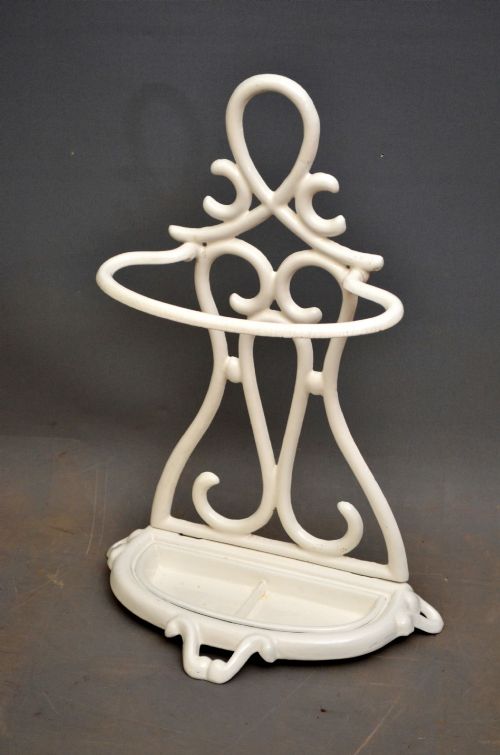
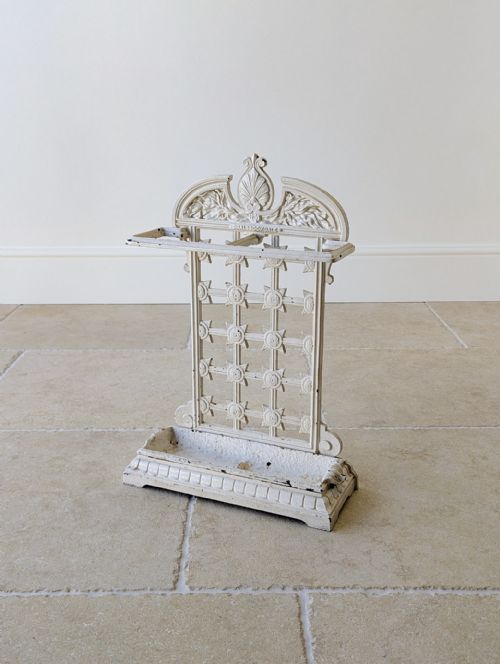
A white stick holder encompasses utilitarian hallway furniture designed to organise walking sticks, canes, and umbrellas within domestic spaces. These functional items frequently appear as heavy umbrella stands and hall stands originating from the Victorian period through to the nineteenth century.
Buyers encounter robust cast iron examples finished in white enamel alongside delicate porcelain and ceramic forms. The selection includes French Art Nouveau designs and English hall furnishings intended for daily practicality in entrance halls.
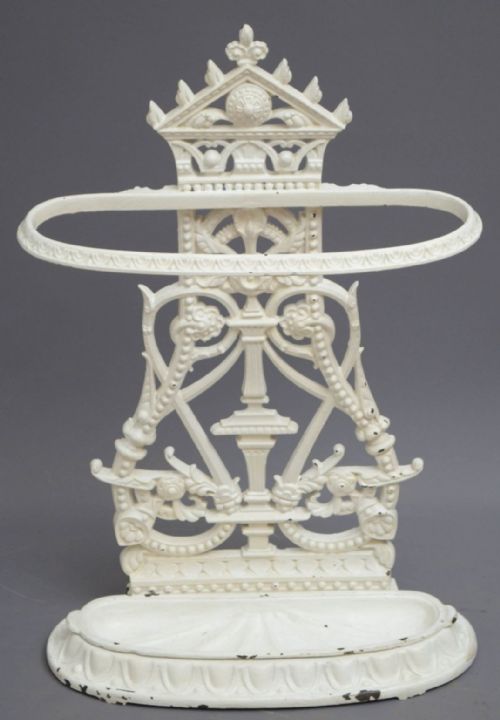
The objects combine practical drip pans and loops with decorative flourishes spanning Victorian neoclassical to Chinoiserie styles. Each piece serves to anchor hallway organisation while displaying period manufacturing methods.
Materials and construction methods
Foundry work dominates the construction of metal pieces, utilising cast iron shaped into intricate openwork patterns and structural umbrella loops. Subsequent enamel finishes provide the characteristic white surface that withstands daily moisture from damp umbrellas.
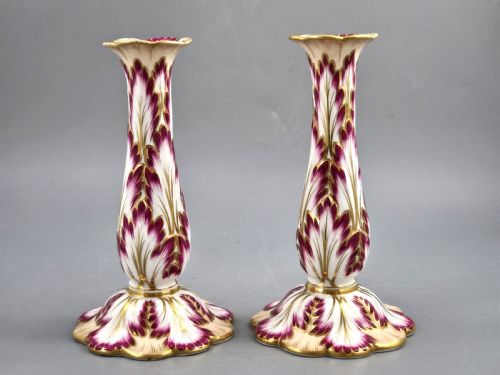
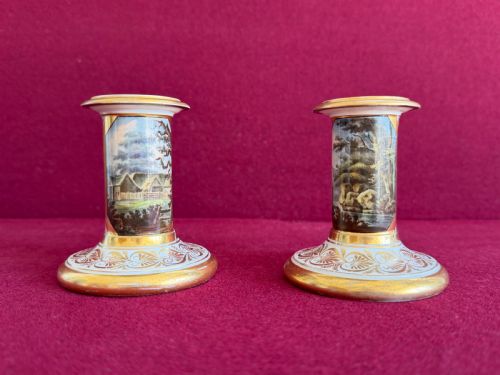
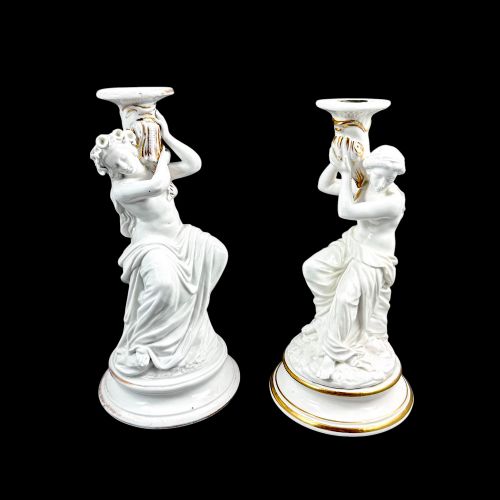
Ceramic pieces utilise porcelain bodies shaped with foliage details, figural elements, and glazed white surfaces. Firing techniques fix these white glazes, occasionally enhanced by paint or gilding applied to highlight moulded details.
Listings span the Georgian period, Victorian era, and the mid-twentieth century, featuring materials from cast iron to porcelain.
Assessing quality and execution
Superior execution shows in the crispness of casting detail on ironwork, where foundry marks and delicate openwork remain sharp and well-defined. Lesser examples exhibit softened contours and thicker surface coatings that obscure the underlying form.
Porcelain quality rests upon the fineness of the paste, the evenness of the white glaze, and the precision of any hand-painted or gilt embellishments. Well-executed pieces maintain proportional balance and structural integrity across both large hall stands and smaller table accessories.
Coalbrookdale·Ridgway·Barr Flight And Barr·Sutherland And Sons·Sitzendorf·Royal Worcester Hadley·Fukagawa
The White Stick Holder Glossary
- Cast iron
- A strong, hard iron alloy produced by casting in a mould, commonly utilised for heavy nineteenth-century umbrella stands.
- Enamel
- A vitreous substance fused to the surface of metal through firing, providing a protective and smooth white finish.
- Porcelain
- A white ceramic material fired at high temperatures to achieve a vitrified, non-porous body used for candlesticks and decorative stands.
- Hall stand
- A large piece of entrance furniture incorporating hooks, mirror frames, and a base section for holding sticks and umbrellas.
- Chinoiserie
- A European artistic style reflecting Chinese motifs and techniques, applied to decorative items during the nineteenth century.
White Stick Holder: Frequently Asked Questions
How were stick holders used in Victorian homes?
These items stood in entrance halls to receive wet umbrellas and walking sticks upon entering the house. They protected flooring and kept hallway accessories neatly arranged for family members and guests.
Their robust construction in cast iron or ceramic handled daily use without tipping. They served as both practical furniture and decorative statements greeting visitors.
Where should I place a stick holder today?
An entryway or hallway provides the most authentic and practical location for these pieces. They continue to serve their original purpose by holding walking canes and umbrellas near the front door.
Placing them on stone or tiled flooring manages any residual moisture from wet weather gear. They also fit well in spacious mudrooms or cloakrooms.
How do I care for cast iron and porcelain stands?
Cast iron surfaces require gentle dusting and protection from persistent moisture to preserve the enamel finish. Keeping the internal drip trays clean prevents rust accumulation at the base.
Porcelain items need careful handling to avoid chipping the glazed surface during daily use. Regular cleaning with a soft cloth maintains the crisp white appearance of the ceramic material.
How can I tell a Victorian stand apart from later pieces?
Victorian examples display specific foundry marks, heavy cast construction, and typical decorative repertoires such as neoclassical or early Art Nouveau motifs. The weight of the metal and the depth of the casting provide clues to the era.
Examining the enamel finish and construction fasteners helps confirm the period of manufacture. Earlier pieces show hand-finishing details absent in mass-produced twentieth-century alternatives.