


White Shade Oil Lamp
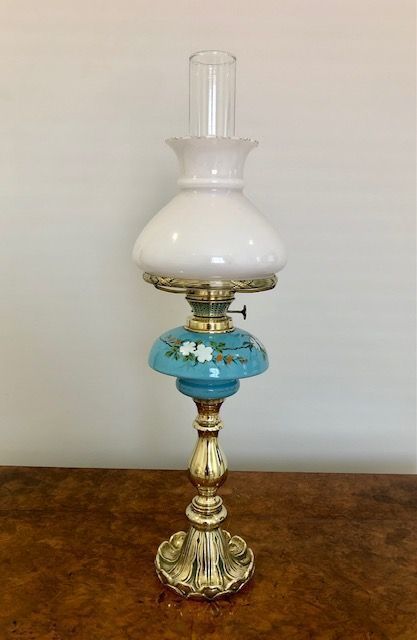
A white shade oil lamp brings period warmth to a room, combining brass or ceramic bases with pale glass shades from the Victorian and Edwardian eras.
White Shade Oil Lamp
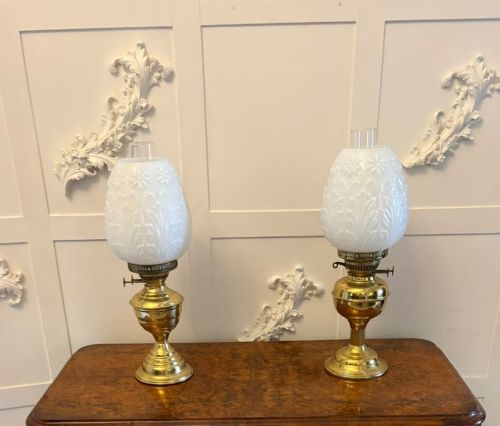
A white shade oil lamp sits on a table, desk, or floor, providing both functional illumination and decorative presence. These pieces originate primarily from the Victorian and Edwardian periods, stretching from the mid-nineteenth century into the early twentieth century.
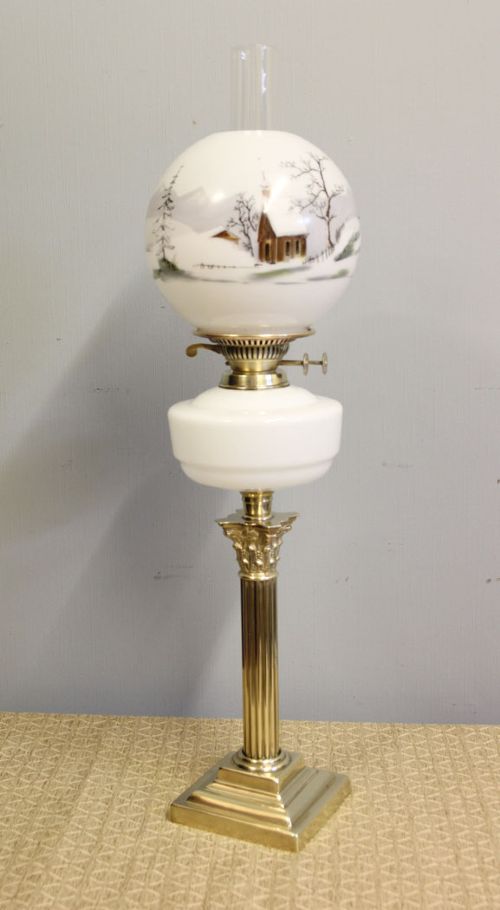
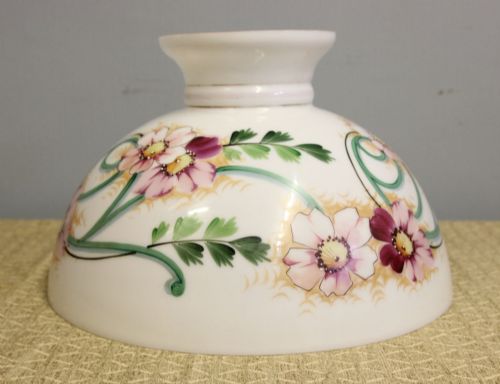
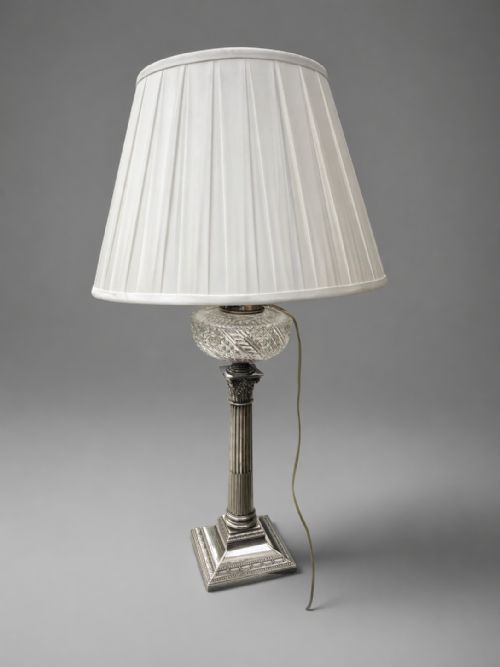
The versions met most often on this page pair gleaming brass or ceramic columns with opaline, milk, or plain white glass shades. Some examples feature painted winter scenes, floral motifs, or specialised forms like Corinthian columns and hanging fixtures.
Buyers encounter everything from near pairs of desk lamps to robust floor-standing pole lamps with tripod bases. The range includes standard table heights alongside converted fittings that retain their original character.
How they were made
Maker workshops built these lamps using solid brass and durable ceramics for the main body and structural columns. Bases often incorporate contrasting materials such as black glass to anchor the weight.
Shades were formed from opaline glass, milk glass, or porcelain, sometimes shaped into globes or painted by hand with enamel. Manufacturers also employed cut glass elements and fabric components to catch the light.
Listings span the Victorian and Edwardian eras, featuring brass, opaline glass, and Sitzendorf porcelain in table and hanging formats.
What varies in quality
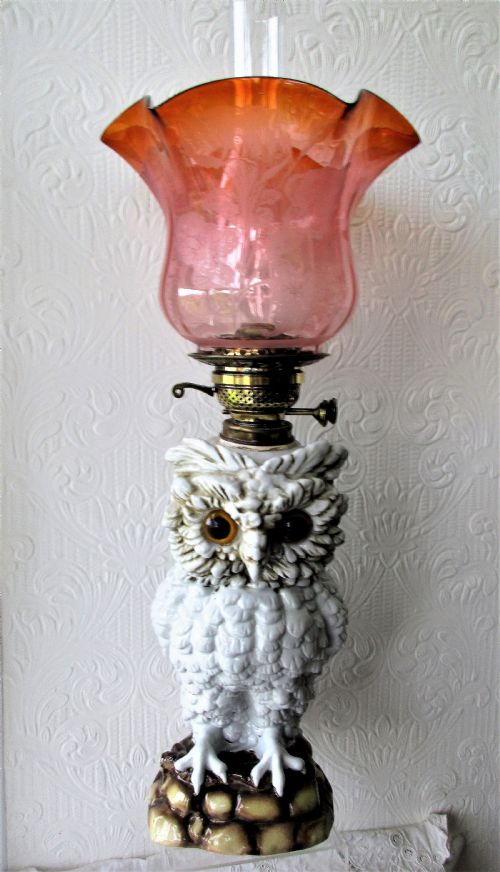
The standard of a white shade oil lamp depends heavily on the crispness of its metal casting and the weight of the brass or ceramic body. Finer examples display meticulous detailing in Corinthian columns or hand-painted porcelain figures.
Quality also shows in the finish of the glass shade, where even thickness, smooth rims, and delicate enamel work separate standard items from superior pieces. The integration of original brass rings and heavy structural bases defines the better tier.
Sitzendorf·Wild and Wessel
The White Shade Oil Lamp Glossary
- Opaline Glass
- A pale, translucent white glass used extensively for lamp shades to diffuse light softly. It gained popularity during the nineteenth century for domestic lighting.
- Corinthian Column
- A classical architectural column style frequently utilised for the vertical stem of oil lamps. These brass shafts mimic ancient Greek stone carvings.
- Sitzendorf
- A German porcelain factory known for elaborate figural and sculptural ceramics. Their work appears in nineteenth-century lamp bodies.
- Wild and Wessel
- A notable maker of nineteenth-century burners and lamps known for engineering quality. Their pieces often represent high manufacturing standards of the period.
- Milk Glass
- An opaque or translucent white glassware moulded into shades and globes. It provides a dense, solid appearance compared to lighter opaline varieties.
White Shade Oil Lamp: Frequently Asked Questions
How do I date a brass oil lamp?
Dating relies on stylistic clues like Corinthian detailing, manufacturing stamps, and the specific composition of the brass and glass. Victorian and Edwardian pieces each carry distinct weight and assembly methods.
Examine the construction of the burner fittings and the type of glass used in the shade. Earlier nineteenth-century examples often display heavier castings compared to later Edwardian production.
Are these lamps still safe to use with oil?
Most antique lamps found on the market have been converted for modern electrical use to comply with contemporary safety standards. Many retain their original physical form while housing modern wiring.
Collectors should inspect the interior fittings and consult a professional electrician if intending to restore an oil-burning mechanism. Preserving the vintage shade and brass body remains the priority for display.
What is the difference between opaline and milk glass?
Opaline glass has a delicate, translucent quality that allows light to filter through with a soft glow. Milk glass tends to be denser and completely opaque with a milky-white appearance.
Both materials were standard for white shade oil lamps during the Victorian era. The choice between them changes the quality of the light emitted by the burner.
Where should I place a floor-standing oil lamp?
Floor-standing pole lamps with tripod bases suit corners of rooms or beside reading chairs where they can serve as statement focal points. Their height demands stable placement away from heavy household traffic.
Ensure the tripod base rests evenly on firm flooring. The proportion of the white glass shade balances the long brass column above the floor.