
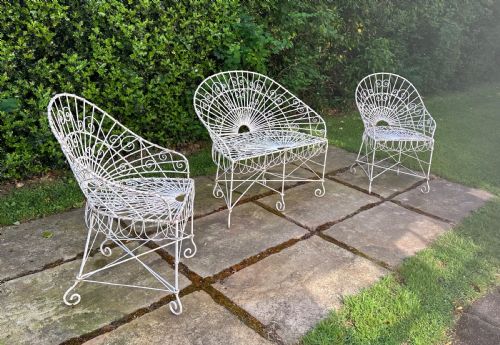


White Painted Outdoor Bench
A white painted outdoor bench turns a quiet lawn or terrace into a proper room, bringing solid nineteenth-century ironwork or timber into the open air.
White Painted Outdoor Bench
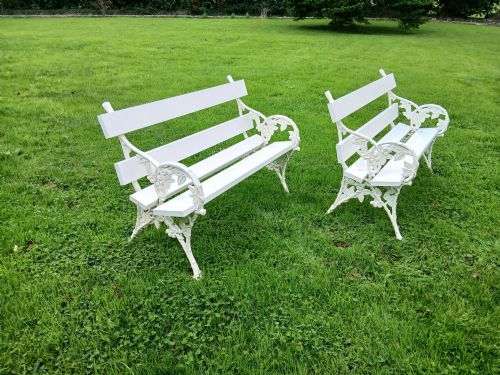
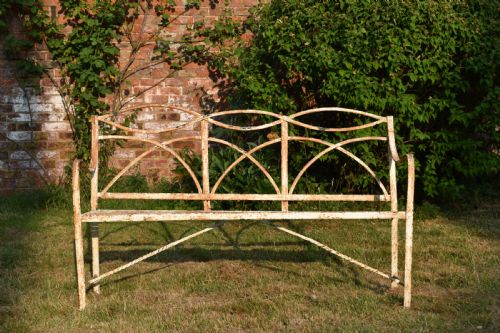
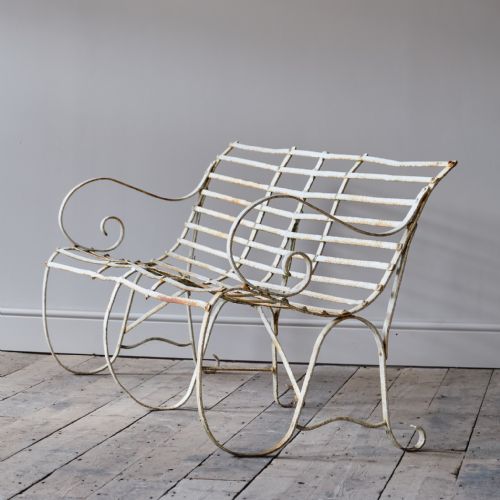
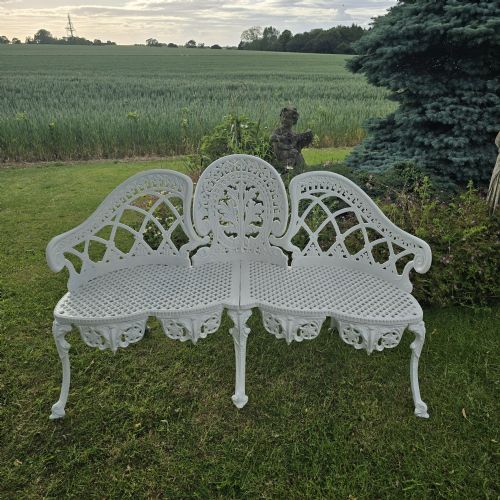
A white painted outdoor bench is a garden seat designed to withstand the elements while offering a formal or rustic resting place among the planting. When searching for a white painted outdoor bench, buyers encounter pieces ranging from Regency strapwork and Victorian ornate castings to simpler twentieth-century timber forms.
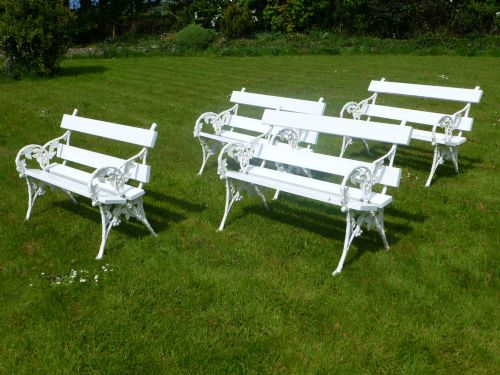
The selections span distinct periods including the nineteenth century, Edwardian era, and the nineteen-thirties, with styles such as Victorian rustic, Regency, and Victorian decorative. Forms include full garden benches, armchairs, sets, and even wirework arbours alongside separate bench ends.
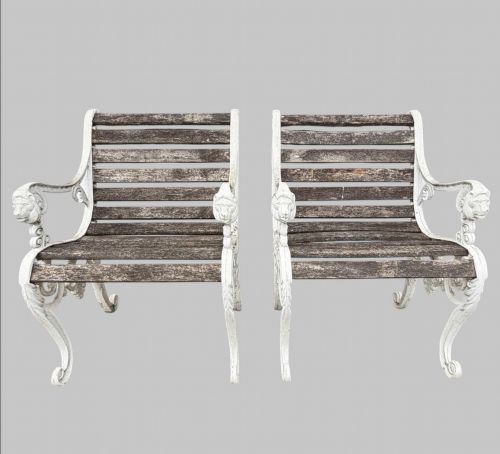
Many examples showcase the heavy industrial output of historical foundries, while others utilise traditional wood construction. Whether standing as a pair of matching armchairs or a single long seat, these objects define outdoor spaces through their enduring silhouettes and bright painted finishes.
Judgments of quality and execution
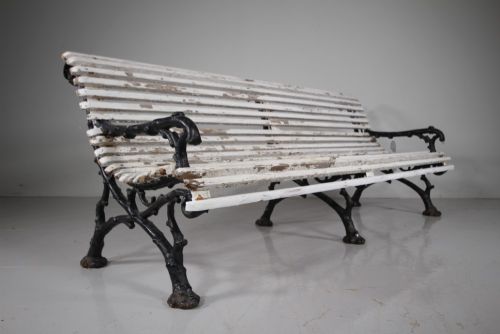
Integrity of construction matters deeply, shown in the original pairing of bench ends with appropriate timber slats and the clean execution of forged joints in wrought iron. The manner in which the white paint layers build up over time contributes to the tactile appeal of the surface, preserving the character of the metal beneath.
Materials recorded on this page include cast iron, wrought iron, timber, wood, painted wood, cast metal, and cast aluminium.
Falkirk Carron Foundry·Coalbrookdale
The White Painted Outdoor Bench Glossary
- Strapwork
- Flat metal bands arranged in geometric patterns, characteristic of Regency design. This technique creates a lighter visual appearance than solid cast iron.
- Cast Iron
- Molten iron poured into a mould to create rigid, highly decorated forms. It enables the creation of detailed plant motifs and animal masks on bench backs and ends.
- Wrought Iron
- Iron heated and hammered into shape by hand, resulting in strong, flexible structural elements. It is often utilised for graceful scrolls and linear garden seats.
- Bench Ends
- The structural side supports of a seat that hold the back and seat slats together. They are frequently cast in iron with decorative patterns while the seating timber is replaced over time.
- Wirework
- Thin metal wires woven or welded together to form garden structures and seating. This technique produces lightweight, airy arbours and benches popular around nineteen hundred.
White Painted Outdoor Bench: Frequently Asked Questions
How do I date a cast iron garden bench?
Dating relies heavily on stylistic markers such as Regency strapwork or Victorian botanical casting, alongside the weight and manufacturing marks of the iron. Foundry names and registration diamonds often stamp directly into the metal frame.
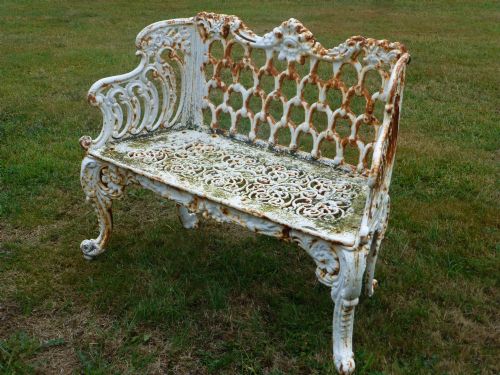
Early pieces from the mid-nineteenth century feature deeply sculpted details like blackberry leaves or lion masks. Later twentieth-century versions tend to simplify these patterns or follow earlier foundry designs without the same crispness.
Are these benches suitable for year-round outdoor use?
Most of these pieces are built from durable cast iron, wrought iron, or hardy timber designed specifically for exterior settings. The protective layers of white paint help shield the materials from moisture and sun exposure.
Positioning the bench on stone or paving rather than directly on damp earth helps preserve the feet of the iron legs or wooden frames. Regular maintenance of the painted surface keeps the metal and wood sound through changing seasons.
What is the difference between cast iron and wrought iron benches?
Cast iron involves pouring liquid metal into moulds, allowing makers to achieve complex three-dimensional decorations like leaves, fruit, and animal figures. These components are heavy, rigid, and break under sudden impacts rather than bending.
Wrought iron is beaten and forged by hand into linear shapes and strapwork patterns, offering greater flexibility and tensile strength. Wrought iron benches generally feel lighter in construction than their heavy cast iron counterparts.
How should I maintain the white painted finish?
Maintaining the finish involves periodically washing away dirt and checking for any areas where moisture might reach the bare iron or wood beneath. Applying a compatible exterior paint over prepared surfaces prevents rust spots from spreading.
Allowing the paint to weather naturally can also add to the character of antique garden furniture, provided the underlying structure remains fully protected from decay.