
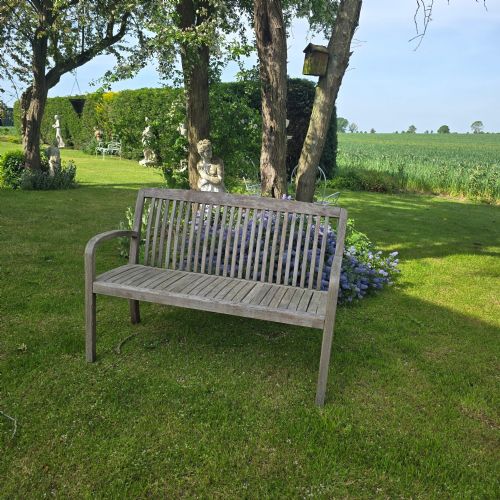


Weathered Teak Bench
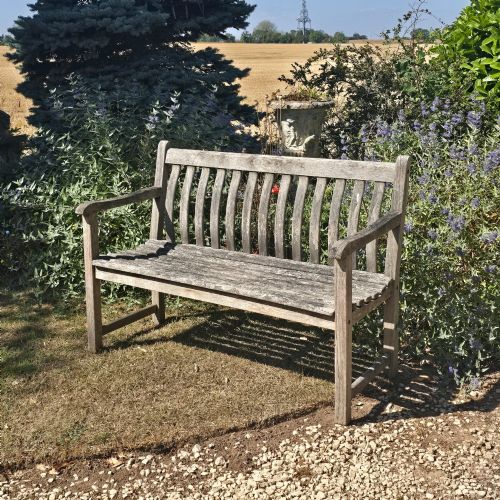
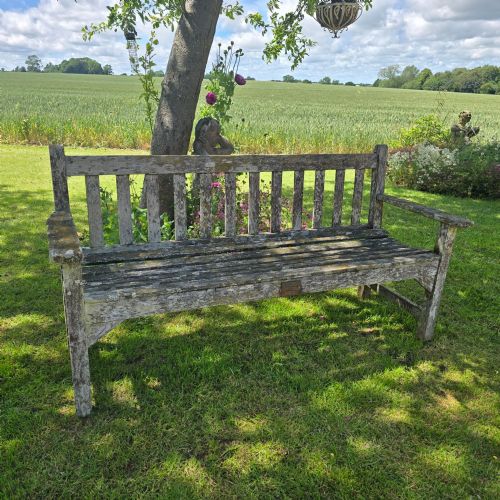
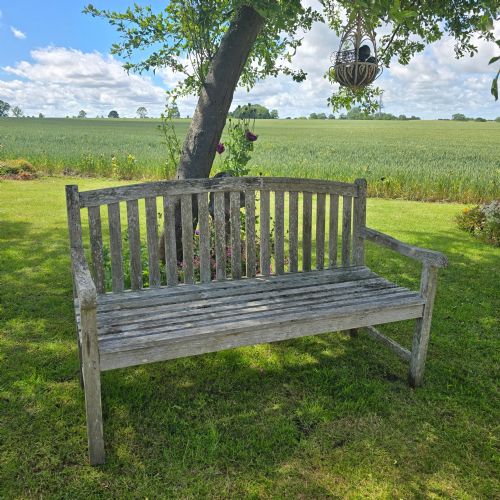
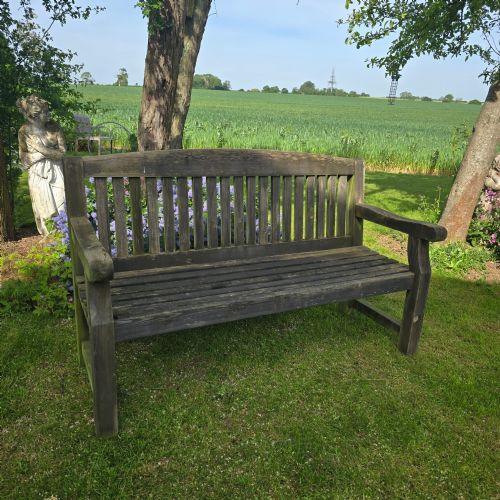
A weathered teak bench is a garden seat built to handle the elements, offering a practical spot to sit while gaining a characteristic silvered patina.

Weathered Teak Bench
When you search for weathered teak bench, you find garden seating built from dense timber designed to live outdoors. These seats range from Edwardian designs to pieces dating from the nineteen-twenties and nineteen-thirties.
The most common forms on this page are traditional garden benches and garden seats with wooden slats, alongside occasional root wood armchairs and tree seats. They carry labels reflecting English country garden styles and twentieth-century garden traditions.
Most examples show the distinct silvered surface that forms when teak is exposed to wind and rain over decades. The construction relies on sturdy joinery intended to withstand prolonged outdoor use.
How they were made
Makers built these pieces primarily using teak and teak wood, selected for its natural oils that resist moisture and decay. Some variations incorporate root wood and general timber for organic forms.
Construction methods focus on durability, utilising slatted seats and sturdy framing to endure garden conditions. Certain examples feature decorative touches such as heart motifs integrated into the woodwork.
An Edwardian garden bench bearing a carved heart motif offers a romantic spot to sit among the cabbages.
What varies in quality
The degree of weathering determines much of the visual appeal, ranging from freshly silvered timber to deeper patination acquired over generations. Benches with uniform silvering across the slats show more consistent exposure.
Structural integrity depends on the original joinery and the density of the teak used in the frame. Edwardian and earlier twentieth-century pieces display varying levels of preservation in their joints and slats.
The Weathered Teak Bench Glossary
- Weathered teak
- Teak wood that has aged outdoors, turning a characteristic silvery grey colour under the influence of sun and rain. This process takes many years and protects the underlying timber.
- Edwardian
- The period from nineteen hundred to nineteen ten, characterised by lighter furniture designs and continued traditional craftsmanship. Pieces from this era often incorporate classic garden forms.
- Root wood
- Timber taken from the root system of a tree, displaying twisting, organic grains and natural contours. It appears in more sculptural seating.
- Slatted
- Constructed with narrow strips of wood spaced evenly apart to allow rainwater to drain through the seat. This design prevents water pooling and helps the timber dry quickly.
Weathered Teak Bench: Frequently Asked Questions
Can I leave my teak bench outside all year?
Teak possesses natural oils that make it well-suited for outdoor conditions throughout the seasons. Leaving the bench outside allows the wood to develop its characteristic silvered patina.
Covering the seat during harsh winter months can help preserve the structural joints, though the timber itself requires little maintenance to withstand the weather.
How do I clean a weathered teak bench?
Washing the bench with mild soapy water and a soft brush removes surface dirt without stripping the natural oils from the timber. Avoid using high-pressure washers, which can raise the grain and damage the aged surface.
Allowing the wood to dry naturally keeps the silvered appearance intact while maintaining the cleanliness of the slats.
What is a tree seat?
A tree seat is a specialised garden bench built in a circular or polygonal shape to fit around the trunk of a mature tree. These pieces offer shaded seating that integrates directly into the garden landscape.
Wooden slatted versions from the early twentieth century allowed the structure to accommodate the natural growth of the trunk over time.
How do I date an older teak bench?
Dating relies on stylistic clues such as Edwardian proportions, specific joinery techniques, and the extent of the natural weathering on the timber. Nineteenth-century root chairs display different organic forms compared to twentieth-century slat designs.
Comparing the construction methods and material thickness helps place the bench within its historical period.