
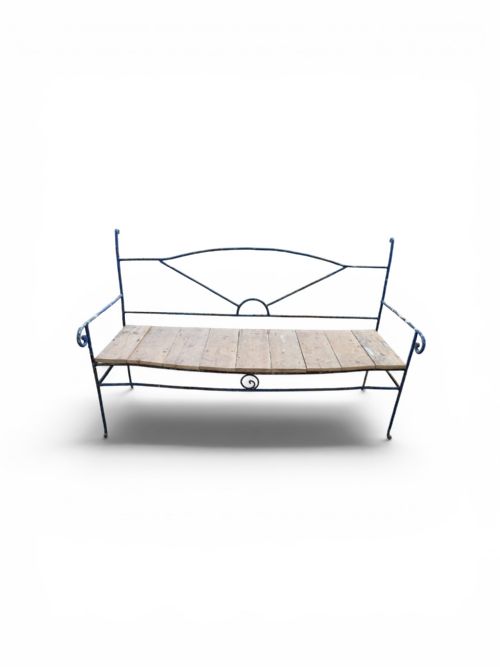
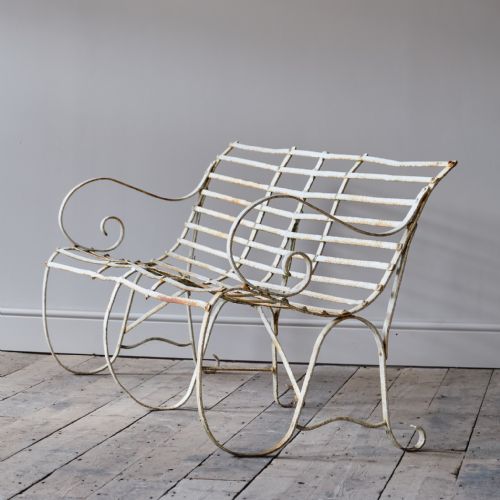
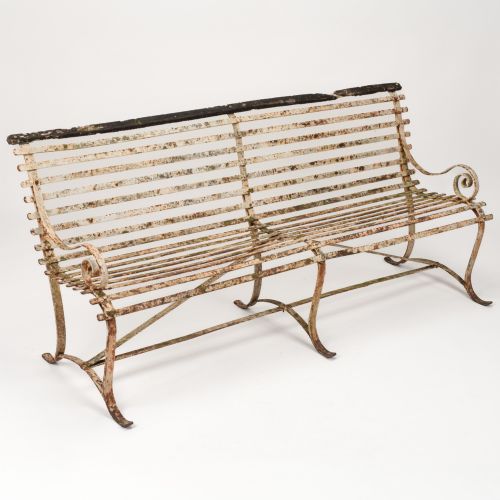
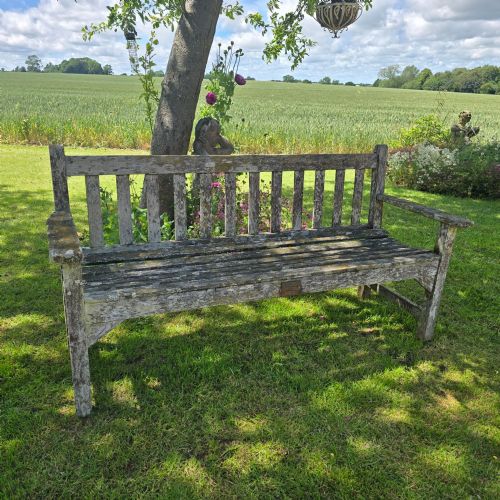


Outdoor Slatted Bench
An outdoor slatted bench brings enduring form to garden spaces, offering the classic proportions of nineteenth-century foundry work or the silvered grain of seasoned teak.

Outdoor Slatted Bench
When searching for an outdoor slatted bench, buyers encounter pieces spanning the Victorian and Edwardian eras alongside early twentieth-century examples. The selection includes garden benches, garden armchairs, and circular tree seats.
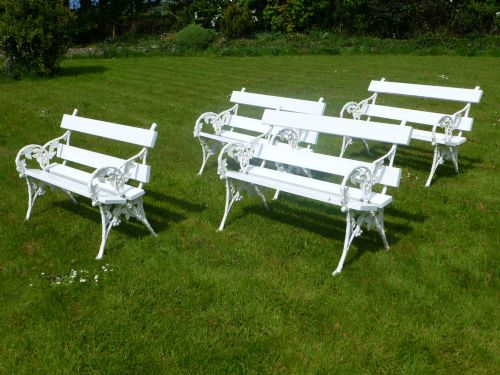
Nineteenth-century examples frequently combine cast iron ends with timber slats, while later pieces rely heavily on durable teak construction. Makers produced both standard park bench forms and more decorative iterations with specific foundry motifs.
English country house and rustic styles dominate the aesthetic, with vernacular wooden benches appearing alongside ornate iron strapwork designs. These seating options suit both formal lawns and sheltered terrace positions.
Materials and construction
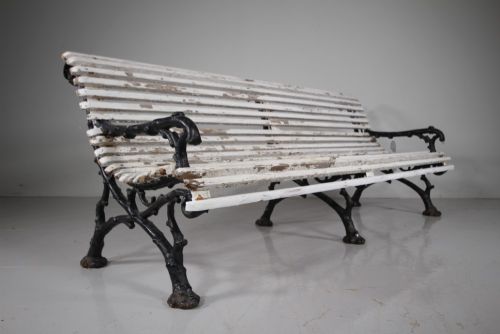
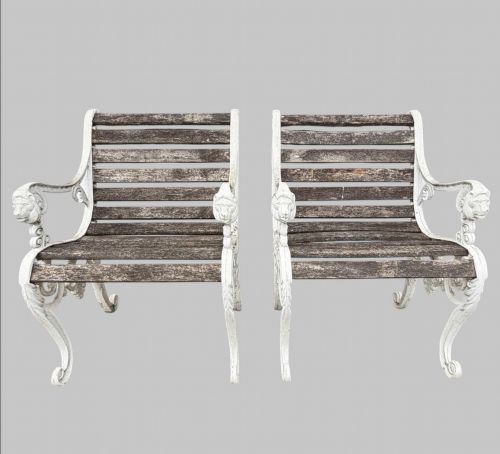
Foundries cast iron into intricate patterns including blackberry and leaf motifs, lion masks, and geometric strapwork. These heavy metal ends provide robust structural support for wooden slats.
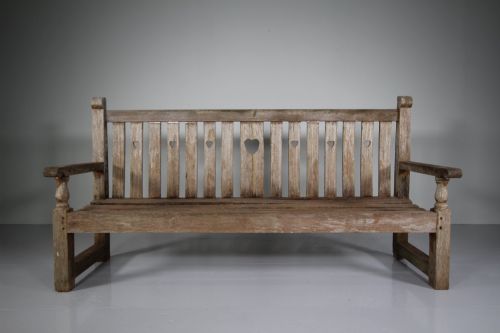
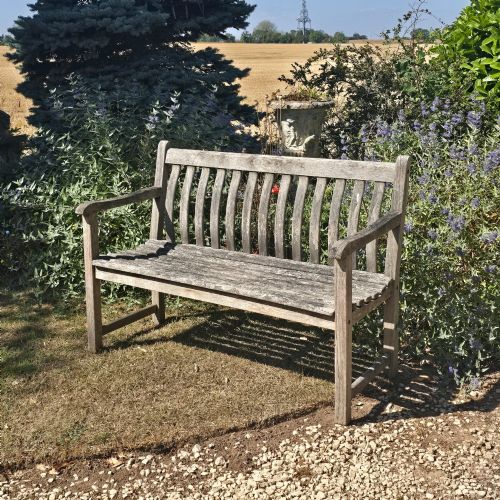
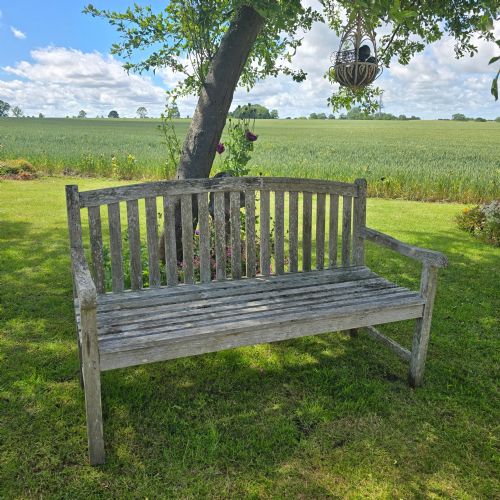
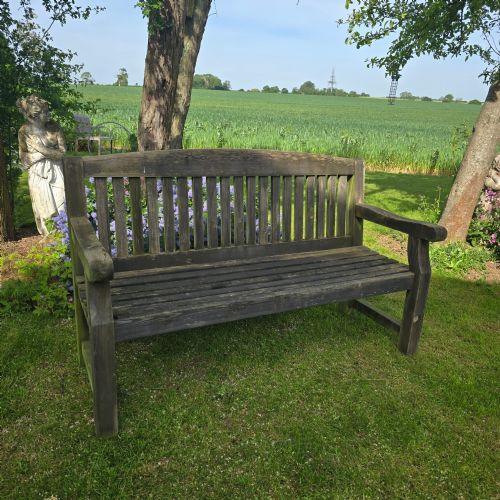
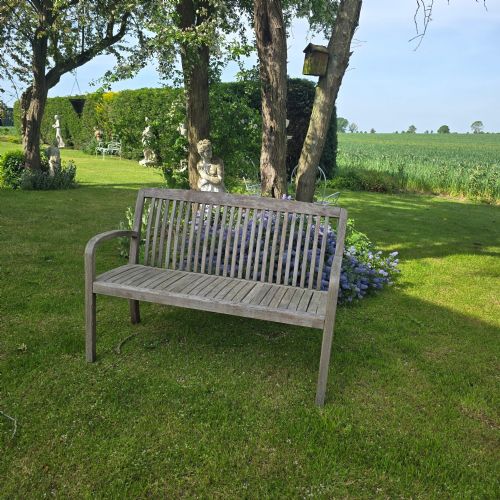
Makers utilised teak, oak, and other timber varieties for the seating surfaces, securing slats to iron or wooden frames. Natural weathering processes turn exposed teak to a silvered patina over decades.
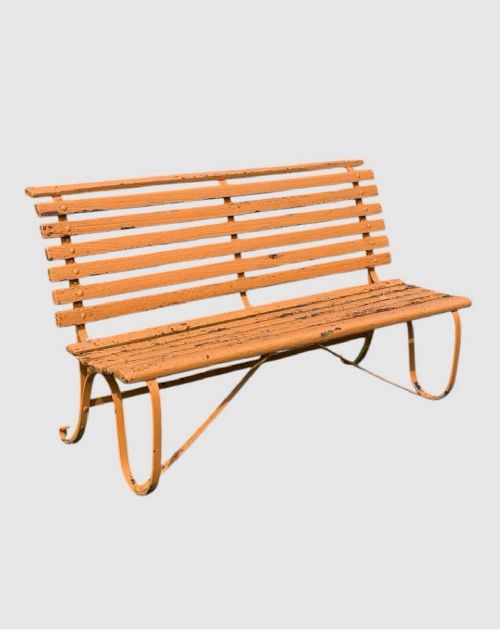
Surface treatments range from bare weathered wood to layers of original paint on wrought iron scrollwork. Construction methods combine traditional joinery for wooden components with heavy bolt assemblies for metal frames.
Materials span cast iron, wrought iron, teak, oak, and fabric elements across various styles.
Distinctions in manufacture
The sophistication of the ironwork distinguishes standard foundry output from finer decorative pieces. Crisp casting detail in elements like rustic branches or animal masks denotes superior workshop production.
The choice and thickness of timber affect longevity and visual weight. Dense teak handles outdoor exposure more resiliently than softer woods, maintaining structural integrity across seasonal temperature shifts.
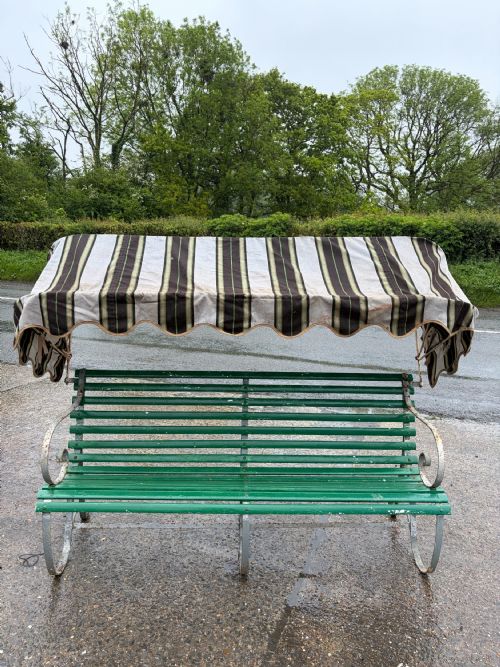
Completeness of original components, such as matching pairs or integrated canopies, elevates certain examples. The preservation of original paint layers on wrought iron frames also distinguishes untouched survivals.
Falkirk foundry·Coalbrookdale design
The Outdoor Slatted Bench Glossary
- Cast iron
- Iron poured into a mould to create rigid components with detailed ornamentation. It provides the heavy structural ends for many nineteenth-century garden seats.
- Wrought iron
- Iron beaten and bent into shape by hand or machine to form strapwork and scroll designs. This material offers high tensile strength for slender structural braces.
- Teak
- A dense tropical hardwood valued for natural oils that resist moisture and decay. It weathers to a silvery grey when left exposed to the elements.
- Strapwork
- Flat bands of metal arranged in geometric or interlaced patterns across the backrest. It characterises many Regency and Victorian iron benches.
- Tree seat
- A circular bench constructed around the trunk of a tree to provide surrounding shade. These wooden slatted forms utilise segmented designs to fit natural contours.
Outdoor Slatted Bench: Frequently Asked Questions
How do I maintain a teak outdoor slatted bench?
Teak requires minimal intervention due to its natural oils, weathering naturally to a silvery grey colour outdoors. Periodic washing removes surface dirt without needing protective oils unless you prefer to retain the warm golden tone.
Leaving the timber to breathe allows the wood to adapt to seasonal moisture changes safely. Ensure the feet rest on paving or gravel rather than damp soil to prevent bottom-end moisture absorption.
Are cast iron and wrought iron benches different?
Cast iron is poured into moulds, resulting in heavier, more brittle components with high-relief ornamentation like foliage or animal masks. Wrought iron is heated and hammered into flexible straps, scrolls, and structural braces.
Victorian makers often combined both techniques, using cast iron for the decorative bench ends and wrought iron or timber for the slatted seating surface.
Where should I place a tree seat?
Circular tree benches require a mature tree with a straight trunk and sufficient clearance beneath the lower branches for seating. Position the segments around the trunk on a level base of gravel or paving stones to ensure stability.
Allow growing room between the inner wooden slats and the bark so the tree can expand naturally over subsequent seasons without constricting growth.
How do I identify a Victorian garden bench?
Victorian examples often feature heavy cast iron frames decorated with rustic branches, fern patterns, or strapwork. The timber slats on nineteenth-century pieces typically show dense grain and deep weathering consistent with age.
Construction methods rely on through-bolts and traditional joinery rather than modern fixings, often bearing foundry marks or design registration numbers on the metalwork.