
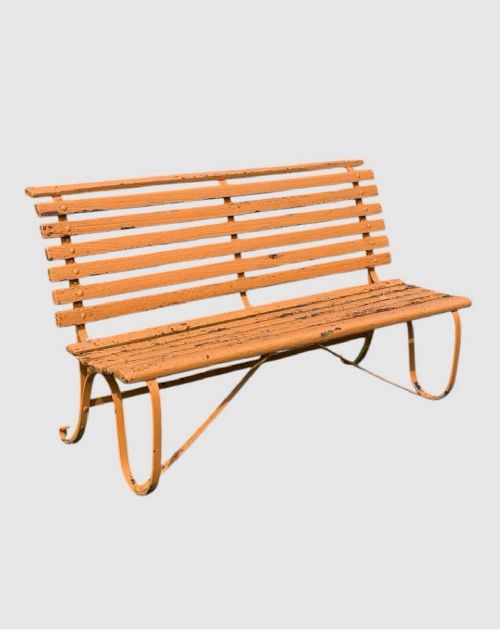


Painted Wooden Garden Seat
A painted wooden garden seat brings character and comfort to a lawn or terrace, offering a practical spot to rest amidst the planting.
Painted Wooden Garden Seat
A painted wooden garden seat is a functional outdoor bench designed to weather the elements while providing a sturdy place to sit. When you search for this phrase, you find items spanning from the nineteenth century through the interwar period.
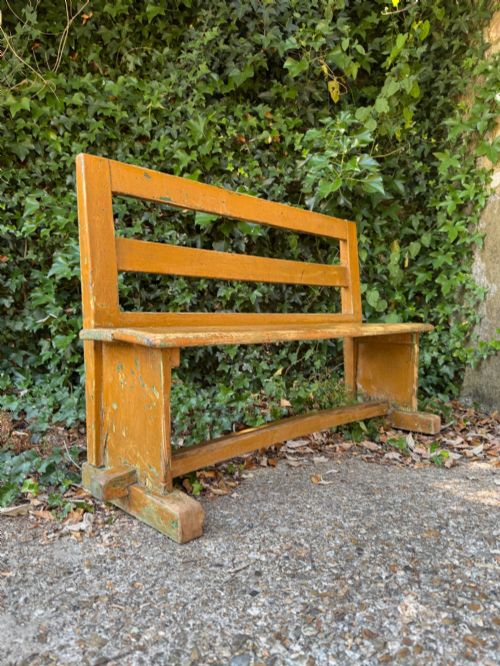
The selections on this page range from simple antique pine benches to decorative Victorian examples and railway station seating. You will also encounter pieces incorporating cast iron elements alongside timber laths.
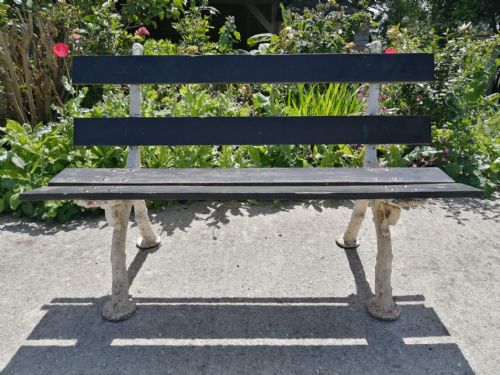
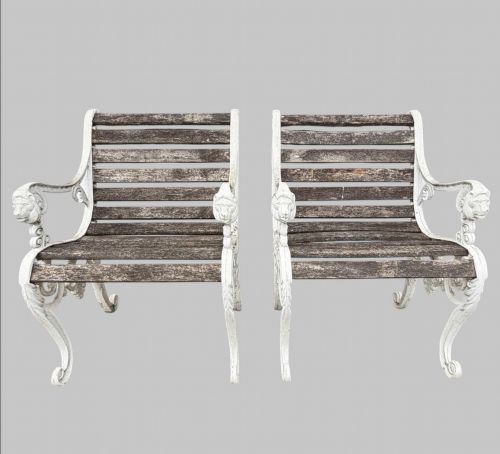
Forms include traditional two-seater benches, pairs of garden chairs, and armchairs featuring ironwork details such as lion masks or faux bois frames.
How they were made
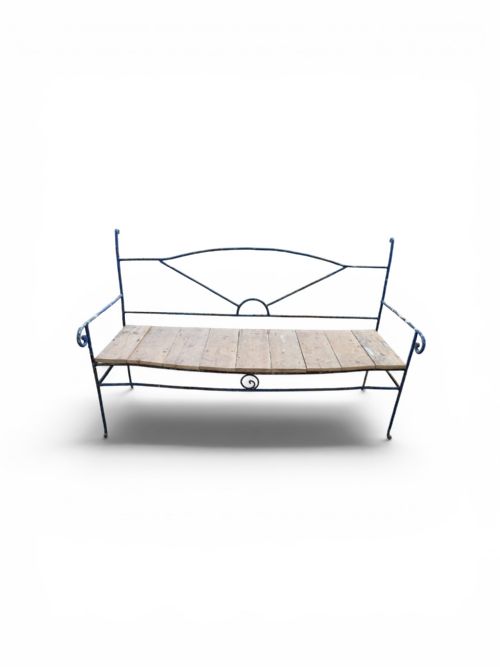
Makers constructed these seats using durable timbers such as pine and teak, paired with structural supports of cast iron or wrought iron. The combination of heavy metal ends and wooden slats provided the necessary weight and stability for outdoor use.
Surface protection relied on thick layers of paint applied to the timber and metal to prevent rot and rust. Many pieces retain traces of successive coats of paint built up over decades of exposure to the weather.
Listings feature items incorporating cast iron, wrought iron, and pine across the nineteenth and early twentieth centuries.
What varies in quality
Quality rests in the heaviness of the metalwork and the grade of the timber utilised in the construction. Heavier cast iron frames and dense hardwoods indicate a sturdier piece built for public or heavy domestic use.
Design ambition also separates standard garden furniture from finer examples, such as those featuring naturalistic faux bois moulding or named railway origins. The integrity of the original joints and the proportion of the armrests dictate the overall success of the form.
Coalbrookdale
The Painted Wooden Garden Seat Glossary
- Faux bois
- Imitation wood. This technique involves shaping cast iron to mimic the knotted texture and gnarled grain of natural branches.
- Cast iron
- Iron melted and poured into a mould. It provides rigid structural support and intricate decorative detail for bench ends.
- Edwardian
- A period spanning the early twentieth century. Furniture from this era often shows lighter proportions compared to heavy Victorian designs.
- Pine
- A softwood commonly utilised for garden furniture slats. It requires regular painting to withstand damp outdoor conditions.
- Railway station bench
- Long seating built for transit platforms. These pieces feature exceptional length and robust frames designed for heavy public traffic.
Painted Wooden Garden Seat: Frequently Asked Questions
How do I care for a painted wooden garden seat?
Keep the timber and metal protected by applying suitable exterior paint when the surface begins to weather. Regular cleaning prevents moisture buildup and moss growth in the grain.
During harsher winter months, storing the seat under cover or using a breathable protective sheet helps preserve the wood and the integrity of the painted finish.
Were these seats meant to stay outside all year?
Most nineteenth and early twentieth-century garden seats were constructed with durability in mind, using heavy iron and treated timber to withstand seasonal changes. They were designed as permanent fixtures for lawns, parks, and station platforms.
Despite this robust construction, prolonged exposure to standing water and frost will accelerate wear on the wooden slats and painted surfaces over time.
How can I tell a Victorian seat from a later one?
Victorian examples often display heavier cast ironwork, deeper mouldings, and ornate decorative motifs such as foliage or animal masks. The timber components tend to be thick and substantial.
Later Edwardian and interwar pieces frequently move towards simpler lines and lighter proportions, reflecting shifts in garden design and manufacturing methods.
What is the difference between pine and teak garden seats?
Pine is a softer timber that requires consistent coats of paint to protect it from moisture and rot. It forms the basis of many traditional painted garden benches.
Teak is a dense hardwood with natural oils that resist dampness, meaning it often survives outdoors with less reliance on heavy surface paint.