



White Painted Linen Press
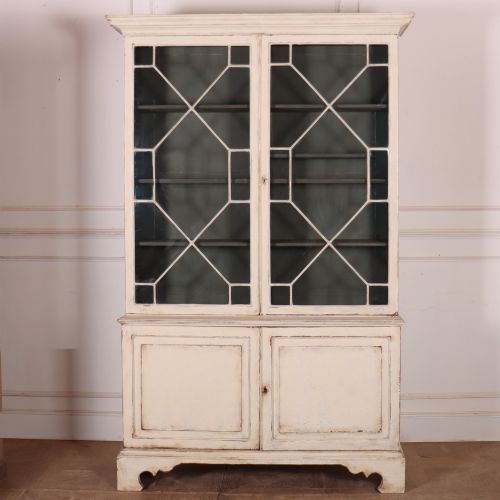
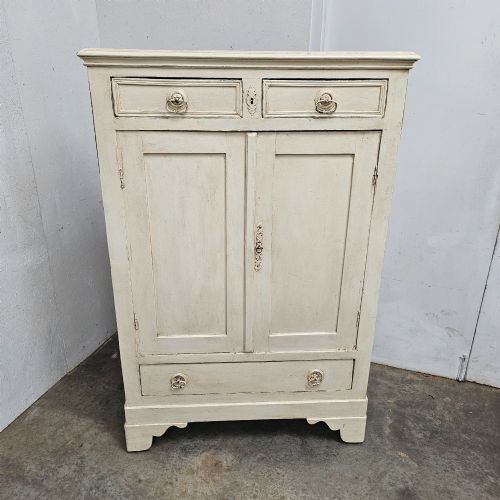
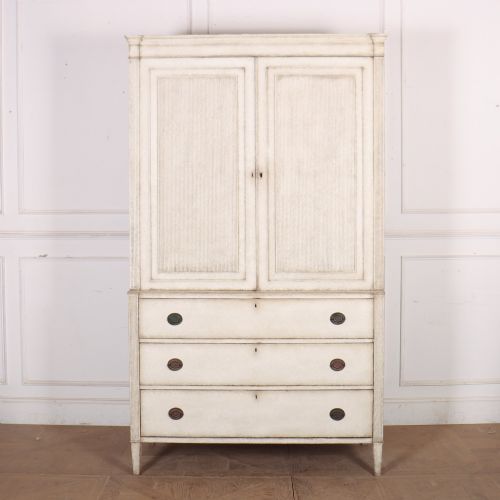
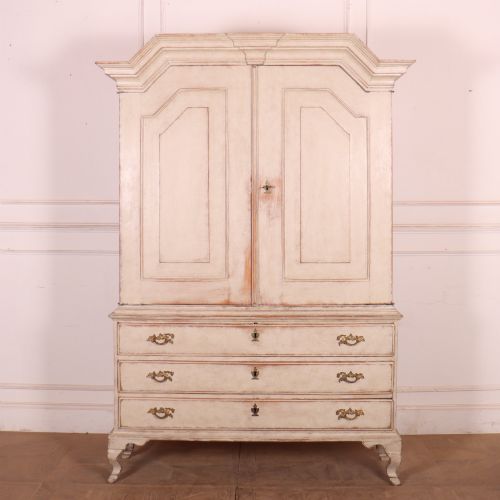
A white painted linen press offers generous storage housed in surface-worn pine, bringing quiet proportion to a bedroom or hallway.
White Painted Linen Press
A white painted linen press combines deep storage cupboards with practical shelving, appearing in forms such as housekeepers' cupboards, tall wardrobes, and side cabinets. These pieces originate across regional traditions, spanning English country workshops, Scandinavian farmhouses, and French provincial houses.
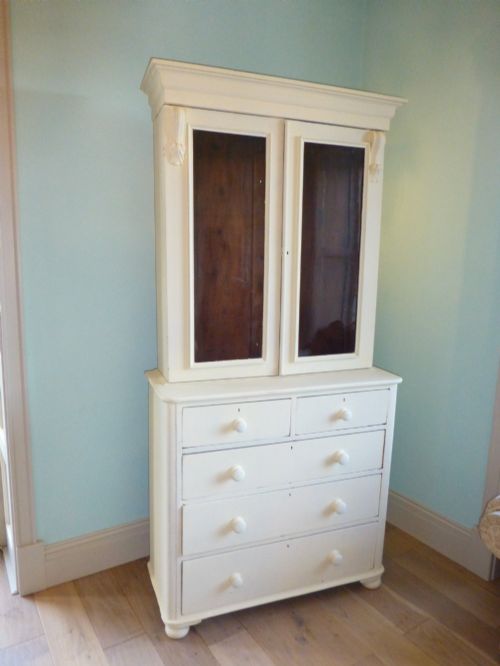
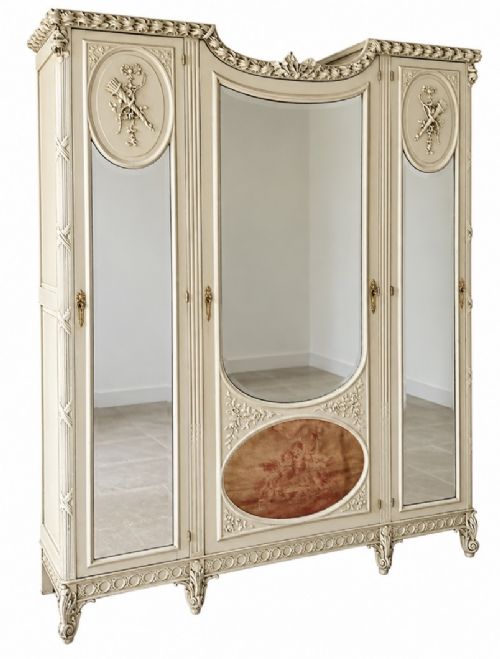
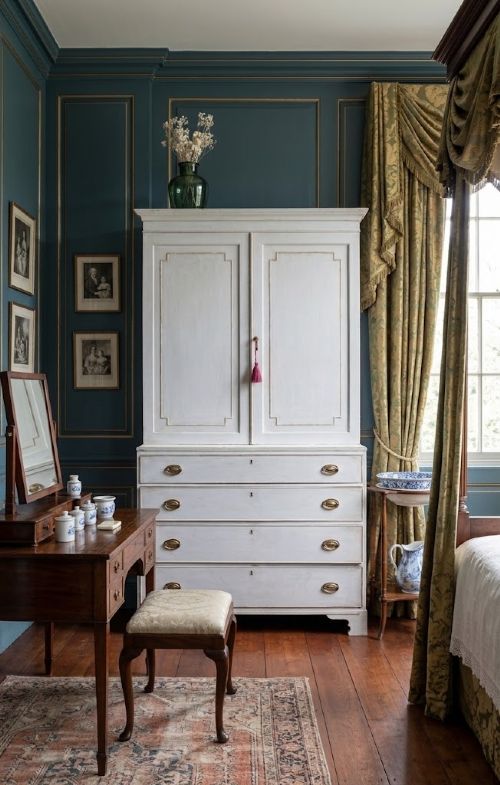
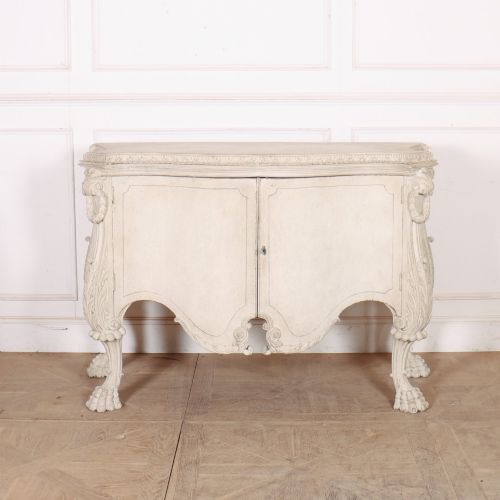
The versions most commonly met on this page date from the eighteenth and nineteenth centuries, often showing layers of old white or pale paint over solid timber. Buyers encounter structural variations ranging from simple two-door pine cupboards to grander glazed bookcases and architectural hall wardrobes.
Construction and materials
Carpenters built these presses primarily using solid pine and occasional oak framing, joining panels with traditional pegged mortise and tenon joints to withstand heavy domestic use. Iron and brass hardware, including hinges, latches, and escutcheons, secured the heavy doors and drawers.
Makers applied multiple coats of lead-based or oil paints over bare timber, which weathered and chipped naturally over decades of cleaning and wear. Glazed variants incorporated hand-blown glass panes secured with timber glazing bars within the upper cabinet doors.
White Painted Linen Press Retail Price Guide 2026
Typical asking prices for white painted linen press among the pieces listed under this phrase on Sellingantiques today, from the lower quarter to the upper quarter. They describe what is for sale here now, not the wider market.
Listings feature pine and painted timber pieces from the Georgian and Victorian eras, alongside Scandinavian and French country styles.
Judging quality and craftsmanship
Quality rests in the architectural proportions and the integrity of the original timber frame, distinguishing well-balanced country pieces from clumsy proportions. Superior examples retain their original backboards, internal linen slides, and structural cornices without excessive replacement timber.
The character of the painted surface dictates visual appeal, separating honest historic patina from later, heavy-handed modern re-painting. Fine pieces show organic craquelure and softening of the white pigment where generations of hands have touched the stiles and rails.
The White Painted Linen Press Glossary
- Linen press
- A tall piece of furniture traditionally used for storing folded linen, featuring upper cupboard doors and lower drawers or deeper shelving.
- Housekeeper's cupboard
- A large utilitarian storage piece originating in large country houses, designed to hold household linens, stores, and provisions.
- Gustavian
- A Swedish neoclassical style characterised by lighter, restrained ornamentation, pale painted finishes, and simplified classical motifs.
- Buffet de corps
- A substantial French dining room or kitchen cabinet featuring a stepped upper section above a lower storage base.
- Harlequin
- A term describing furniture assembled or decorated with mixed stylistic elements or mismatched periods assembled together.
- Scullery cupboard
- A robust, utilitarian storage cabinet built for heavy domestic duties in the scullery or pantry of a country house.
White Painted Linen Press: Frequently Asked Questions
What is a white painted linen press?
A white painted linen press is a tall storage cabinet designed for textiles, featuring cupboards and sometimes drawers.
Most surviving examples date from the eighteenth and nineteenth centuries and originate from various European country workshops.
How were these cupboards used historically?
Households used them to store freshly laundered sheets, tablecloths, and garments away from dust and dampness.
In larger country houses, they served domestic staff for organising household provisions and everyday linens.
How do I care for antique painted pine?
Keep the wood away from direct heat sources and sudden humidity changes to prevent timber movement and paint flaking.
Dust gently with a dry, soft cloth and avoid modern chemical cleaners that might soften historic paint layers.
How do I distinguish eighteenth and nineteenth-century pieces?
Eighteenth-century pieces typically display hand-planed timbers, pegged frame construction, and deeper mouldings characteristic of regional joinery.
Nineteenth-century examples often incorporate machine-sawn elements, simpler planking, and standardised iron hardware.