



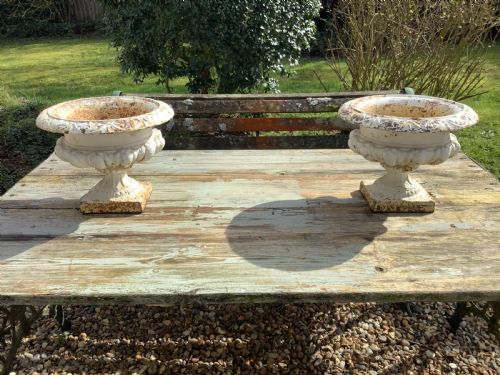


White Painted Iron Urn
White painted iron urn pieces are heavy garden vessels shaped by classical lines, offering enduring focal points for terraces.
White Painted Iron Urn
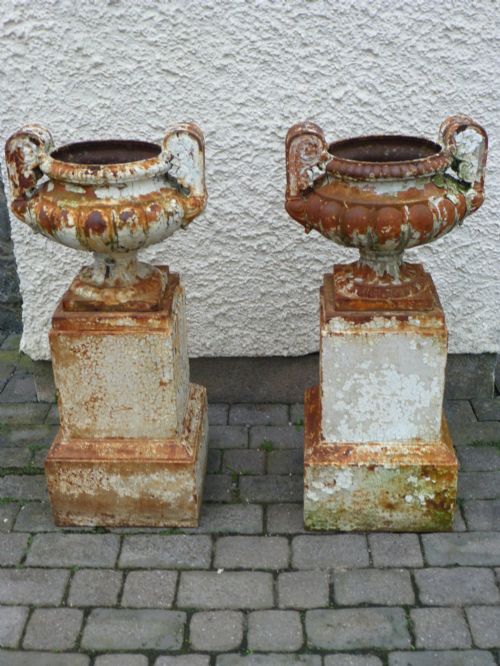
A buyer seeking a white painted iron urn is looking at heavy metal garden vessels built to weather the elements while holding formal plantings. Most examples on this page date from the nineteenth century and Victorian periods, often taking the form of Campagna or gadrooned garden planters set upon matching pedestals.
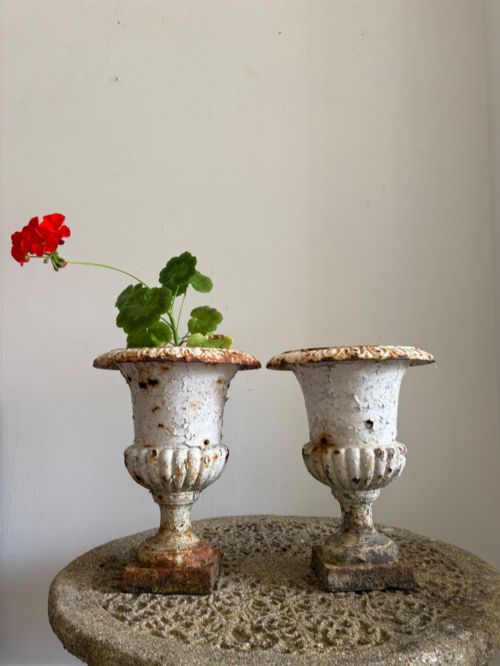
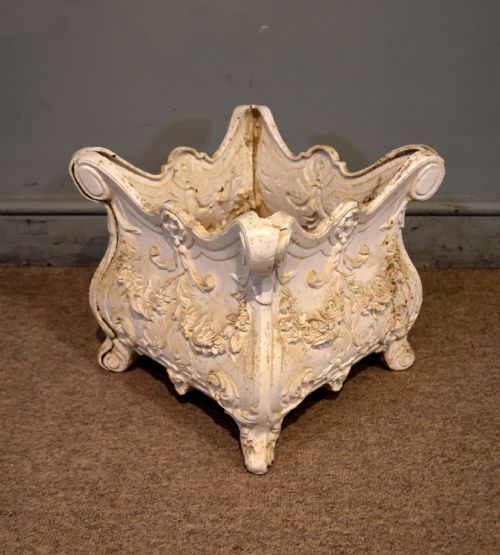
The selection ranges from sturdy garden urns on plinths to compact table pieces, alongside related garden planters and classical vases. These items draw on Neoclassical, Regency, and French styles to create strong architectural silhouettes for terraces and lawns.
How they were made
Foundries shaped these items using cast iron, pouring molten metal into sand moulds to achieve crisp classical details such as acanthus leaves and gadrooning. This robust metal was then finished with protective coats of paint, sometimes incorporating elements like gold leaf to highlight the relief work.
Many surviving examples carry layers of historic paint that have weathered over decades into a distressed surface texture. The weight of the cast iron provides the stability required for outdoor garden use without needing ground fixings.
White Painted Iron Urn Retail Price Guide 2026
Typical asking prices for white painted iron urn among the pieces listed under this phrase on Sellingantiques today, from the lower quarter to the upper quarter. They describe what is for sale here now, not the wider market.
Listings feature nineteen-century and Victorian pieces in cast iron, alongside rarer porcelain vases decorated in the Japanese Imari palette.
What varies in quality
The sharpness of the cast iron moulding separates ordinary production from finer foundry work, where details like leaf tips and fluting remain crisp. Finer pieces often come paired as original sets complete with their matching plinths or pedestals, rather than being matched together later.
The character of the surface finish plays a major part in the appeal, with intact early paint layers holding more visual depth than modern resprays. Proportion and the elegance of the classical silhouette distinguish standard utility vessels from sculptural foundry showpieces.
Falkirk Carron foundry·Coalbrookdale
The White Painted Iron Urn Glossary
- Campagna urn
- A bell-shaped garden vessel with a flared rim and footed base, widely cast in iron during the nineteenth century. This form originates from ancient marble discoveries in Italy.
- Gadrooned
- Decorated with a series of convex curves or flutes moulded in a parallel row around the body of the vessel. This classical motif adds texture and catches the light on garden urns.
- Plinth
- A heavy base block or pedestal that elevates an urn to improve its proportion and presence in a garden scheme. Many nineteenth-century examples were designed as a single unit with their stand.
- Neoclassical
- A style drawing on the architecture and ornamentation of classical antiquity, featuring formal symmetry and motifs like acanthus leaves. It dominated much nineteenth-century ironwork production.
White Painted Iron Urn: Frequently Asked Questions
Can white painted iron urn pieces stay outside all winter?
Cast iron is remarkably durable and withstands cold temperatures well, making these urns suitable for year-round garden display. Ensure drainage holes remain clear so that trapped water does not freeze and crack the metal.
Positioning the urn on bricks or feet prevents moisture from drawing up from damp ground during the colder months.
How do I tell a Victorian iron urn from a later piece?
Nineteenth-century pieces typically display heavier casting with hand-finished details and older paint layers that have chalked down naturally over time. Examining the seams and the texture of the iron underside reveals the older sand-casting methods.
Later reproductions often feature smoother, lighter metal surfaces and lack the depth of weathering found on genuine period examples.
What is the best way to plant a heavy garden urn?
Fill the lower section with broken crocks or lightweight material to improve drainage and reduce the overall weight before adding soil. This prevents the vessel from becoming too heavy to reposition once planted.
Choosing trailing plants helps to soften the rigid classical lines of the ironwork as the growing season progresses.
How should I care for distressed old paint on iron?
Preserving original distressed paint requires gentle cleaning with warm water and a soft brush rather than harsh chemical strippers or pressure washers. Allowing the natural patina to remain safeguards the historic character of the surface.
If bare iron begins to show through, spot-priming those small areas stops active rust without erasing the aged appearance of the whole piece.