


White Overmantle Mirror
A white overmantle mirror brings height, light and architectural weight to a chimney breast, anchoring a room with period proportion.
White Overmantle Mirror
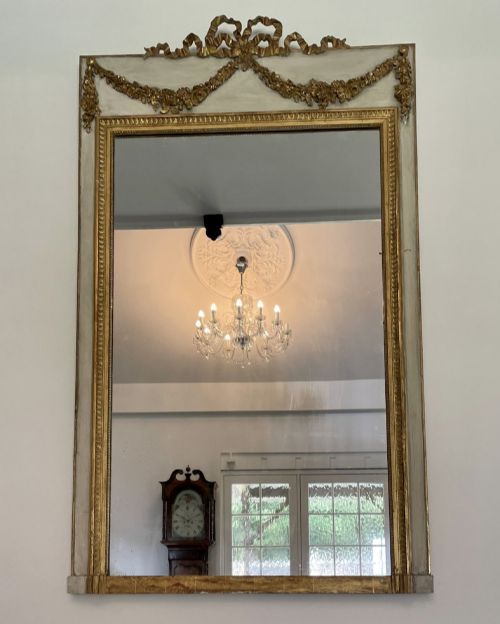
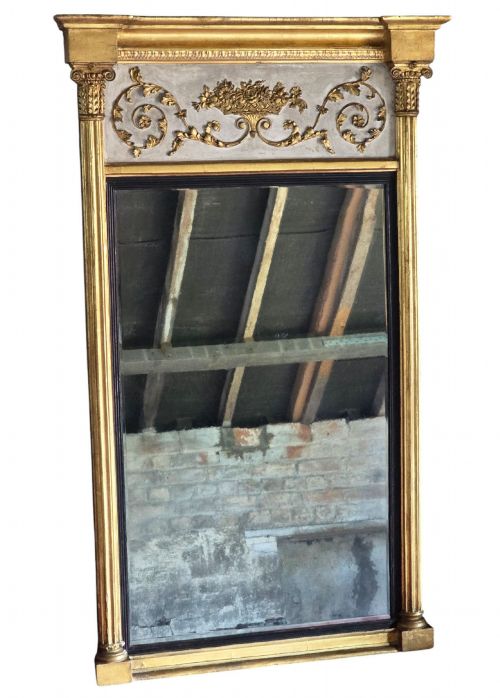
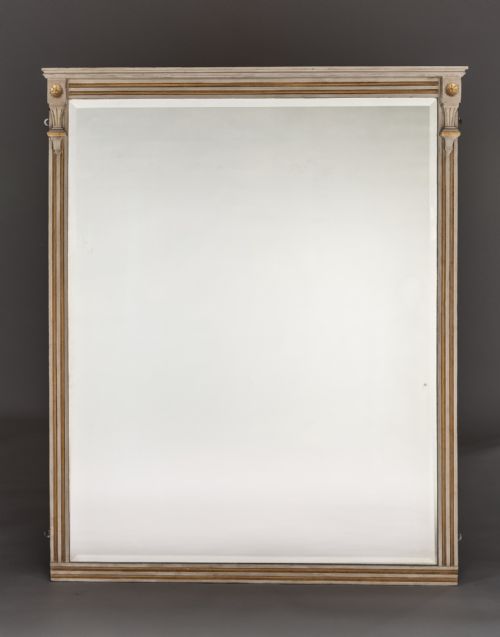
A white overmantle mirror is a large wall-hanging looking glass designed specifically to sit above a fireplace mantelpiece. The pieces gathered under this phrase are predominantly substantial Victorian works alongside examples spanning the Regency period through to the early twentieth century.
Most entries are large horizontal or arched formats originating from English and French workshops, finished in white paint with gilt highlights. They reflect the nineteenth-century preference for drawing light deep into reception rooms while harmonising with decorative plasterwork.
Buyers will encounter forms ranging from simple rectangular frames to elaborate shaped tops with carved wooden details. The selection leans heavily towards nineteenth-century craftsmanship, capturing period styles from French Chateau to Victorian Classical Revival.
How They Were Made
Makers constructed the structural frames from solid wood, applying layers of gesso to build up smooth surfaces and crisp decorative motifs before painting. Gesso allowed artisans to carve intricate mouldings, columns and leaf details that accepted gold leaf and paint finishes.
The painted and parcel-gilt surfaces received multiple coats, often showing distressing or aged patination across the wood and gesso beneath. Mirror glass was set into these heavy frames, frequently held by traditional backing boards to support the wide proportions.
Listings span periods from the Regency era through the nineteenth century and into the early twentieth century, using wood, gesso, paint and gold leaf.
What Varies in Quality
Quality rests in the depth and crispness of the carved wood and gesso ornament applied to the frame. Superior examples display sharply defined mouldings and harmonious proportions that integrate the painted surface with underlying parcel-gilding.
The treatment of the painted finish dictates much of the character, separating standard utilitarian pieces from those with refined tonal layering. Original mirror glass and intact structural joinery further distinguish the finer survivals from later adaptations.
The White Overmantle Mirror Glossary
- Overmantel mirror
- A large looking glass built to hang specifically on the wall directly above a fireplace mantelpiece. These frames were proportioned to match the width of the hearth below.
- Gesso
- A dense plaster mixture of chalk and binder applied to wood frames to create a smooth base for gilding and painting. Artisans carved intricate decorative details directly into this hardened material.
- Parcel-gilt
- A decorative treatment where portions of an object are selectively highlighted with gold leaf while the main body remains painted. This technique accentuates raised carvings against a contrasting ground.
- Triptych
- A mirror glass divided vertically into three distinct panels within a single frame. This layout helps distribute reflections widely across a room.
- Pier mirror
- A tall looking glass designed to hang on the narrow wall space between two windows. They share similar decorative vocabularies with mantel glasses.
White Overmantle Mirror: Frequently Asked Questions
Where should an overmantle mirror hang?
These large glasses belong directly above a fireplace mantelpiece, resting low enough to visually connect with the hearth below. Their broad proportions balance the architectural weight of the chimney breast.
Positioning them opposite a window captures maximum daylight, bouncing illumination back into the interior space.
How do I date a painted overmantle mirror?
Dating relies on examining the construction methods of the wooden frame, the composition of the gesso, and the style of the carved ornament. Victorian pieces often feature classical revival motifs, arched tops and heavy timber backboards.
Later Regency revival or Edwardian examples show subtle shifts in proportion and paint layering that distinguish them from mid-nineteenth-century originals.
Are these mirrors heavy to hang?
Solid wood frames combined with thick glass and dense gesso create substantial weight that requires secure wall fixings. They must be anchored directly into masonry or robust structural studs behind plaster.
Professional hanging hardware distributed across multiple points ensures the frame remains stable against the wall.
What is parcel-gilt finishing?
Parcel-gilt involves applying thin sheets of gold leaf to specific raised details of a carved frame while leaving the rest painted white. This method draws the eye to decorative mouldings and acanthus leaves.
The contrast between the bright metallic highlights and the painted wood creates depth across the composition.