


White Milk Glass Shade
White milk glass shade fixtures bring a soft, diffused glow to a room, drawing buyers who want period character and gentle task lighting.
White Milk Glass Shade
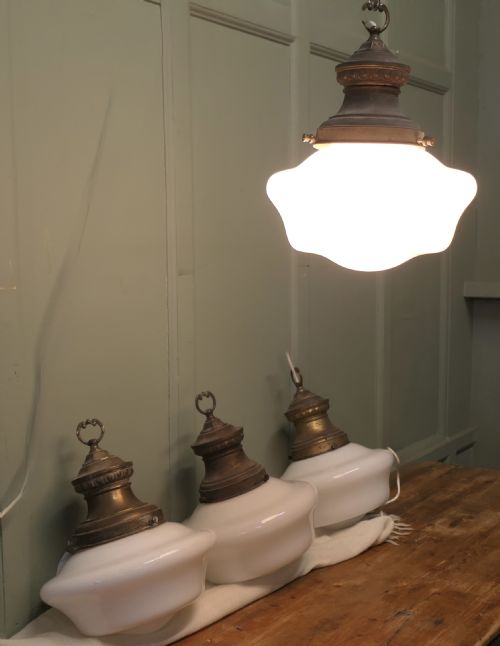
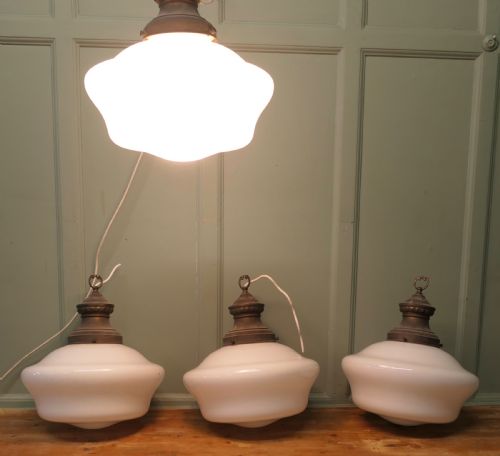
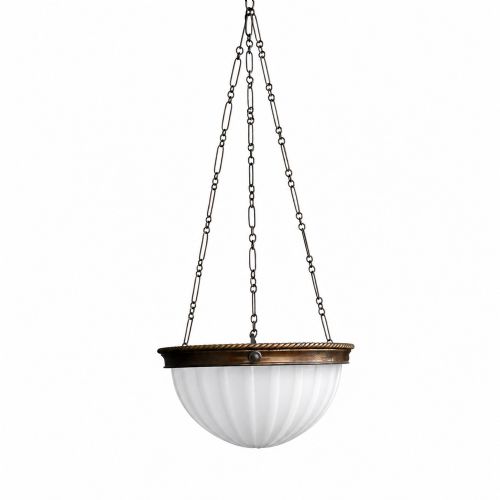
A white milk glass shade serves as a functional diffuser for pendant lights, ceiling fixtures, and oil lamps spanning the Victorian era through the 1930s. These pieces emerge in various profiles, including conical shapes, reeded designs, and pear-shaped pendants suited to domestic and industrial spaces.
Most examples found here date from the late nineteenth century up to the Art Deco period, incorporating materials like opaline glass, opal glass, and moonstone glass alongside brass or ceramic mounts. Buyers encounter everything from diminutive English light shades to large chapel pendants and oil lamp globes.
Materials and construction
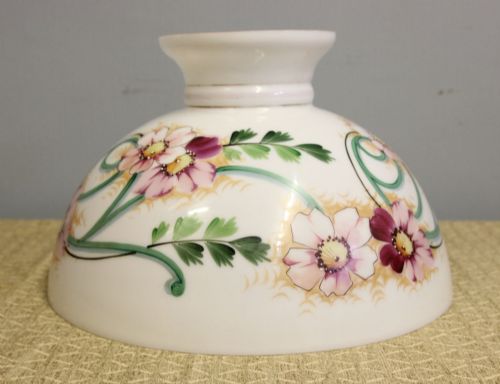
Glassmakers produced these shades using opaque white formulations such as opaline and moonstone glass, sometimes adding hand-painted enamel decoration or delicate frilled edges. The manufacturing process often involved blowing or pressing the molten glass into moulds to achieve specific geometric or curved profiles.
Metal components in brass and chrome frequently accompany the glass shades, serving as galleries, rings, or mounting hardware for pendant and table lamp assemblies. Ceramic bases and black glass foundations also appear in oil lamp configurations from the Victorian period.
One historical archive entry notes a pair of French lampshades boasting frilly edges, proving that even utilitarian lighting once wore a frill.
Assessing quality and craftsmanship
Quality reveals itself in the thickness, weight, and light diffusion of the glass body, where finer examples display an even opacity without unwanted dark streaks. The depth of hand-painted enamel details and the precision of moulded reeded patterns further distinguish superior pieces from standard production items.
The integrity of the associated metalwork, whether solid brass fittings or matching brass rings, influences the overall standard of the fixture. Original pairings of glass shades with their period brass or ceramic oil lamp bases command greater appreciation from collectors.
The White Milk Glass Shade Glossary
- Opaline glass
- A type of semi-translucent white glass popular in nineteenth and early twentieth century lighting. It diffuses light softly without causing harsh glare.
- Moonstone glass
- A milky, opalescent glass variety with a characteristic shimmering depth resembling the gemstone. It was frequently utilised for early twentieth century pendants.
- Gallery
- The metal ring or collar at the top of a shade that secures it to the lamp holder or burner. It often incorporates thumb screws for tightening.
- Pendant light
- A hanging light fixture suspended from the ceiling by a cord, chain, or metal rod. These often feature large conical or pear-shaped glass shades.
- Oil lamp
- A lighting device that burns paraffin or oil via a wick, usually comprising a glass shade or globe mounted above a brass or ceramic reservoir.
White Milk Glass Shade: Frequently Asked Questions
How do I clean an old glass shade?
Wash the glass gently in warm, soapy water using a soft cloth to avoid scratching the surface. Dry thoroughly before reattaching it to any electrical or oil fitting.
Avoid submerging metal mounts or painted sections where moisture might damage enamel work or aged brass patination.
Are these shades compatible with modern wiring?
Many pendant shades fit standard modern lamp holders, though older galleries might require specific adapter rings. A qualified electrician can check the fitter size and ensure safety.
Original oil lamps and conversion pieces need careful assessment if you intend to electrify them for daily domestic use.
How can I tell Victorian shades from later pieces?
Victorian shades frequently accompany oil lamps and often feature hand-painted enamel details or frilled, ruffled edges shaped by hand. They typically appear alongside heavy brass or ceramic components.
Later Edwardian and 1930s examples lean towards industrial or geometric forms like reeded cones and chapel pendants produced in larger numbers.
What is the difference between opaline and milk glass?
Opaline is a translucent or semi-translucent glass that lets some light pass through while scattering it softly. Milk glass is generally denser and fully opaque.
Both terms describe white decorative glass used extensively across Victorian and early twentieth century lighting fixtures.