



White Marble Top Vanity
A white marble top vanity brings durable elegance to a bedroom, combining cool stone surfaces with traditional wood framing.
White Marble Top Vanity
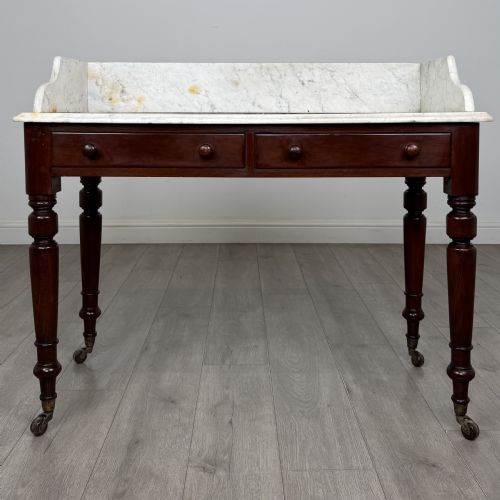
A white marble top vanity most commonly appears as a washstand or side table across periods such as Victorian, Edwardian, and the early twentieth century. These pieces serve practical functions with stone surfaces designed to resist water and daily wear.
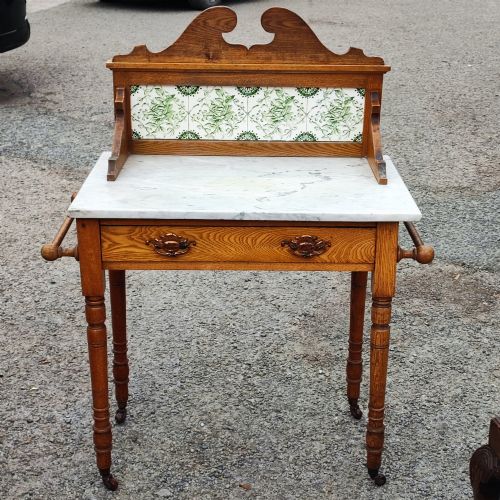
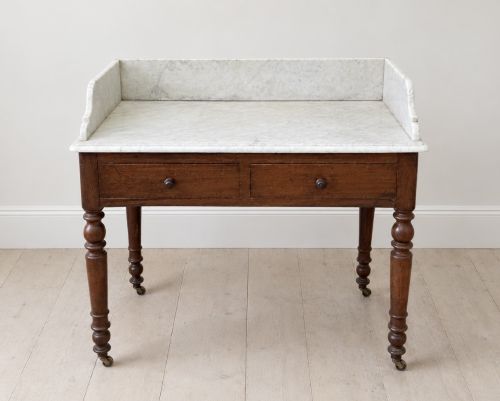
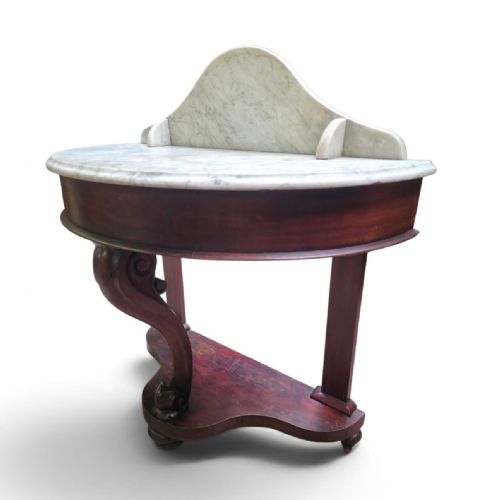
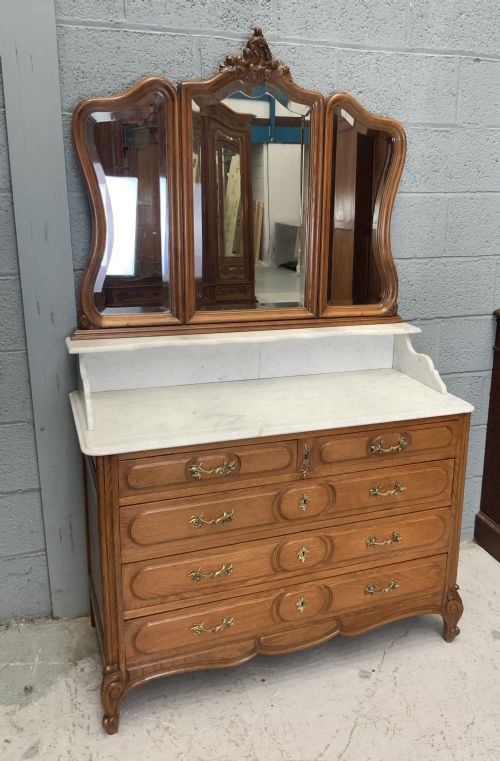
The version most frequently met on this page is the washstand, built in timber and topped with white marble, often accompanied by drawers or lower shelves. Makers shaped these items in various regional tastes, including French provincial, aesthetic movement, and arts and crafts styles.
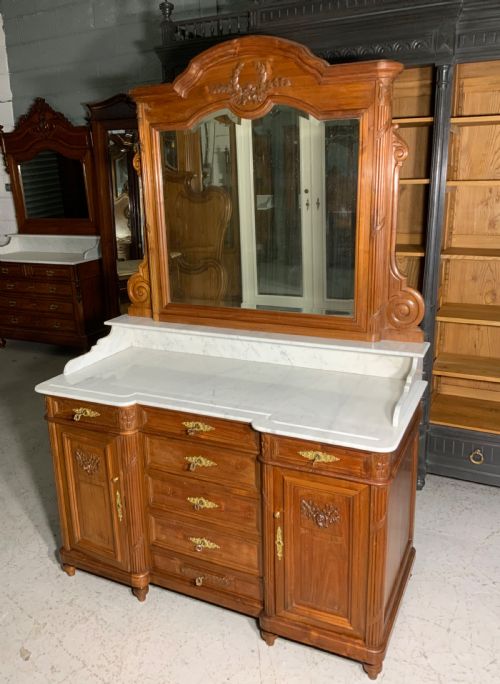
Wood choices span mahogany, oak, ash, satinbirch, and painted surfaces, sometimes paired with brass castors or ceramic elements. Side tables and dressing mirrors also appear within the selection, offering similar stone and timber combinations.
Materials and construction
Cabinet makers utilised solid and veneered timbers such as mahogany, oak, and ash to construct the main bodies of these washstands and side tables. These woods provided sturdy frames capable of supporting heavy stone slabs.
Slabs of white marble, including Carrara varieties, were fitted directly to the upper surfaces to create a smooth, waterproof counter. Additional metalwork such as brass castors and glass or ceramic details completed the functional design.
White Marble Top Vanity Retail Price Guide 2026
Typical asking prices for white marble top vanity among the pieces listed under this phrase on Sellingantiques today, from the lower quarter to the upper quarter. They describe what is for sale here now, not the wider market.
Listings feature mahogany, oak, ash, and satinbirch timbers paired with white marble across Victorian, Edwardian, and early twentieth-century periods.
Judging the quality
The refinement of carved detailing on the timber frame distinguishes standard examples from more elaborate pieces, particularly in French provincial and rococo revival items. Superior construction involves closely fitted drawers, stable joinery, and carefully selected wood grain.
The thickness and grain consistency of the white marble slab also influence the character of the piece. Matching the quality of the timber base with an intact, well-finished stone top determines the overall standard.
The White Marble Top Vanity Glossary
- Washstand
- A piece of bedroom furniture designed for personal washing, typically fitted with a stone top to hold basins and jugs. These form the majority of white marble top vanity pieces.
- Carrara Marble
- A type of white or blue-grey marble quarried in Italy, frequently used for the tops of nineteenth-century washstands.
- Aesthetic Movement
- A late nineteenth-century design style focusing on visual beauty rather than narrative or moral themes, represented here in washstand furniture.
- Castor
- A small wheel mounted on a swivel attached to the bottom of furniture legs, allowing easier movement across the floor.
White Marble Top Vanity: Frequently Asked Questions
What is a white marble top vanity used for?
These pieces functioned primarily as washstands in bedrooms before modern plumbing, holding basins, ewers, and grooming items on their protective stone surfaces.
Today, buyers frequently utilise them as decorative side tables or adapted bathroom sink surrounds where the durable stone surface remains practical.
How do I clean the marble top?
White marble requires gentle cleaning with warm water and a soft cloth to avoid scratching the polished stone surface or dulling the natural finish.
Avoid acidic household cleaners or harsh chemicals, which can etch the marble and leave permanent dull patches on the stone.
Are the marble tops attached to the base?
On many period washstands, the heavy marble slab rests loose upon the wooden frame rather than being permanently fixed with adhesives.
This loose construction allowed nineteenth-century makers and owners to lift the stone off separately, making the heavy furniture easier to move.
How do I date a marble top washstand?
Dating relies on observing the timber species, joinery methods, and stylistic details such as arts and crafts simplicity or victorian mahogany turning.
Comparing the hardware, such as brass castors and drawer construction, alongside period markers helps narrow down the decade of manufacture.