




Victorian Tile Splashback Washstand
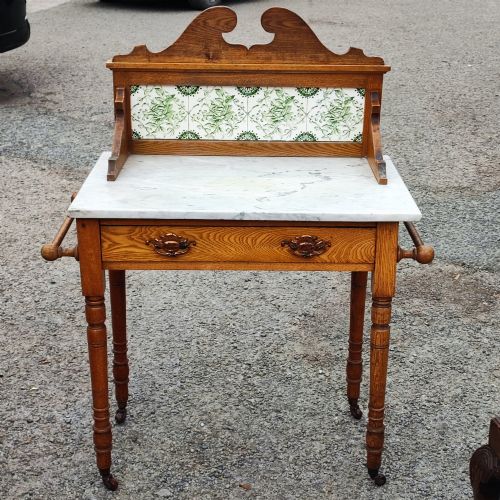
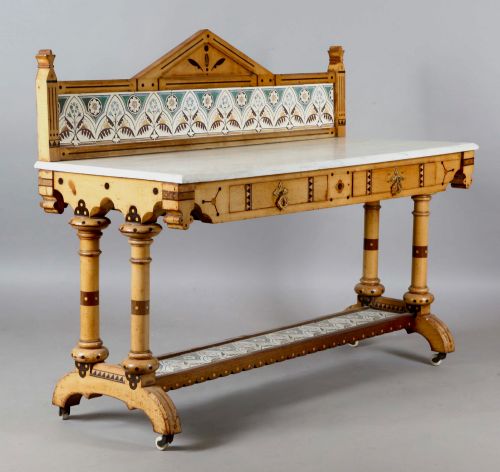
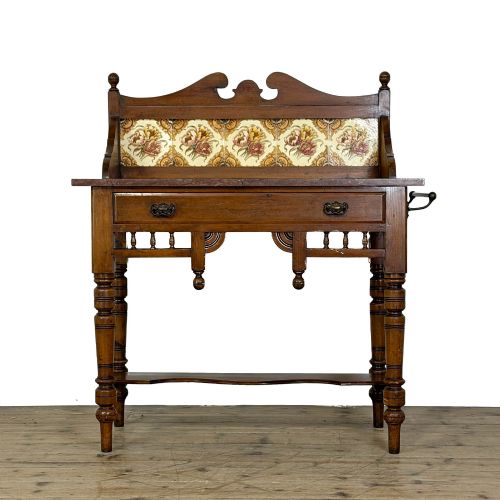
These Victorian tile splashback washstand pieces bring genuine period character to a bathroom with their decorative ceramic panels and stone tops.
Victorian Tile Splashback Washstand
When you search for a Victorian tile splashback washstand, you are looking at nineteenth-century bedroom and bathroom furniture designed to hold washbasins while protecting walls from splashes. The examples seen here span the Victorian and Edwardian eras, with dates reaching from the late nineteenth century into the eighteen nineties.
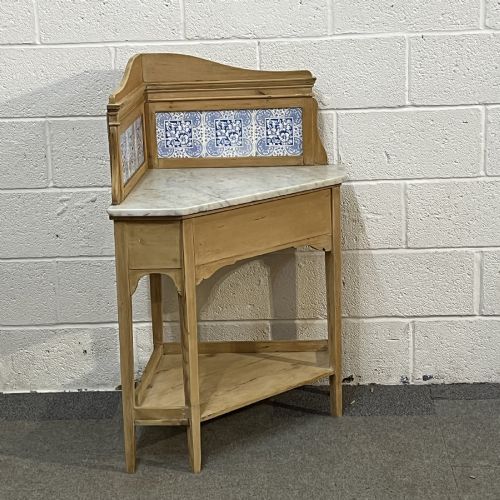
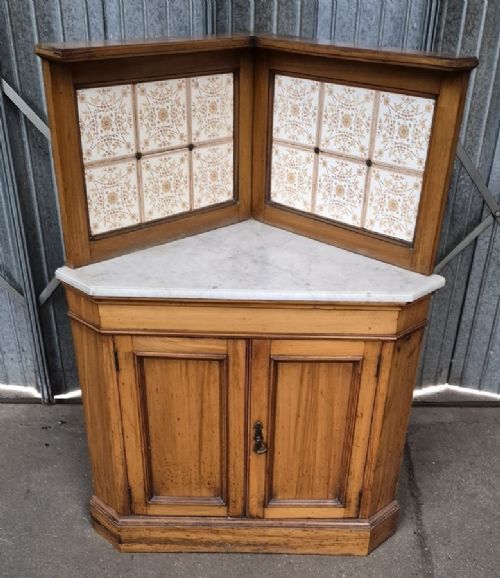
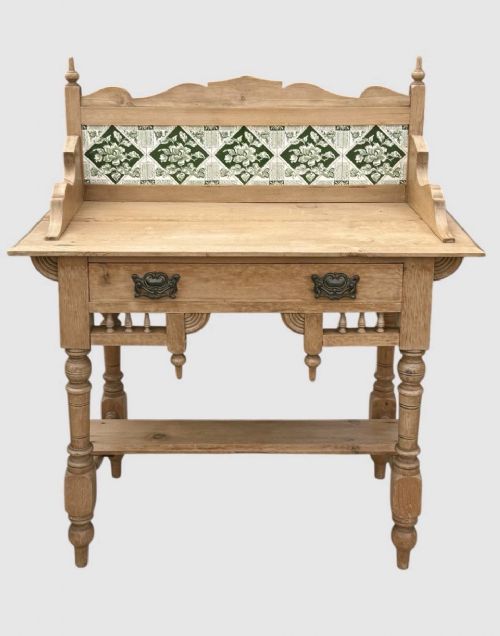
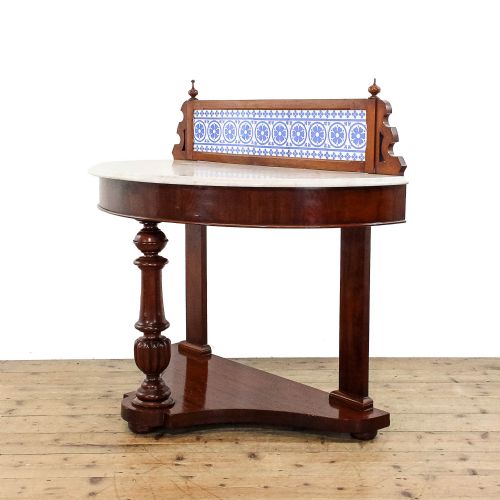
The form typically combines a wooden framework with a stone top and an upright ceramic tile gallery at the rear. You will encounter corner formats alongside standard rectangular units, constructed from timbers such as pine, walnut, ash, and mahogany.
Stylistic variations range from simple rustic pine country pieces to sophisticated examples displaying Arts and Crafts, Reformed Gothic, and Aesthetic Movement design influences. These washstands bridge the gap between practical utility and decorative domestic furniture.
Materials and construction methods
Cabinetmakers built these washstands using a mix of dense hardwoods like walnut and ash alongside more accessible softwoods such as pine. The upper surfaces rely heavily on heavy marble slabs designed to resist water damage during daily ablutions.
The defining feature is the integrated splashback, which incorporates glazed ceramic tiles secured into the wooden or metal frame. These tiles often display transfer-printed or hand-painted botanical and geometric motifs typical of the period.
Victorian Tile Splashback Washstand Retail Price Guide 2026
Typical asking prices for victorian tile splashback washstand among the pieces listed under this phrase on Sellingantiques today, from the lower quarter to the upper quarter. They describe what is for sale here now, not the wider market.
The listings show a strong presence of Arts and Crafts influence alongside traditional Victorian pine and marble combinations.
Judging the quality of these washstands
Quality reveals itself in the selection of timber and the ambition of the design, moving from utilitarian painted pine to figured walnut and ash cabinets. The integration of the marble top and the artistic merit of the ceramic tiles set the finer examples apart.
The presence of designated designer attributions or specific aesthetic movements elevates an ordinary utility piece into a work of cabinet art. Intricate details in the tile gallery framework and brass hardware indicate higher workshop standards.
Charles Bevan·Christopher Dresser·Walker and Sons
The Victorian Tile Splashback Washstand Glossary
- Splashback
- A vertical panel rising behind the washstand top to protect wallpaper and plaster from water marks. It commonly houses decorative ceramic tiles.
- Marble top
- A solid stone slab fitted to the upper surface of the washstand to provide a durable, waterproof counter. This feature ensures longevity despite regular exposure to water.
- Tile gallery
- The elevated wooden frame designed to hold a row or grid of ceramic tiles securely above the basin area. It acts as the primary decorative focal point of the piece.
- Reformed Gothic
- A nineteenth-century design style favouring architectural lines, exposed construction joints, and medieval motifs. Pieces in this style often display robust geometric proportions.
- Aesthetic Movement
- A late nineteenth-century design approach emphasising visual beauty over narrative function. Items from this movement frequently incorporate Japanese-inspired motifs and rich colour palettes.
Victorian Tile Splashback Washstand: Frequently Asked Questions
What is a tile splashback washstand?
A tile splashback washstand is a piece of nineteenth-century bedroom furniture featuring a stone top and a tiled vertical back panel. It was designed to hold a basin and jug before plumbed bathrooms became standard in homes.
Today, these pieces serve as characterful vanity units or decorative storage items in modern bathrooms and hallways.
How do I care for the marble top?
Marble requires gentle cleaning with warm water and mild, non-acidic soap to preserve the polished surface. Avoid harsh chemical cleaners and wipe up spills promptly to prevent staining.
Applying a suitable stone sealer periodically helps protect the porous surface from moisture and everyday wear.
Are the tiles original to the piece?
Original tiles fit snugly within the wooden rebates of the gallery and match the period of the surrounding cabinet structure. Examining the glaze and the mortar behind the tiles often reveals whether they have remained undisturbed since manufacture.
Many pieces retain their factory-fitted decorative panels, which frequently reflect Arts and Crafts or Aesthetic Movement tastes.
Can I use these washstands in a modern bathroom?
Many buyers repurpose these washstands as sink surrounds by mounting modern basins and plumbing through the marble top. The sturdy wooden frames and water-resistant stone surfaces adapt well to contemporary bathroom spaces.
It is advisable to check the internal dimensions and timber condition to ensure the cabinet can accommodate modern pipework safely.