
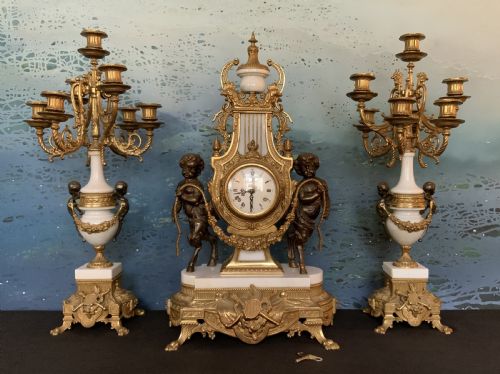


White Marble Cherub Clock
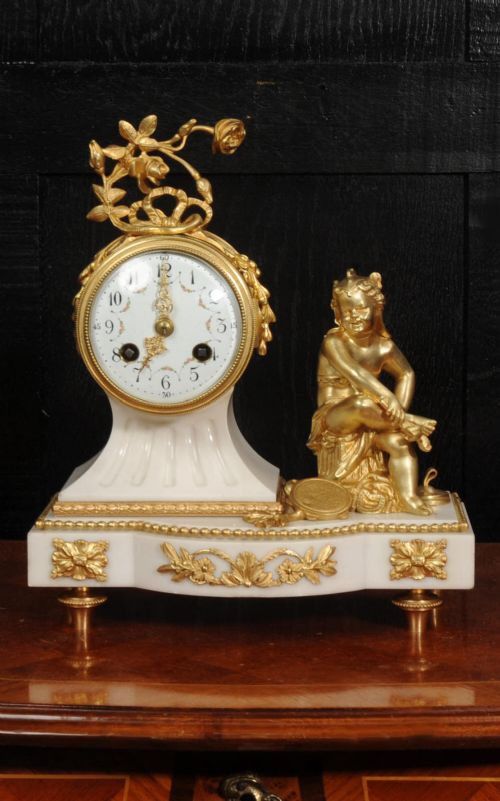
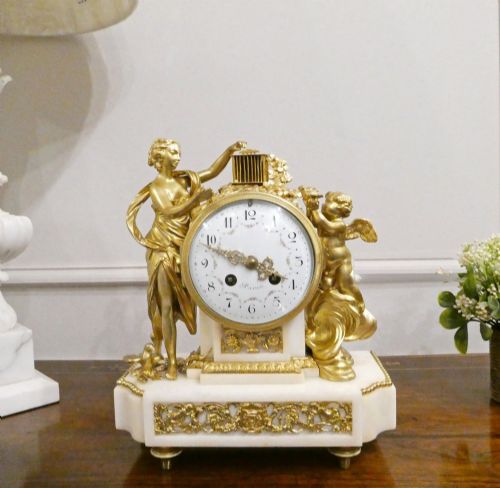
These white marble cherub clocks bring sculpted figures and heavy stone together, offering a striking centrepiece for a mantel.
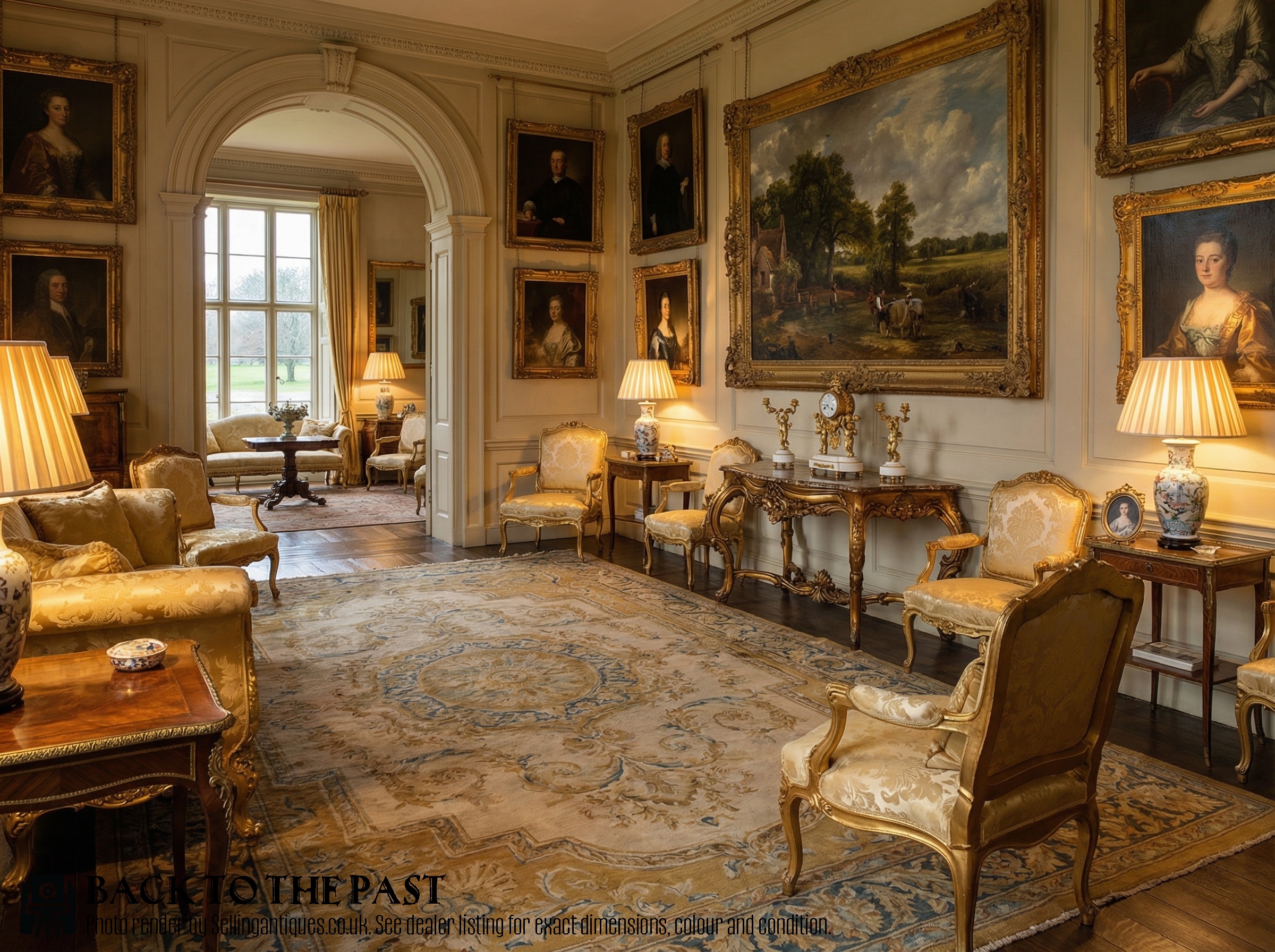
White Marble Cherub Clock
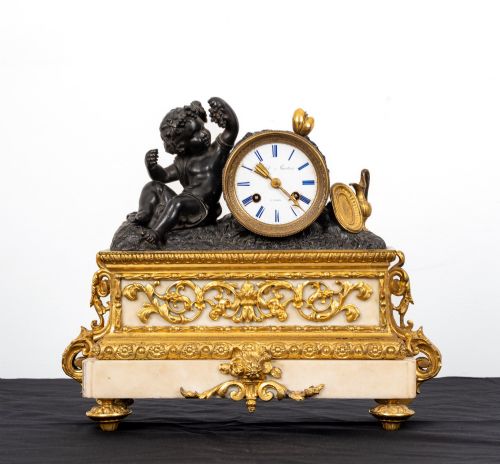
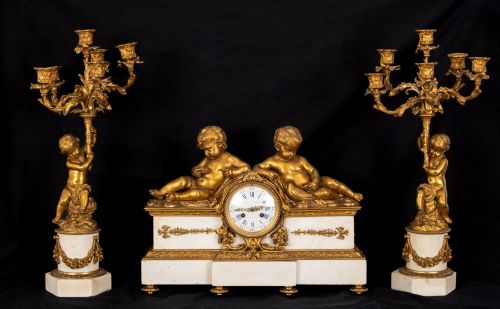
A white marble cherub clock combines carved stone cases with cast metal figures, most frequently appearing in nineteenth-century French designs. These pieces often arrive as part of larger garnitures alongside matching candelabras.
Makers drew heavily on classical motifs, placing winged putti beside columns, dials and pedestals. The forms range from compact portico structures to substantial mantel pieces housing eight-day movements.
French workshops dominated production during the Victorian era, particularly adhering to Louis XVI and Neoclassical styles. Buyers encounter both single clocks and multi-piece sets featuring bronze or ormolu mounts.
Materials and construction
Craftsmen shaped solid white marble into architectural bases and column bodies, pairing the pale stone with cast ormolu and gilt bronze mounts. Enamel dials, often protected by glass bezels, display painted numerals for the hours.
Foundries cast bronze and brass components before applying fire-gilding to create the characteristic ormolu finish. Sculptors carved the marble and figures separately before assembling the mechanical movements inside the stone housings.
Listings for this phrase frequently span the nineteenth century, featuring materials such as white marble, ormolu, gilt bronze and enamel.
Quality differences
The precision of the marble carving and the crispness of the bronze chasing dictate the upper tier of these clocks. Softer details in the cherub figures or clumsy joints in the stone indicate standard production work.
Signed movements by known makers elevate a piece above unmarked workshop examples. The integration of matching garniture pieces and the survival of original fire-gilding also separate superior specimens from simpler alternatives.
Japy Freres·Siffel and Cartier·H Luppens Paris·F Marti·Le Roy and Fils Paris
The White Marble Cherub Clock Glossary
- Ormolu
- A technique of applying finely ground high-carat gold to a bronze object using a mercury amalgamation process. This finish provides a warm, durable golden lustre.
- Garniture
- A set of matching decorative objects designed for display together, typically comprising a clock flanked by two candelabras or urns. These sets coordinate in material and style.
- Portico clock
- A mantel clock featuring a case shaped like a classical portico with supporting columns. The pendulum often hangs visibly between the upright supports.
- Enamel dial
- A clock face made by fusing powdered glass to a metal plate at high temperatures. The resulting surface carries painted numerals that resist fading over time.
White Marble Cherub Clock: Frequently Asked Questions
How do I wind the clock?
Most of these movements require a key inserted into winding holes on the enamel dial. Turning the key tensions the springs to power the eight-day mechanism.
Care must be taken not to over-wind the springs, stopping as soon as resistance is felt to protect the internal brass gears.
Where should I place it?
These heavy stone and metal pieces need a stable, level surface such as a sturdy mantelpiece or console table. Keeping them away from direct sunlight protects the delicate enamel dials.
Allow sufficient clearance around the case if the garniture includes matching side pieces like candelabras.
Are these clocks difficult to maintain?
Routine care involves dusting the marble gently with a dry cloth and avoiding harsh chemical cleaners on the ormolu mounts. Mechanical movements benefit from professional servicing every few years.
Moving the clock requires securing the pendulum to prevent damage to the suspension spring inside.
How do I spot a reproduction?
Original pieces show age-appropriate wear to the gilding and natural variations in the marble grain. Machine-cast modern substitutes often lack the hand-chased detail found on nineteenth-century bronzes.
Examining the backplate of the movement often reveals maker stamps or serial numbers consistent with period French manufacturing.