
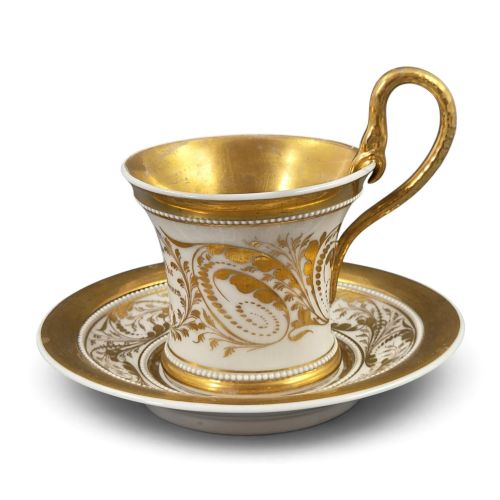
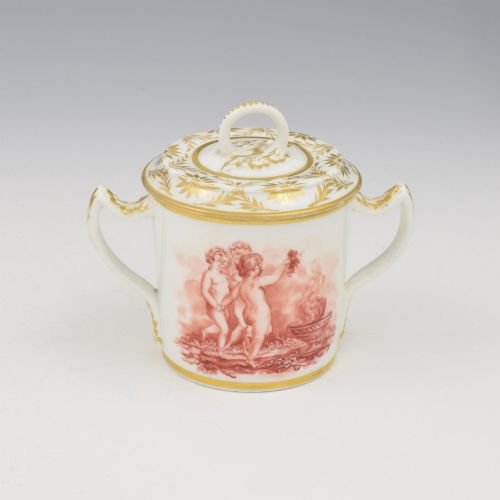


White Gold Porcelain Cups
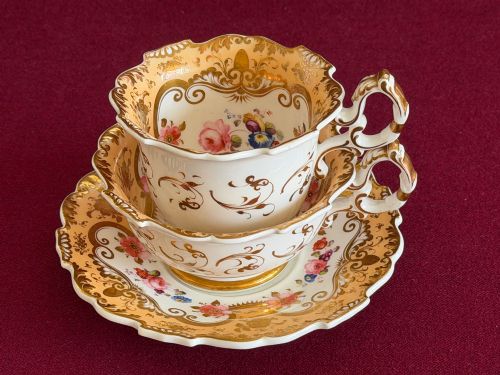
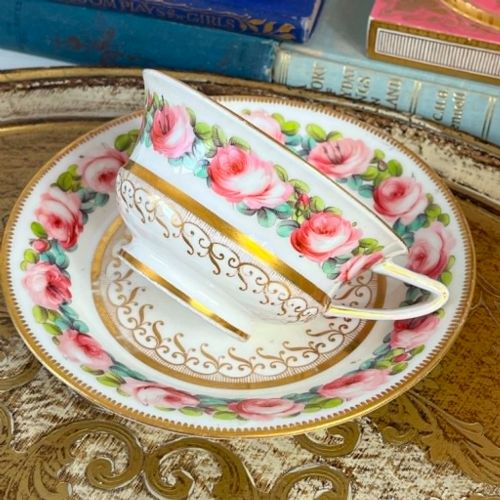
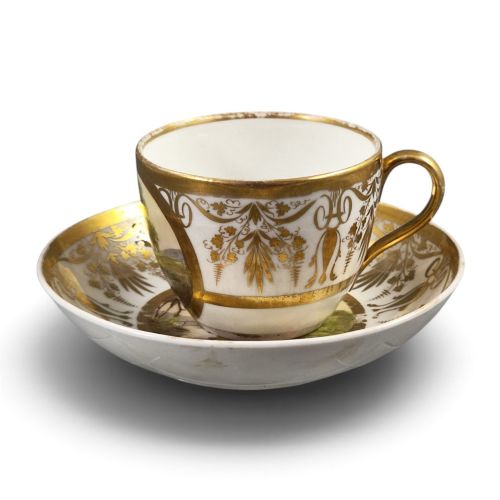
White gold porcelain cups are finely painted drinking vessels embellished with rich metallic gilding that elevate any morning tea service.
White Gold Porcelain Cups
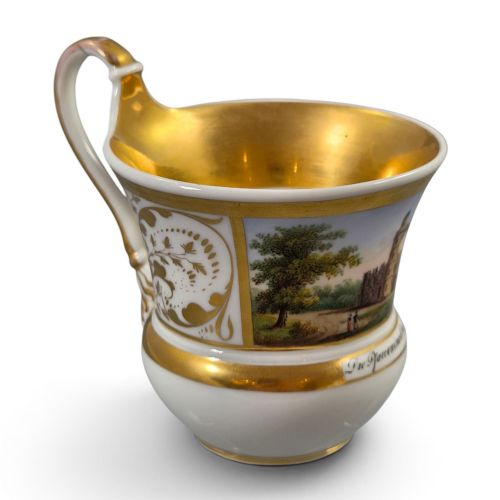
White gold porcelain cups encompass a diverse range of drinking vessels, including cabinet cups, teacups and saucers, coffee cups, porter mugs, and chocolate cups. These pieces originate from various historical eras spanning the eighteenth, nineteenth, and early twentieth centuries.
Continental manufactories and English potteries both contribute to the available styles, ranging from Rococo Revival and Biedermeier to strict nineteenth-century neoclassical designs. Each form reflects the specific social rituals of tea and coffee drinking associated with its period of production.
Materials and construction methods
These vessels are formed primarily from hard-paste porcelain, bone china, or standard ceramic bodies, providing a durable yet translucent white foundation. Artisans then apply detailed handpainted decoration using rich enamel colours alongside intricate scenes and botanical motifs.
Gilding plays a central role in the finishing process, utilising gold leaf and gold gilt to accentuate rims, handles, and painted panels. This metal application requires careful firing to bond the precious metal permanently to the porcelain glaze.
Assessing quality and craftsmanship
The distinction between standard wares and superior pieces rests upon the precision of the handpainted details, such as topographical landscapes, sepia putti, or delicate floral sprays. Finer examples display exceptional artistry in miniature portraits or topographical scenes rather than simple printed transfers.
The application and preservation of the gilding further define the grade of the vessel. Heavy, burnished gold leaf that remains intact without rubbing indicates a higher standard of original manufacture and careful historical handling.
A H & R Daniel·Davenport·KPM Berlin·Bloor Derby·Coalport·Worcester·Hirsch Dresden·Spode Copeland
The White Gold Porcelain Cups Glossary
- Cabinet cup
- A decorative cup intended primarily for display in a cabinet rather than for daily use. These pieces often feature elaborate topographical paintings or historical scenes.
- Biedermeier
- A Central European style dating from the early nineteenth century that emphasises clean lines, domestic comfort, and understated elegance without excessive ornamentation.
- Hard-paste porcelain
- A durable ceramic composition fired at very high temperatures, made from kaolin and petuntse. It results in a hard, vitrified body that resists scratching.
- Chocolate cup
- A specialised vessel, often deeper than a standard teacup and occasionally supplied with a cover. They were designed for drinking rich hot chocolate during the eighteenth and nineteenth centuries.
- Demitasse
- A small cup used specifically for serving strong black coffee or espresso. They frequently appear in pairs or sets alongside matching saucers.
White Gold Porcelain Cups: Frequently Asked Questions
How were these cups originally used?
These vessels served high-status social functions centered around the consumption of tea, coffee, or chocolate in fashionable drawing rooms. Many larger examples, such as cabinet cups, were also created simply to be admired inside glass display furniture.
Delicate tea bowls and teacups were handled with care during formal afternoon gatherings, reflecting the refined manners of the Georgian and Victorian upper classes.
Can I use antique porcelain cups daily?
While these pieces were originally functional tableware, most owners today treat them as decorative antiques rather than everyday utility items. Handwashing is essential to preserve the delicate enamel colours and fragile gold leaf.
Hot liquids can still be consumed from them occasionally, but modern dishwashers and microwaves will quickly ruin the historic gilding and ceramic bodies.
How do I identify a Regency cup?
Regency pieces often display bold neoclassical shapes inspired by ancient Greek and Roman forms, paired with rich cobalt blues and burnished gilding. Look for distinctive handle shapes and classical motifs such as putti or floral garlands.
Makers working during this period between roughly eleven-hundred and eighteen-thirty frequently incorporated refined pedestal bases into their cabinet cups.
What is the difference between bone china and hard-paste porcelain?
Bone china incorporates animal bone ash into the ceramic paste, resulting in a slightly warmer tone and high translucency when held to the light. It was widely favored by English manufactories.
Hard-paste porcelain relies on mineral components fired at intense heat, producing a colder, brighter white surface that was standard across many continental European kilns.