
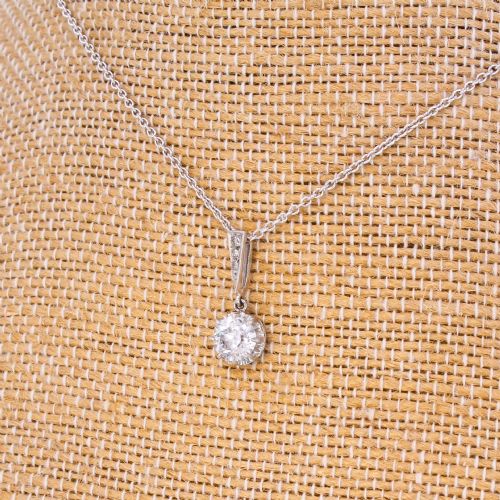
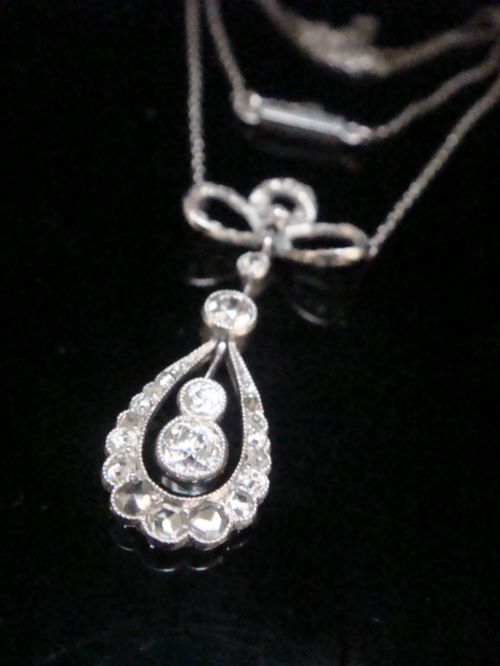


White Gold Diamond Necklace
A white gold diamond necklace combines precious metal and brilliant gemstones to create neck ornaments spanning from Edwardian designs through to mid-century modern pieces.
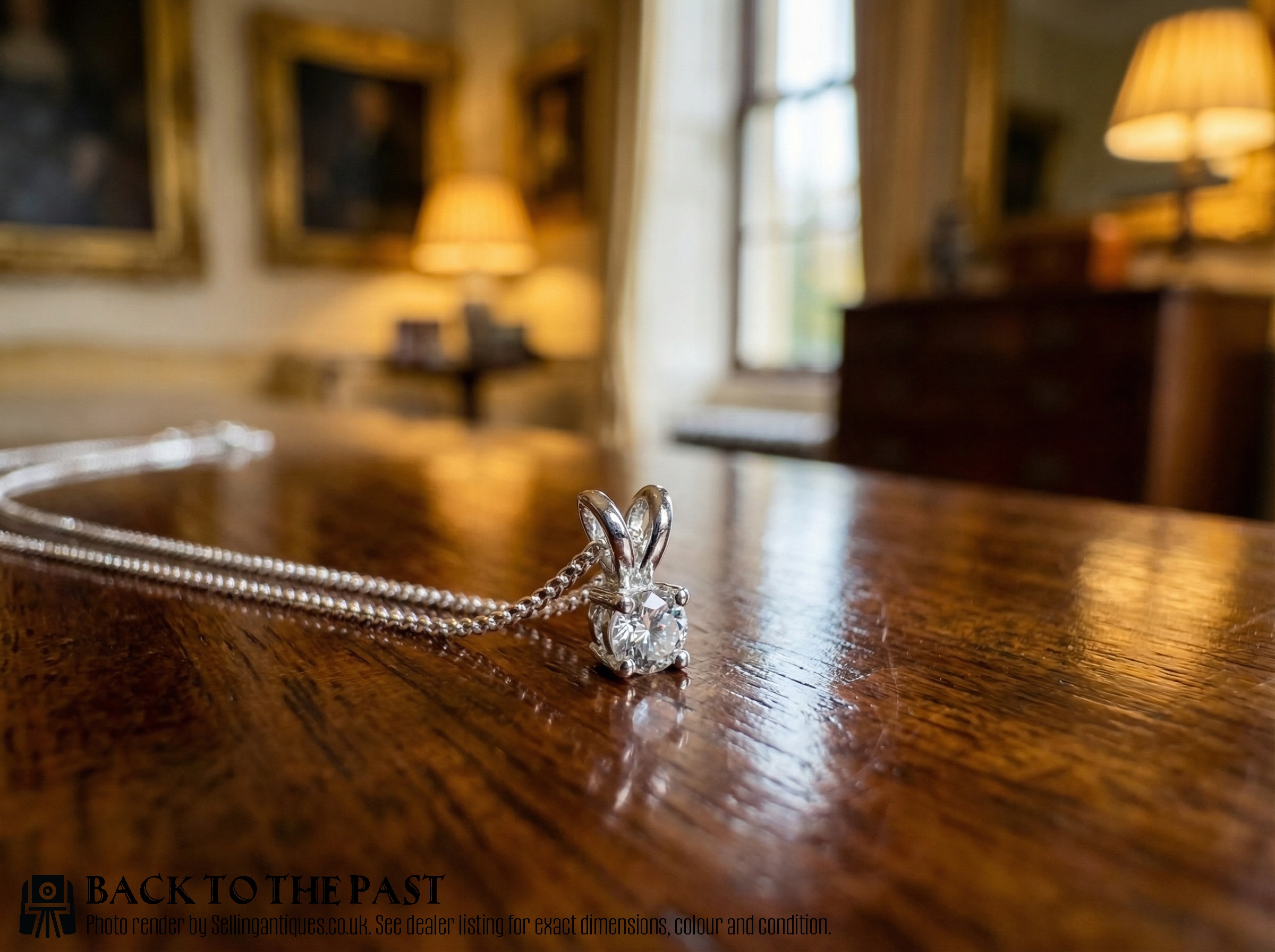
White Gold Diamond Necklace
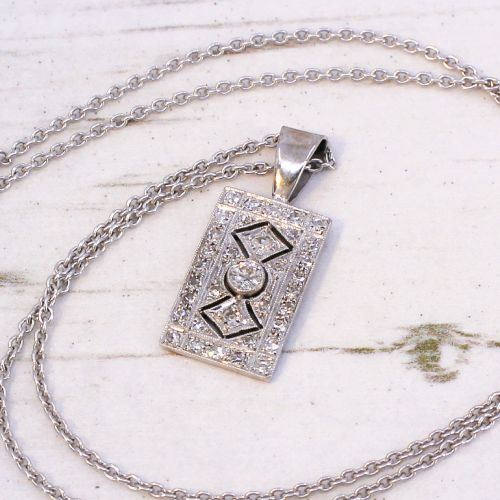
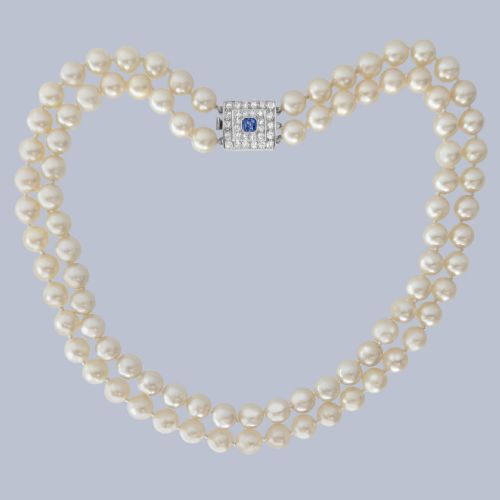
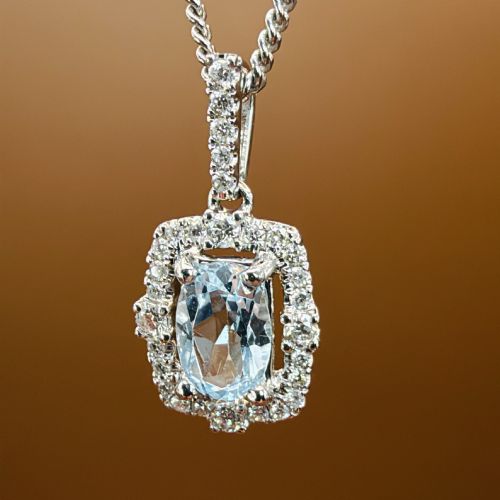
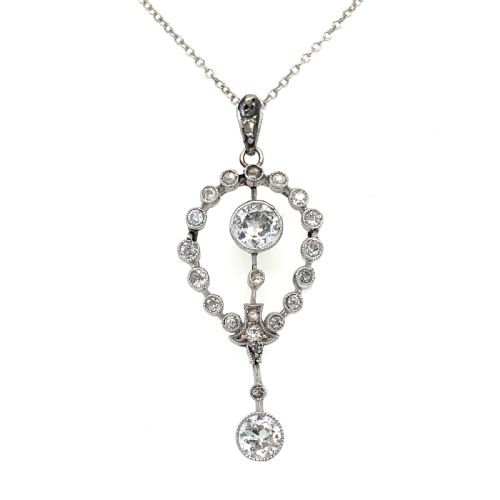
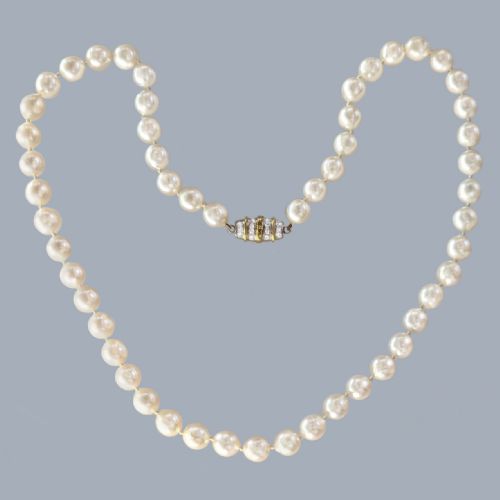
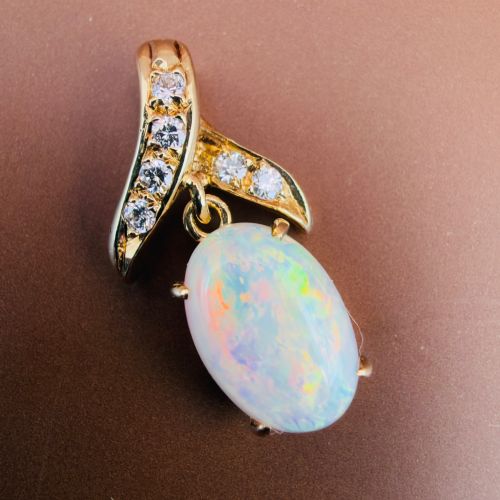
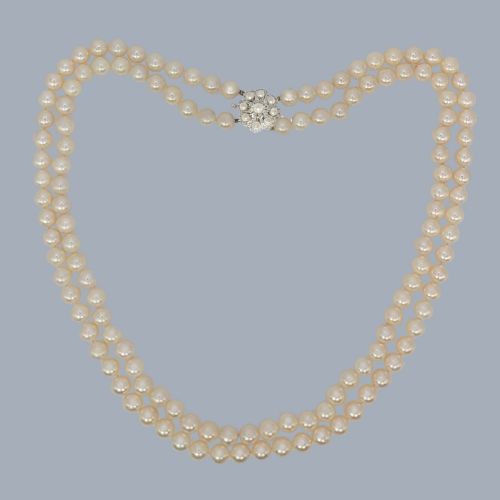
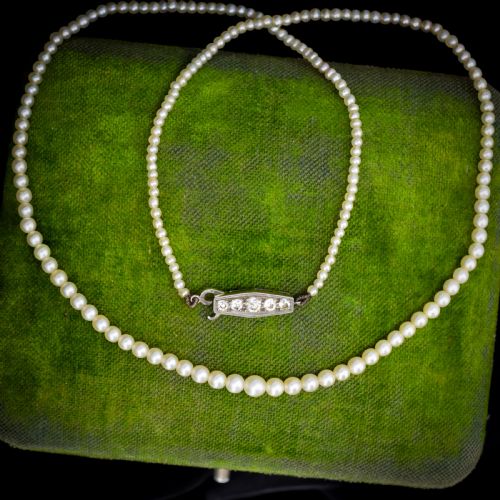
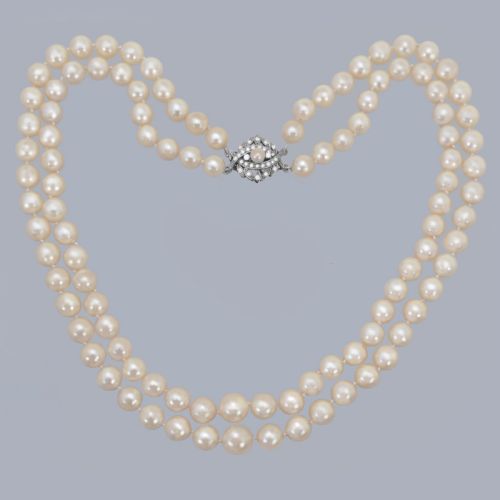
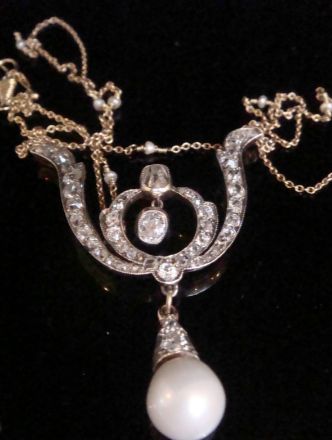
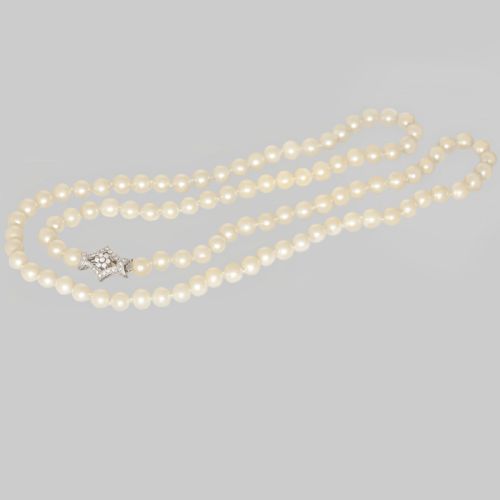
A white gold diamond necklace spans several decades of craftsmanship, appearing as delicate drop pendants, solitaire settings, multi-gemstone clusters, and elaborate pearl strands secured by diamond-set clasps.
The material palette centres on 18ct white gold, 9ct white gold, and platinum paired with diamonds, alongside pearls, sapphires, aquamarines, opals, and other coloured stones.
Pieces from this category originate across the Victorian, Edwardian, Art Deco, and mid-century periods, showing shifts from geometric platinum work to fluid gold designs.
How they were made
Goldsmiths shaped white gold and platinum into bezels, cluster mounts, and articulated links to hold old cut, round cut, and oval cut diamonds securely.
Pearl strands required careful stringing or re-stringing, pairing natural or cultured pearls with white gold clasps featuring pavé or channel set diamonds.
White Gold Diamond Necklace Retail Price Guide 2026
Typical asking prices for white gold diamond necklace among the pieces listed under this phrase on Sellingantiques today, from the lower quarter to the upper quarter. They describe what is for sale here now, not the wider market.
Listings feature items spanning the Victorian, Edwardian, Art Deco, and Mid-Century periods, utilising white gold, platinum, diamonds, and pearls.
What varies in quality
The distinction between standard and superior pieces lies in the precision of the metalwork, the symmetry of the stone cutting, and the integration of the clasp with the main body of the necklace.
Higher grade examples display well-matched pearls, finely balanced cluster proportions, and clean solder joints that reflect disciplined workshop execution.
The White Gold Diamond Necklace Glossary
- Old cut
- A diamond cut from the late 19th or early 20th century featuring a small table, high crown, and large culet. These stones display softer scintillation under candlelight than modern brilliant cuts.
- Clasp
- A mechanical fastening device secured at the back or side of a necklace. In many period pieces, the clasp doubles as a decorative focal point set with diamonds and sapphires.
- Cluster
- An arrangement of gemstones where a central stone is surrounded by a border of smaller stones. This technique maximises visual impact and light return in pendants.
- Solitaire
- A single gemstone mounted independently on a chain or drop. This setting focuses attention entirely on the characteristics of the central diamond.
- Bezel setting
- A method of securing a gemstone by pushing a thin collar of metal around its perimeter. It provides a smooth outline and robust protection for the stone.
White Gold Diamond Necklace: Frequently Asked Questions
How do I date a white gold diamond necklace?
Dating relies on stylistic markers such as geometric platinum motifs from the Art Deco era or organic floral designs from the Edwardian period.
Hallmarks stamped on the metal or clasp provide additional confirmation of the assay office and year of manufacture.
Are pearl necklaces with diamond clasps original?
Many multi-strand pearl necklaces retain their original clasps, though organic silk threads degrade over decades and often require professional re-stringing.
Certification from laboratories helps verify whether the pearls are natural or cultured saltwater specimens.
What is the difference between white gold and platinum?
Platinum is a naturally white, dense metal used extensively in Edwardian and Art Deco mountings for its strength in delicate wirework.
White gold is an alloy of yellow gold mixed with white metals, offering a bright finish favoured in mid-century jewellery production.
How should I care for antique gemstone necklaces?
Store pearl necklaces flat in lined boxes to prevent the silk cord from stretching under tension from the weight of the stones.
Clean diamond and metal sections gently with a soft brush and warm soapy water, avoiding harsh ultrasonic cleaners on pearls and opals.