




White Gold Claw Ring
A white gold claw ring holds a stone securely in prongs above a precious metal band, bringing together period craftsmanship and enduring elegance.
White Gold Claw Ring
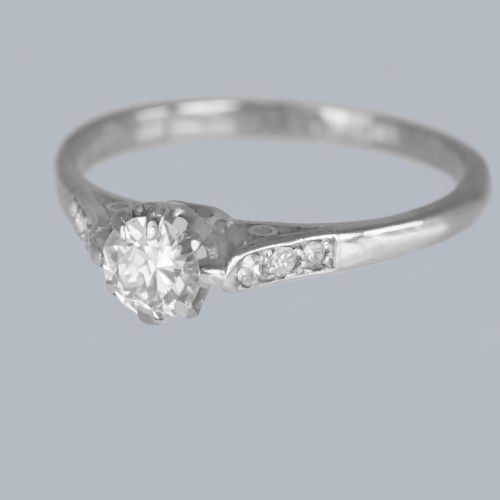
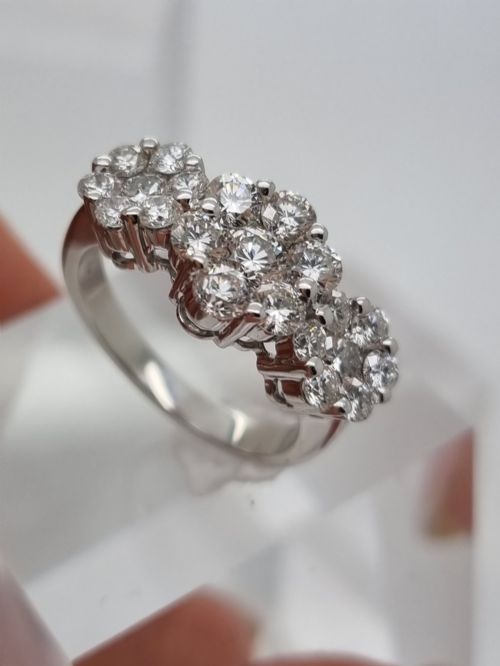
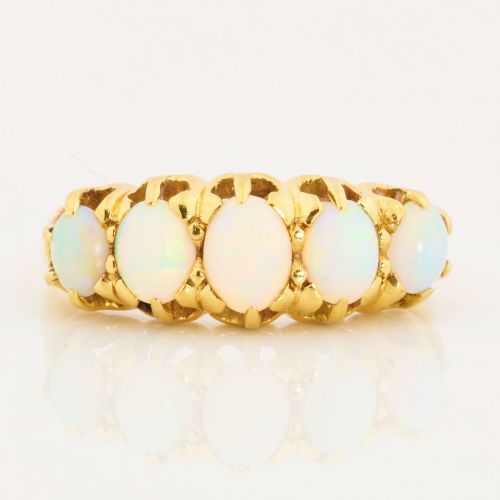
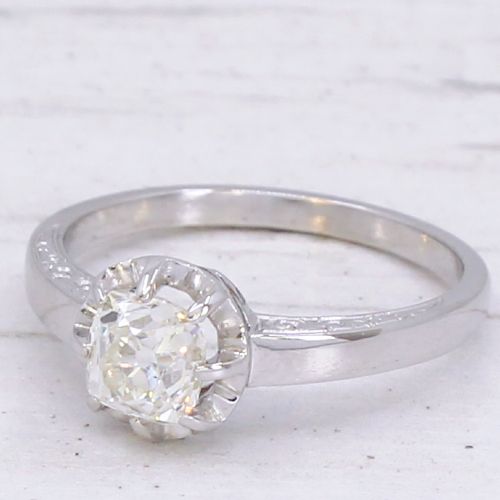
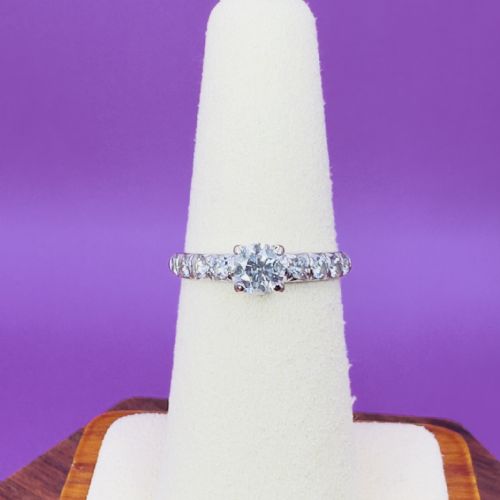
A white gold claw ring sits within a selection of rings and engagement rings spanning from the Victorian and Edwardian eras through Art Deco and Mid-Century designs to modern pieces. Buyers find forms including diamond solitaires, multi-stone rings, clusters, trilogies, and full eternity bands.
The most common examples on this page are diamond engagement rings from the 1930s and 1950s, utilising old cut, transitional, and brilliant cut stones set in 18ct white gold or platinum.
Materials and construction
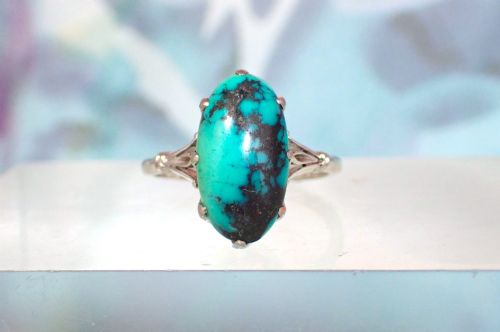
The pieces rely primarily on 18ct white gold and platinum to mount diamonds alongside occasional turquoise, opal, tanzanite, and aquamarine stones.
Goldsmiths shaped individual metal claws to grip the girdle of each gemstone, securing the centre stone or cluster while letting light pass through the facets.
Some stones have survived two world wars only to end up mounted in a sparkling cocktail ring.
Distinctions in quality
Quality rests on the proportion and symmetry of the stone cutting, particularly in older hand-cut diamonds where facet arrangement creates distinct brilliance.
The weight and integrity of the metalwork, from slender solitaire shoulders to substantial multi-stone settings, determines the structural refinement of each ring.
The White Gold Claw Ring Glossary
- Claw setting
- A mounting where metal prongs hold a gemstone in place. This technique maximises the light entering the stone from multiple angles.
- Solitaire
- A ring featuring a single gemstone. It remains a definitive choice for traditional engagement rings.
- Old cut
- A diamond cut executed by hand before the mid-twentieth century. These stones typically display smaller tables and higher crowns than modern cuts.
- Trilogy
- A ring set with three stones, often interpreted to represent the past, present, and future. They appear frequently in twentieth-century designs.
- Cluster
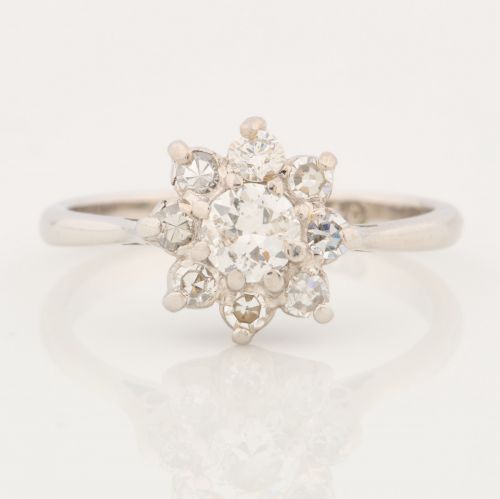
- An arrangement where a central stone is surrounded by smaller gems. This style creates a larger visual presence on the finger.
White Gold Claw Ring: Frequently Asked Questions
How do I choose between an old cut and modern diamond?
Old cut diamonds display softer, broader flashes of light due to hand-cutting techniques used across Victorian and Art Deco periods. Modern cuts offer precise, brilliant symmetry developed later in the twentieth century.
Your choice depends on whether you prefer the antique character of early hand-fashioned stones or the uniform sparkle of later brilliant cuts.
What is the difference between a solitaire and a cluster ring?
A solitaire focuses attention entirely on one central stone held by claws on a plain or diamond-set band. A cluster surrounds the main gem or centre point with a group of smaller stones.
Solitaires emphasise the individuality of a single diamond, whereas clusters maximise overall brilliance and surface area.
How do I care for a white gold ring?
White gold is often plated with rhodium to maintain a bright, silvery finish over the alloy underneath. Periodic professional replating restores this surface sheen when daily wear causes it to fade.
Regular cleaning with warm soapy water and a soft brush keeps the gemstones and claw settings free from accumulated dust.
Can these engagement rings be resized?
Most gold and platinum rings can be altered by a jeweller to fit a different finger size. The complexity depends on the band design, such as whether it is a solid shank or a full eternity ring.
Full eternity rings with stones set all the way around the band are generally difficult or impossible to resize without disturbing the setting.