

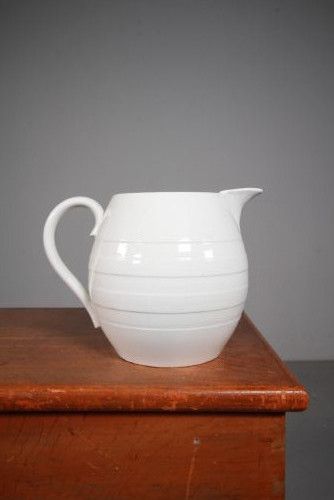
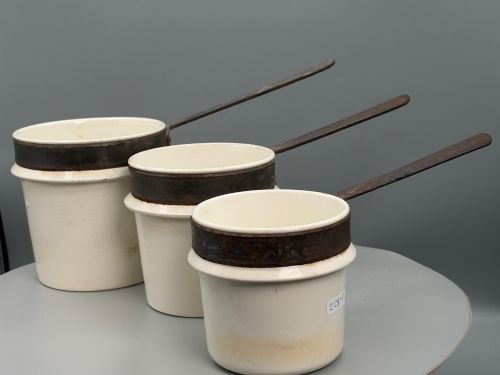
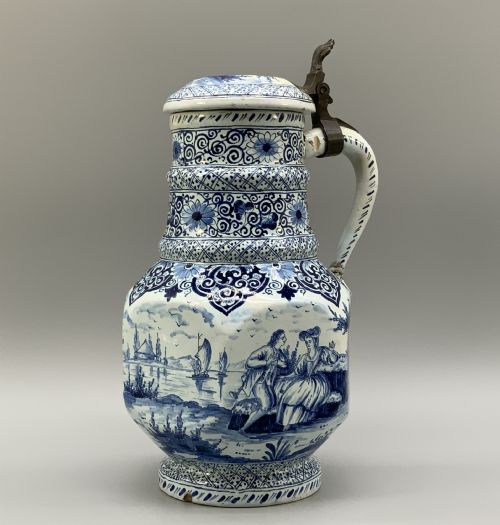
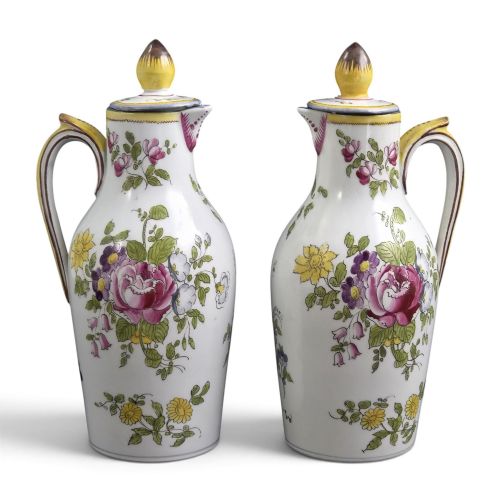




White Glazed Earthenware Jug
A white glazed earthenware jug brings utilitarian charm to a table, offering historic ceramic craft shaped for pouring liquids.
White Glazed Earthenware Jug
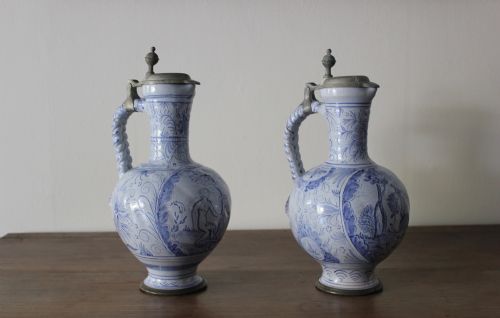
A white glazed earthenware jug spans centuries of ceramic production, encompassing functional measuring vessels, pharmacy jars, and decorative pitchers. Buyers seeking a white glazed earthenware jug encounter forms ranging from 17th-century Dutch Delftware and French faience to 19th-century Staffordshire tableware and 1920s English dairy pieces.
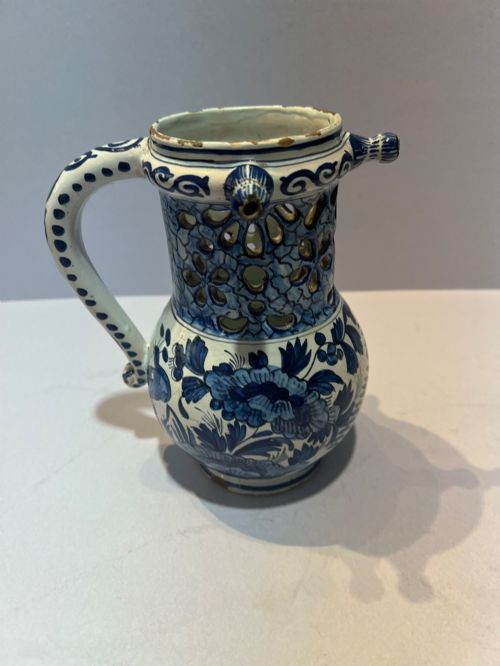
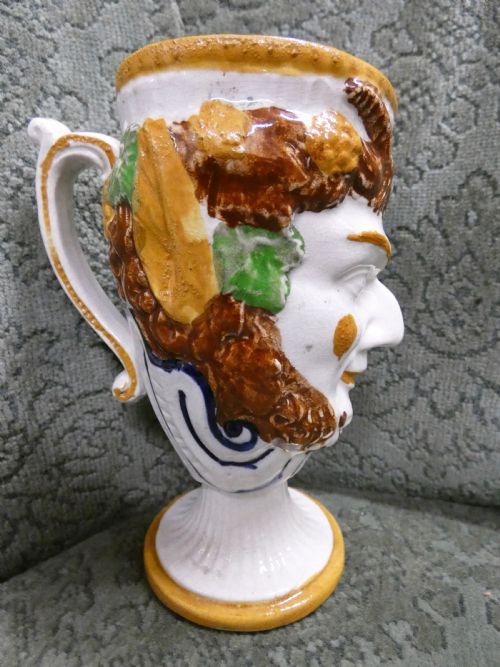
The selection includes specialised objects such as puzzle jugs, pilgrim flasks, Toby jugs, and graduated sets of domestic pitchers. Many examples feature tin glazing, enamel decoration, or blue and white floral motifs applied across various European production centres.
Most pieces date from the eighteenth and nineteenth centuries, reflecting domestic, pharmaceutical, and dairy uses. The forms vary from large hotel ice water containers to small salesman's samples and cruet sets.
Assessing quality and character
Quality reveals itself in the crispness of the moulded form and the fluidity of the hand-painted decoration, whether in cobalt blue or polychrome enamel. Superior examples display an even, lustrous glaze application that pools naturally across the earthenware surface without obscuring underlying details.
The sophistication of the potting and the completeness of original matching covers or pewter mounts elevate certain vessels above standard domesticware. Historical significance, such as documented factory origin or specialised pharmacy function, distinguishes exceptional specimens.
White Glazed Earthenware Jug Retail Price Guide 2026
Typical asking prices for white glazed earthenware jug among the pieces listed under this phrase on Sellingantiques today, from the lower quarter to the upper quarter. They describe what is for sale here now, not the wider market.
Frog mugs conceal a ceramic amphibian inside the base that startles drinkers as the liquid empties.
Booths·Wedgwood·Veuve Perrin·Doulton Lambeth·Staffordshire
The White Glazed Earthenware Jug Glossary
- Earthenware
- Porous pottery fired at relatively low temperatures which requires a glaze to hold liquids. It forms the structural base for most tin-glazed and Delft vessels.
- Tin Glaze
- An opaque white glaze produced by adding tin oxide to a lead glaze base. It provides a smooth white background for painted cobalt and enamel decoration.
- Faience
- European tin-glazed earthenware produced mainly in France, Italy, and the Netherlands. The term encompasses decorative jugs, pharmacy jars, and tableware.
- Puzzle Jug
- A drinking vessel featuring a perforated neck and multiple spouts designed to confound the drinker. Users must cover hidden holes to draw liquid without spilling.
- Polychrome
- Decoration employing multiple colours, typically applied over a white glaze using mineral pigments. It contrasts with monochrome blue and white ceramic painting.
White Glazed Earthenware Jug: Frequently Asked Questions
Can I use these jugs for serving drinks?
Many historic jugs remain structurally sound for holding water, milk, or flowers. However, older lead or tin glazes on seventeenth and eighteenth-century earthenware can react with acidic liquids.
Examine the interior glaze for stability and loss before using the vessel for food service. Purely decorative pieces or pharmacy jars are best kept for display.
How do I date a white glazed jug?
Examine the weight and colour of the earthenware body, alongside the characteristics of the glaze and decorative palette. Tin-glazed pieces with manganese or cobalt painting typically point to eighteenth-century European traditions, while heavier iron-banded or transfer-printed examples suggest nineteenth-century manufacture.
Compare the form and potting style with documented examples from known potteries and regions. Stylistic clues like Victorian patterns or 1920s dairy stamps provide specific chronological markers.
What is a pharmacy wet drug jug?
A pharmacy wet drug jug stored liquid medicines, syrups, and oils in apothecaries and dispensaries. These vessels typically feature tin-glazed earthenware bodies painted with identifying labels or pharmaceutical inscriptions.
Their substantial spouts and covered tops protected contents from dust and evaporation in working apothecary shops. Surviving examples often display polychrome cartouches naming specific medical compounds.