


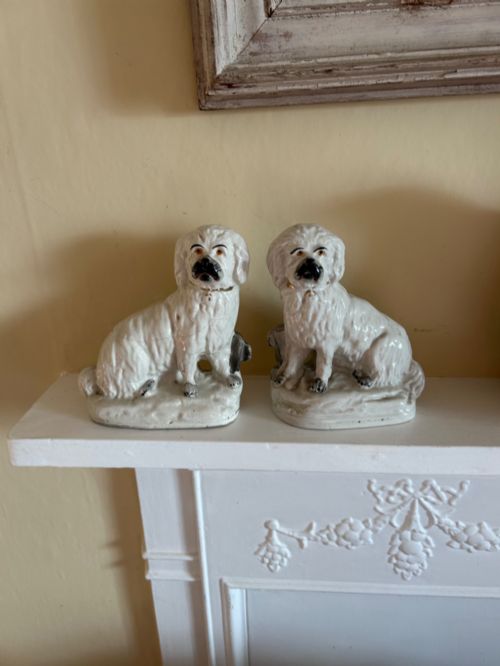


White Glaze Pottery Figure
A white glaze pottery figure brings animal and human subjects into focus through simple earthenware and monochrome surfaces.
White Glaze Pottery Figure
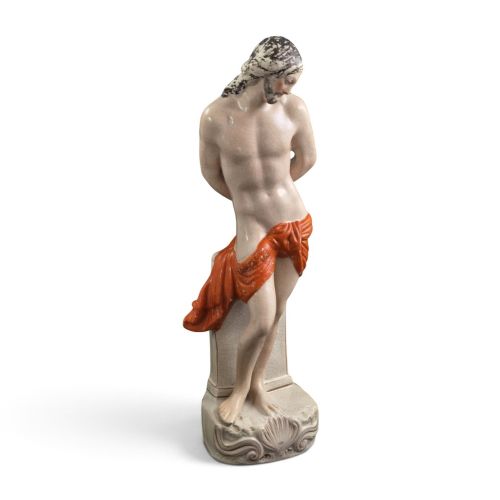
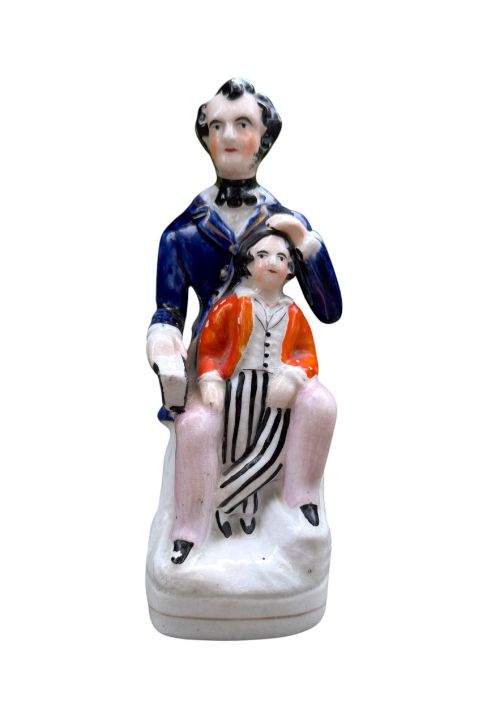
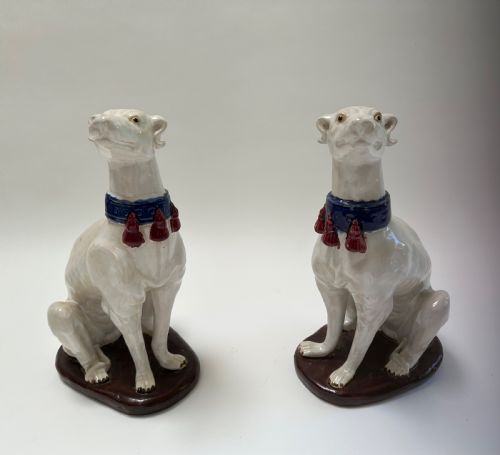
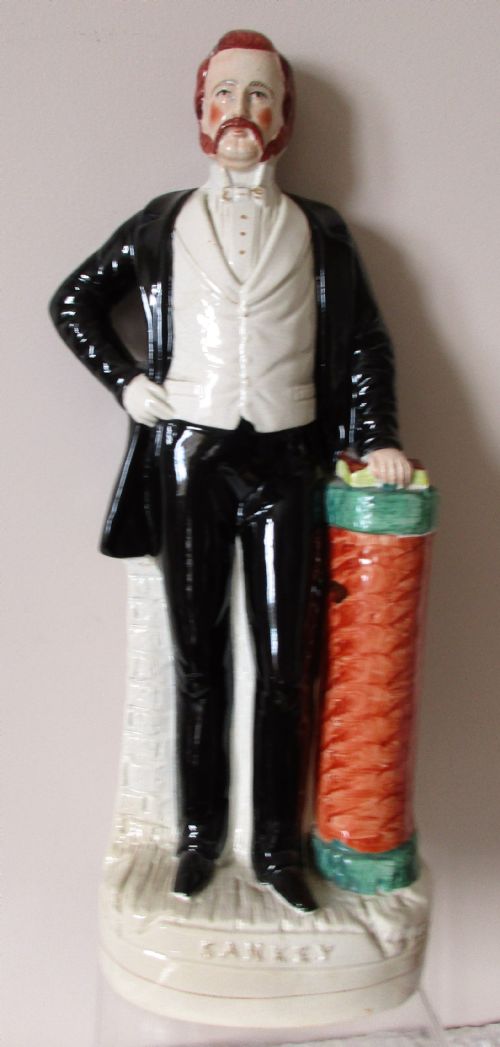
A white glaze pottery figure encompasses a broad range of ceramic sculpture spanning the eighteenth and nineteenth centuries, with Staffordshire production forming the backbone of the selection. These pieces frequently take the form of domestic animals, spaniels, lions, and historical or royal portrait subjects modelled for mantelpiece display.
Buyers encounter earthenware figures shaped as pairs of dogs, sheep, and figurative groups reflecting Victorian taste and earlier Dutch delftware traditions. The forms serve both decorative and practical roles, including inkwells, bookends, and watch holders modelled in standard pottery pastes.
Materials and construction
Many nineteenth-century examples utilise press-moulded construction, where hollow figures are formed in two halves and joined prior to glazing and kiln firing. Lustre glazes and polychrome accents occasionally supplement the primary white glaze surface.
Listings span the eighteenth, nineteenth, and early twentieth centuries, featuring earthenware, terracotta, and tin-glazed ceramic forms.
Distinctions in craftsmanship
Quality rests primarily in the crispness of the moulding and the sensitivity of the hand-painting applied to the facial expressions and surface details. Softer definition in press-moulded earthenware indicates heavy usage of worn moulds during production.
The smoothness and consistency of the lead or tin glaze across complex three-dimensional surfaces separate standard commercial output from finer studio and pottery works. Finer examples retain clear enamel application without excessive pooling or running in the kiln.
Thomas Parr·Gao Hengsheng
The White Glaze Pottery Figure Glossary
- Earthenware
- Porous pottery fired at lower temperatures than stoneware or porcelain, requiring a glaze to hold liquids and seal the body.
- Lead glaze
- A glossy coating containing lead oxide applied to earthenware to create a smooth, waterproof surface that enhances body colours.
- Flatback
- A Staffordshire figure style moulded with a finished front and a flat, unpainted reverse designed to sit flush against a mantelpiece wall.
- Tin glaze
- An opaque white glaze produced by adding tin oxide to the liquid mixture, typical of delftware and fayence pottery traditions.
- Polychrome
- Decoration employing multiple distinct colours painted onto the ceramic surface, often combined with a primary white glaze background.
White Glaze Pottery Figure: Frequently Asked Questions
How do I clean an old pottery figure?
Dust the ceramic surface gently with a soft, dry brush to remove particles without disturbing delicate enamel paint or gilt highlights.
Avoid immersing antique earthenware in water, as moisture can penetrate hairline cracks in the old glaze and weaken the underlying clay body.
Were these figures meant for children?
These decorative objects served as mantelpiece ornaments for adults rather than playthings, reflecting popular political figures, royalty, and domestic animals.
Their placement high on household shelves kept them safely away from daily domestic handling.
What is a flatback figure?
A flatback figure is a ceramic sculpture designed with a detailed front and a flat, undecorated reverse side intended for display against a wall.
This construction method saved clay and kiln space while ensuring the piece remained stable on narrow mantelpieces.
How can I tell the period?
Dating relies on stylistic clues, subject matter such as specific historical events or royalty, and the type of earthenware body and glaze used.
Nineteenth-century Staffordshire pieces often feature distinct press-moulded seams and hand-painted enamel highlights characteristic of Victorian production.