


White Glass Ceiling Shade
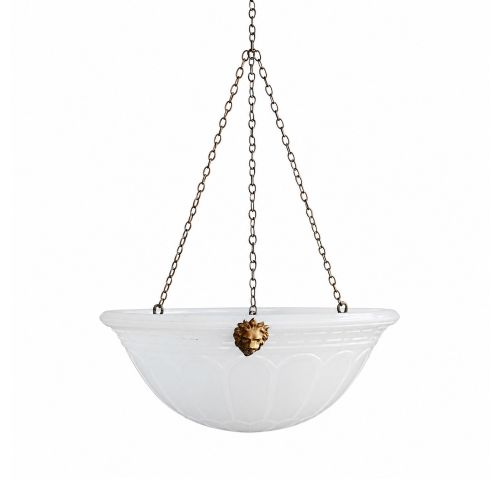
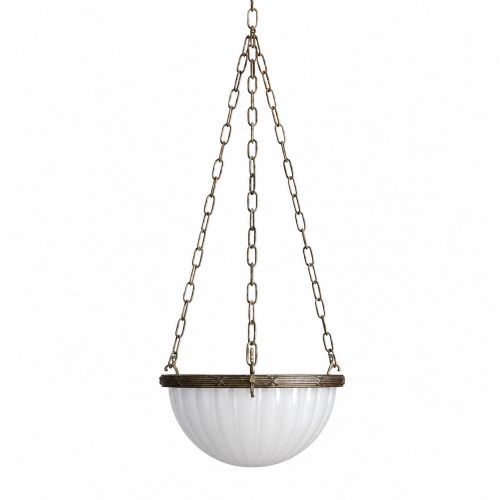
These white glass ceiling shade examples range from Victorian opalescent bowls to sleek Art Deco domes, bringing functional elegance overhead.
White Glass Ceiling Shade
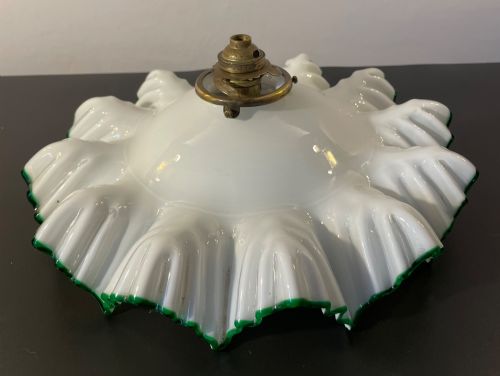
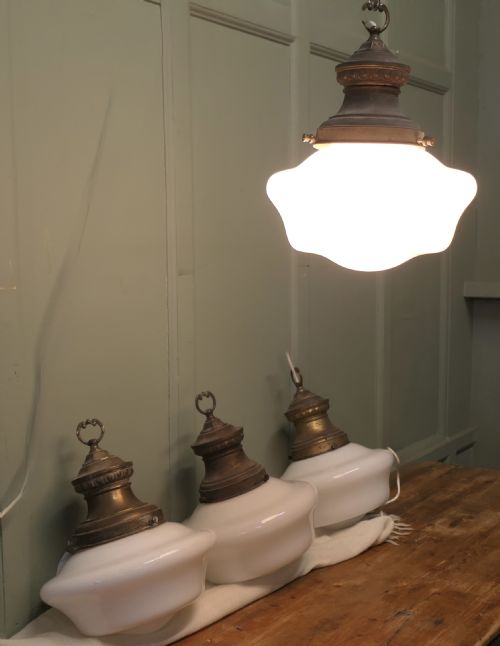
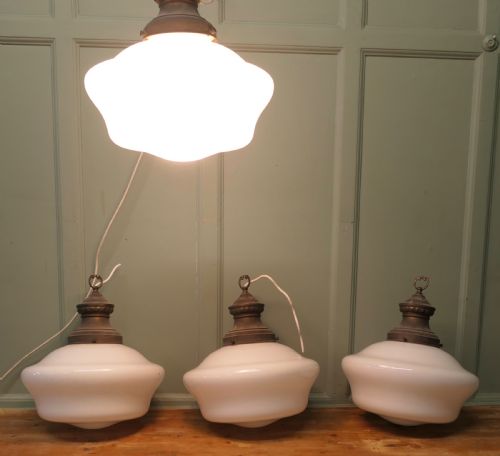
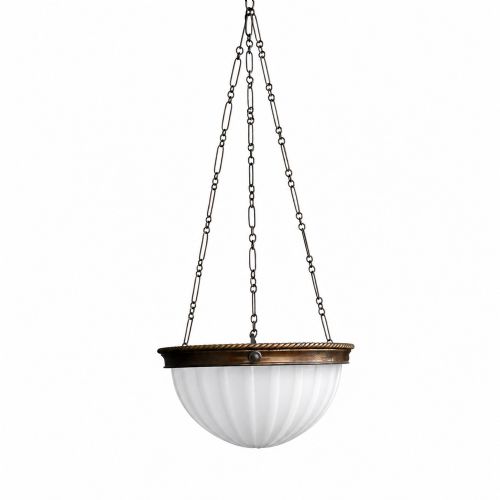
A white glass ceiling shade serves as a luminous overhead fitting, with pieces on this page spanning periods from the Victorian era through Edwardian times and into the 1920s and 1930s. Buyers encounter diverse forms such as conical pendants, pear-shaped drops, and shallow plafonniers designed to diffuse light evenly across a room.
The selections include industrial chapel lights, pharmacy pendants, and French frill shades that reflect styles ranging from Art Nouveau and Arts and Crafts to Art Deco and industrial design. Many items arrive paired with original brass, chrome, or copper suspensions, while others exist as standalone shades ready for installation.
Materials and construction methods
Techniques involved blowing or pressing the glass into moulds, occasionally incorporating etched crystal details or painted neoclassical motifs on the surface. Metal components were cast or spun to fit snugly around the glass collars, securing the shades for ceiling suspension.
Some Edwardian kitchens once relied on chapel pendants to keep dinner prep visible through a soft, milky haze.
Distinctions in manufacture and preservation
Quality reveals itself in the weight and consistency of the glass, where finer pieces display an even distribution of opalescence and smooth, unblemished surfaces without excessive bubbles. The intricacy of the moulding, such as sharp ridges in reeded designs or crisp detailing on bronze and brass mounts, distinguishes standard production from superior work.
The integrity of the original metal hardware, including matched brass galleries or specialised copper fixings, elevates a piece by retaining its period-correct assembly. Condition matters significantly, particularly regarding the preservation of delicate rims, etched patterns, and original surface patinas on the metal parts.
The White Glass Ceiling Shade Glossary
- Opaline glass
- A milky, semi-translucent glass that diffuses light softly and appears white or pale blue by transmitted light. It was widely used in Victorian and early twentieth-century lighting.
- Plafonnier
- A ceiling-mounted light fixture where the shade sits flush or very close to the ceiling surface rather than hanging on a long suspension cord or chain.
- Moonstone glass
- A type of glass with a cloudy, mottled appearance resembling the gemstone, providing a soft and atmospheric glow when illuminated from within.
- Gallery
- The metal ring or collar at the top of a lampshade that holds the shade in place and connects it to the suspension wiring and ceiling rose.
- Opalescent
- Exhibiting a milky iridescence with a pearly display of colours, commonly found in nineteenth-century and Arts and Crafts bowls and shades.
White Glass Ceiling Shade: Frequently Asked Questions
How do I hang a vintage shade?
These shades typically attach to a compatible metal gallery using screws or a threaded fitter rim that secures the glass to the suspension cable. Ensure your electrician checks the brass or chrome fittings to support the weight safely.
For ceiling mounting, a standard cord grip pendant or rigid brass rod can be wired into the ceiling rose, matching the era of the fixture.
What rooms suit an opaline pendant?
Opaline pendants provide a diffused, glare-free illumination that works well in kitchens, hallways, and dining areas where ambient light is preferred. Their clean white appearance complements both traditional and modern interior schemes.
Smaller dimunitive shades suit compact spaces, while large industrial or chapel pendants anchor higher ceilings in open living areas.
Are these shades original period pieces?
The inventory on this page includes authentic items dating from the Victorian and Edwardian eras through the 1920s and 1930s. Materials such as heavy opaline, moonstone glass, and period metal mounts confirm their age.
Construction details like hand-blown glass variations and period brass or copper hardware distinguish genuine vintage lighting from modern reproductions.
How do I clean white glass?
Wash the glass gently in warm soapy water using a soft cloth to remove dust and household residue without scratching the surface. Avoid harsh chemical cleaners that might damage antique finishes on attached brass or copper.
Dry the shade thoroughly before re-attaching it to the ceiling suspension hardware.