




White Garden Planters
White garden planters bring classical presence to terraces and lawns through heavy metal, carved stone and weathered paint.
White Garden Planters
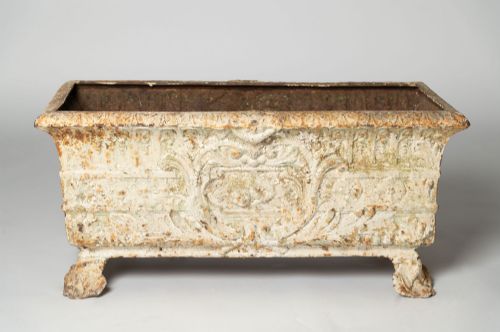
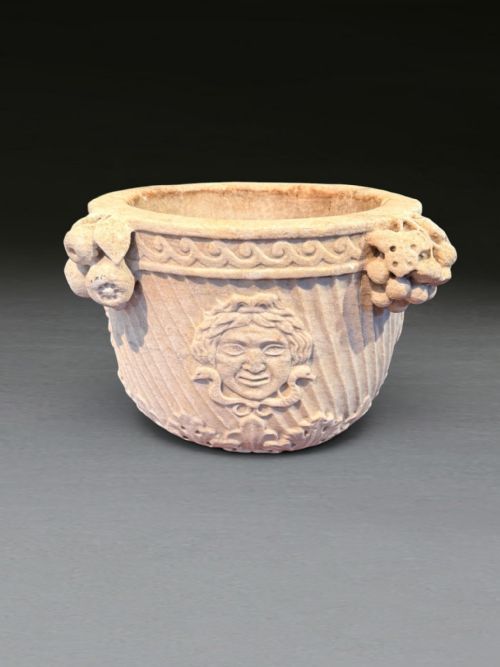
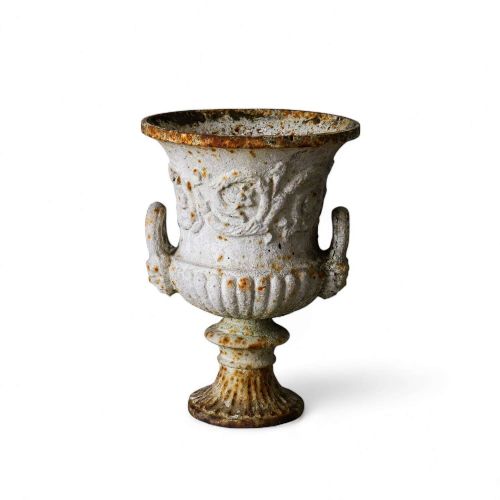
White garden planters encompass monumental cast iron urns, wirework plant stands and marble cisterns spanning several centuries of landscape design. When searching for white garden planters, buyers typically encounter nineteenth-century cast iron vessels coated in distressed white paint, alongside classical stone and terracotta examples.
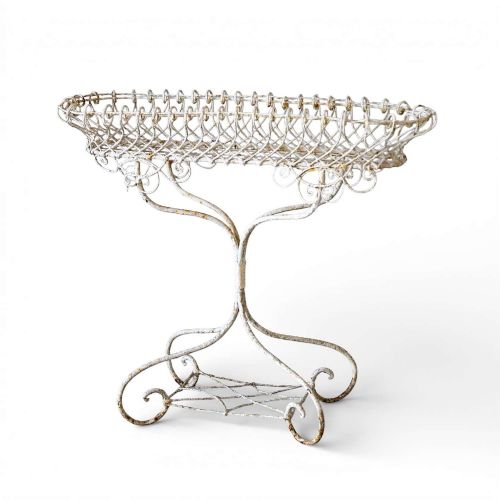
The selection extends from Regency neoclassical campana shapes to Edwardian wirework conservatory jardiniere stands and French country urns. Formats range from low table vessels and tiered stands to large pedestal planters designed to anchor garden pathways and terrace corners.
Origins stretch across English, French and Italian workshops, incorporating materials that have weathered outdoors across generations. Pieces frequently arrive paired, standing upon original plinths or matching column pedestals.
Materials and construction methods
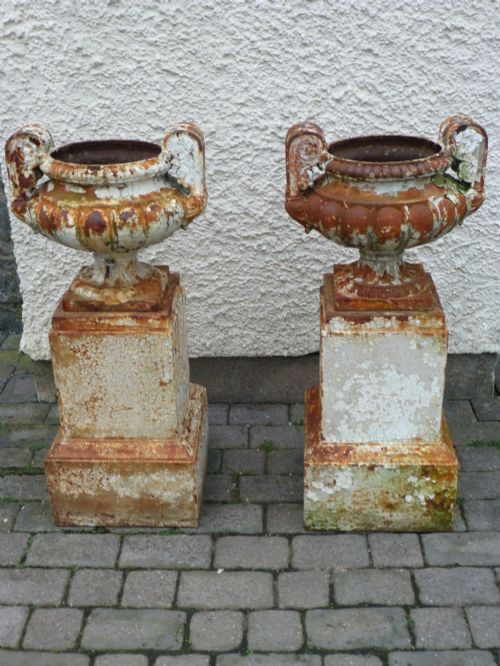
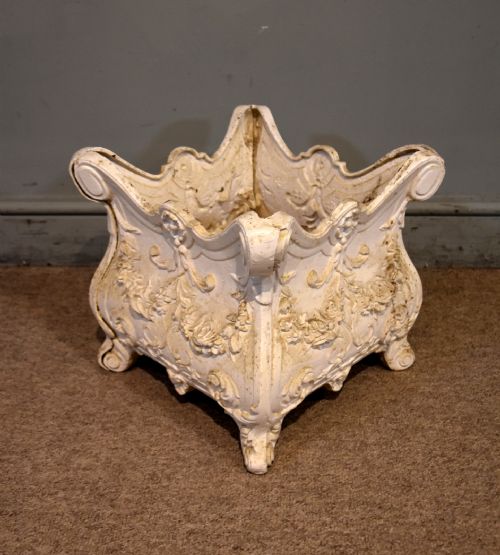
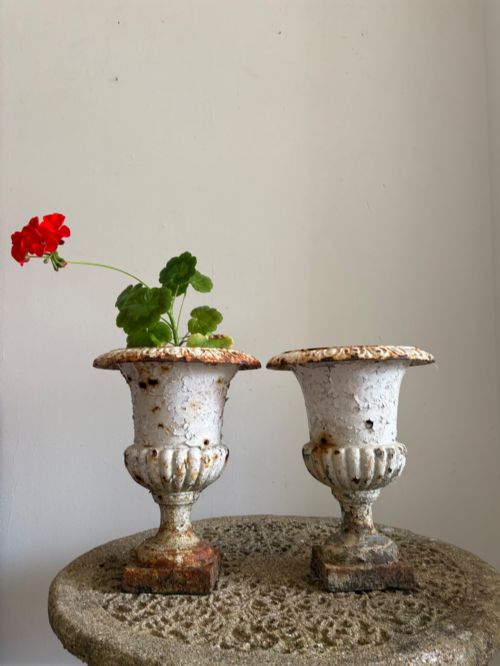
Foundries produced heavy metal vessels using cast iron and wrought iron, employing scrollwork, lattice basket tops and classical motifs like acanthus leaves. Many iron pieces retain layers of original white paint that have flaked and weathered through decades outdoors.
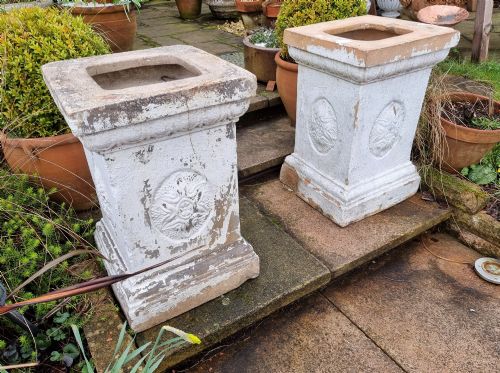
Carved stonework relies on white marble, Carrara marble and limestone, shaping substantial cisterns and tazza urns with neoclassical gadrooned edges. Terracotta and clay variants provide porous alternatives shaped by traditional pottery methods in England and Italy.
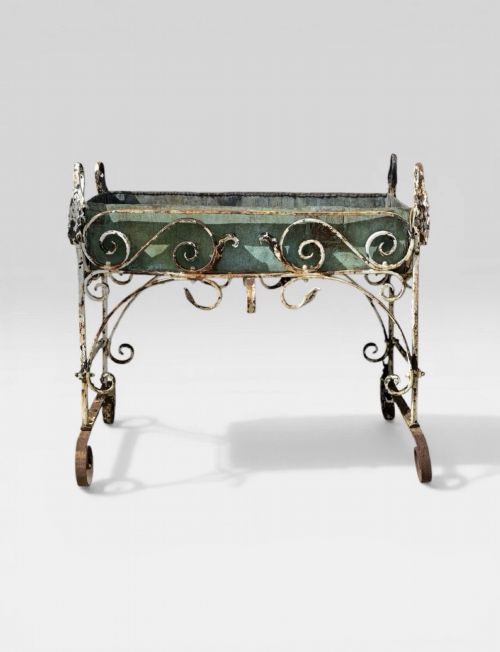
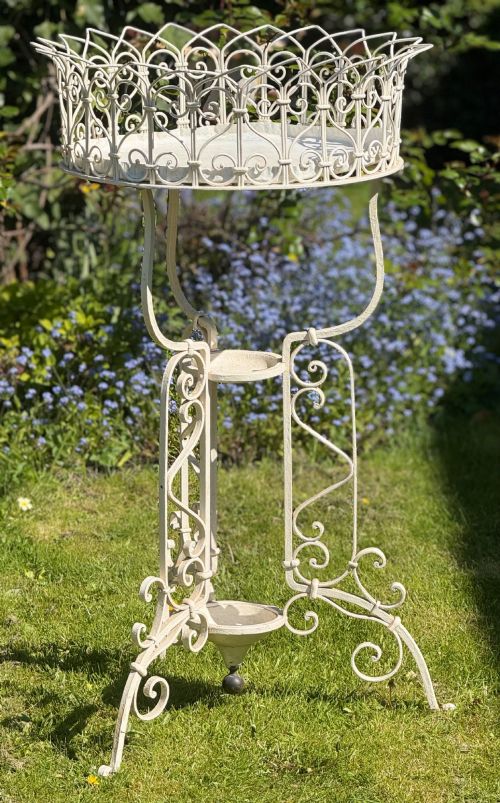
Wirework constructions utilise delicate metal rods bent into tiered stands and plant holders suited for conservatories and sheltered patios.
Nineteenth-century foundries occasionally cast iron garden ornaments as playful children statues holding planters.
Distinctions in quality and execution
Quality rests upon the crispness of the original cast or carve, visible in the sharp relief of acanthus leaves, classical figures and gadrooned rims. Foundry attribution separates standard commercial foundry output from documented works by notable makers.
The integrity of the material dictates longevity, with heavy cast iron and solid marble holding structural permanence superior to lighter wirework or plaster. Surface patination, particularly genuine historic white paint retaining honest weathering, holds greater appeal than modern repainting.
Completeness defines the higher tier, where urns retain their matching bases, plinths or original companion pieces rather than surviving as single items.
Dunfermline Clay Company·Falkirk Carron foundry·Coalbrookdale·Andrew Handyside
The White Garden Planters Glossary
- Campana
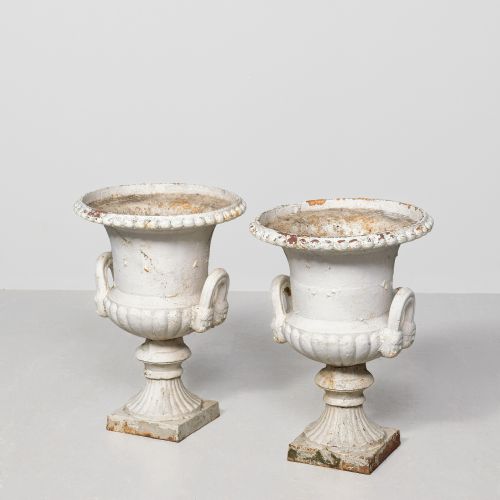
- A bell-shaped garden urn with a flared rim and tapering body. This classical silhouette originates from ancient Roman pottery forms.
- Tazza
- A shallow cup or urn set upon a pedestal foot. These open vessels were frequently cast in iron or carved from marble during the nineteenth century.
- Jardiniere
- An ornamental pot or stand designed to hold growing plants. These pieces often feature decorative wirework or iron scrollwork.
- Gadrooned
- Decorated with a series of convex vertical curves or flutes. This ornamental carving appears frequently around the rims of classical stone and marble urns.
- Pedestal
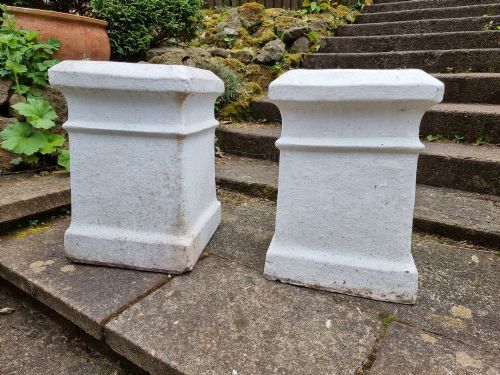
- A supportive base or column elevating an urn or planter. Matching pedestals lift garden vessels to improve sightlines on terraces.
White Garden Planters: Frequently Asked Questions
How do I place heavy iron planters safely in a garden?
Heavy cast iron urns require level ground, stone paving or concrete pads to prevent shifting as the earth settles beneath them. Using stone plinths or integrated pedestals lifts the base away from damp soil, protecting the metal from prolonged moisture contact.
Position larger pieces where structural walls or formal pathways bear the visual weight. Ensure the drainage hole remains clear so trapped water does not expand during freezing weather.
Can marble and stone planters stay outside year-round?
Marble and limestone garden vessels endure outdoor climates well, provided they are cleared of standing water before winter freezes occur. Natural stone develops a soft, weathered patina over decades of exposure to rain and foliage.
Protecting porous terracotta and plaster pieces from severe frost prevents cracking. Lifting stone vessels onto small feet during winter stops moisture rising from frozen ground into the base.
What is the difference between an urn and a jardiniere?
Urns typically feature a traditional footed or pedestal base supporting a deep, rounded bowl shaped for permanent plantings. Their classical silhouette suits formal garden focal points and terrace corners.
Jardiniere designs often incorporate open wirework frames or tiered baskets intended for holding multiple potted plants inside conservatories or sheltered patios.
Should I repaint a vintage white garden planter?
Preserving original flaking white paint maintains the historic character and authentic surface texture valued by collectors. Many buyers prefer the honest weathering accumulated across decades outdoors.
If active rust threatens iron structural integrity, applying a protective primer and matching exterior paint halts further decay. Clean marble and stone gently with water rather than harsh chemicals to protect the natural grain.