






White Floral Wall Art
White floral wall art brings together botanical paintings and plates, offering timeless depictions of roses, lilies and peonies for your home.
White Floral Wall Art
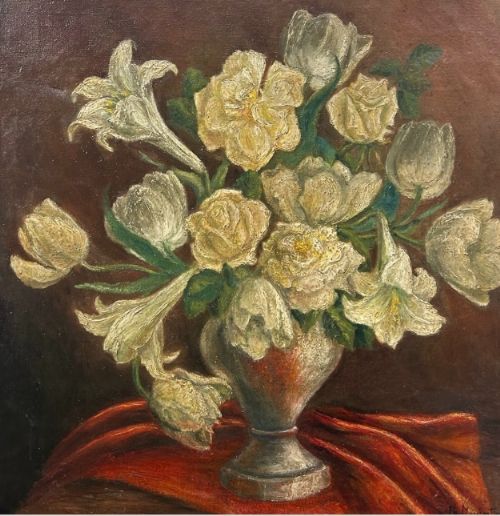
White floral wall art encompasses paintings, watercolours and decorative plates depicting flowers across several centuries. When searching for white floral wall art, a buyer encounters works ranging from eighteenth-century oil paintings to mid-century canvas compositions.
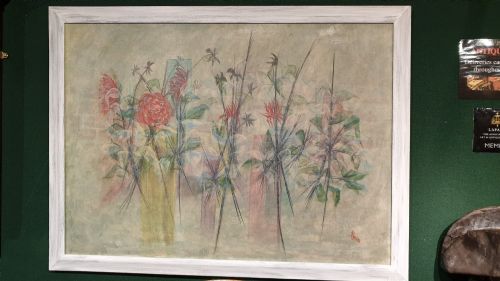
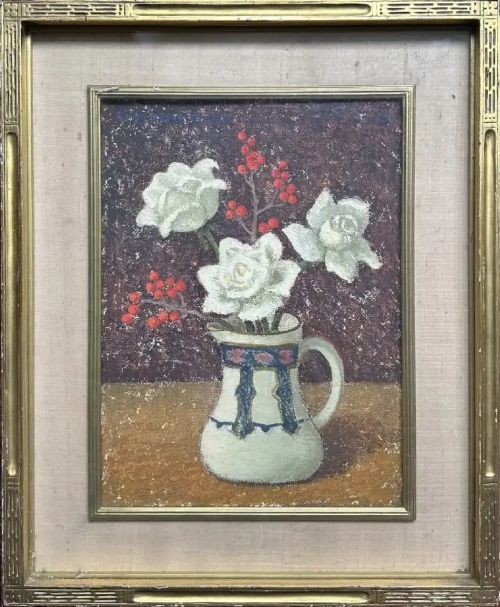
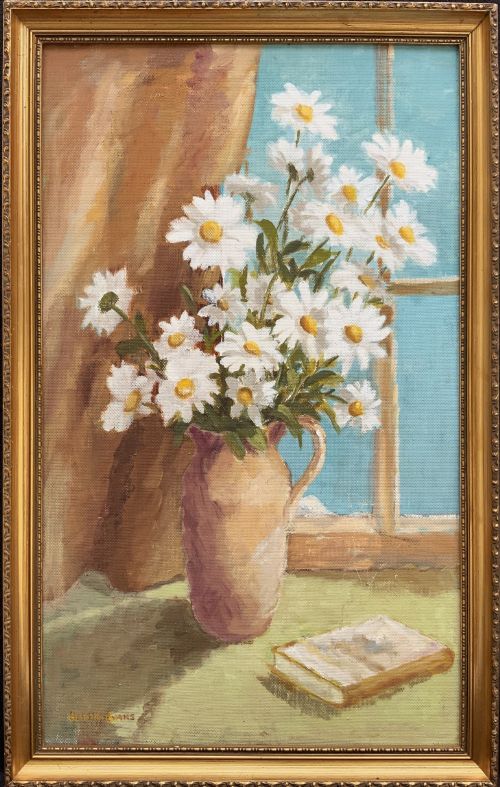
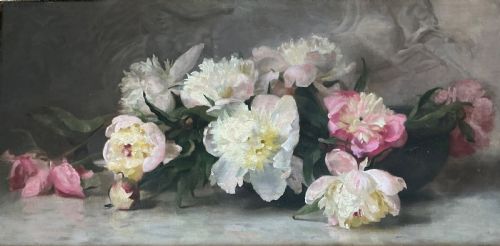
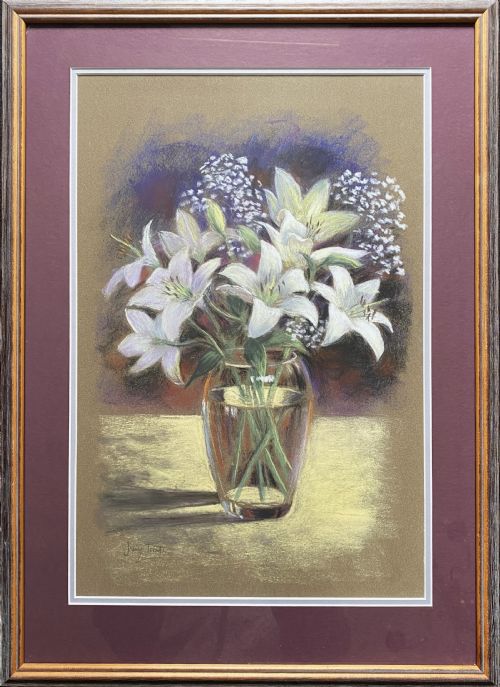
The selections on this page lean heavily towards mid-century impressionism, traditional still life and Victorian botanical styles. These pieces capture subjects like daisies, roses, lilies and peonies arranged in jugs, vases or baskets.
Works originate from various periods including the Edwardian era, the nineteenth century and the nineteen-fifties. Painters utilise canvas, paper and wood as supports for oil paint, watercolour pigment and gouache.
Materials and methods
Artists create these works using oil paint, watercolour pigment, gouache, tempera and pastel upon surfaces such as canvas, paper and wood. Gilt frames frequently enclose the paintings, while glass protects delicate watercolours.
Hand-painted techniques appear across both canvas paintings and decorative plates. The application of oil on canvas provides heavy texture, whereas watercolours on paper offer transparent washes of colour.
One painting even doubles as a token of friendship, serving as a lucky charm painted by a Franco-British artist.
Distinctions in quality
Quality rests in the handling of the medium and the sureness of the brushwork. Works by accomplished painters display careful observation of light upon petals and foliage, whether in oil or watercolour.
The integrity of the support and the preservation of the pigments dictate the condition of the piece. Framed canvas works and protected watercolours maintain their visual impact when materials remain stable over decades.
Emma Fordyce MacRae·Gertrude Hayes·Thomas Bromley Blacklock·Kershaw Schofield·Robin MacKertich·Edith Barrow·Stuart Armfield·Pierre Joseph Redoute·Jennifer Toombs·Marion Broom·Annie Mary Youngman·Minnie Smythe
The White Floral Wall Art Glossary
- Gouache
- An opaque watercolour paint that dries to a matte finish. It allows artists to build solid blocks of colour.
- Tempera
- A permanent fast-drying painting medium consisting of coloured pigment mixed with a water-soluble binder. This technique creates a durable surface.
- Impressionism
- A style of painting that focuses on the accurate depiction of light in its changing qualities. Practitioners capture overall visual impressions rather than minute details.
- Still life
- A work of art depicting mostly inanimate subject matter, typically commonplace objects. Floral arrangements serve as a frequent subject within this genre.
- Provenance
- The chronology of the ownership or location of a historical object. It helps establish authenticity.
White Floral Wall Art: Frequently Asked Questions
What periods do these paintings come from?
The pieces span from the eighteenth century through the nineteenth and twentieth centuries. Mid-century examples appear alongside Victorian and Edwardian works.
Specific decades represented include the nineteen-tens, twenties, forties, fifties and sixties.
How should I hang framed canvas art?
Secure the painting using appropriate wall fixings that match the weight of the timber frame and canvas. Position the artwork at eye level to enjoy the composition.
Keep pieces away from direct sunlight to protect oil paint and watercolour pigments from fading.
Are watercolours framed under glass?
Paper works generally require glass protection to shield the pigment from dust and atmospheric moisture. This glazing preserves the delicate washes of watercolour and pastel.
Ensure the paper does not touch the glass directly during framing to prevent condensation damage.
What floral subjects are most common?
Artists frequently depict roses, lilies, peonies, daisies and gladioli arranged in jugs, vases or baskets. Botanical studies also feature individual blooms alongside butterflies.
These subjects appear in traditional still life, impressionist and botanical illustration styles.