


Botanical Watercolour on Paper
A botanical watercolour on paper brings the quiet detail of garden studies and woodland scenes directly into your room.
Botanical Watercolour on Paper
When you search for a botanical watercolour on paper, you encounter delicate floral studies, garden views, and still life compositions rendered by artists over the past two centuries. These works range from meticulous Victorian depictions of roses and azaleas to looser twentieth-century interpretations of seasonal blooms.
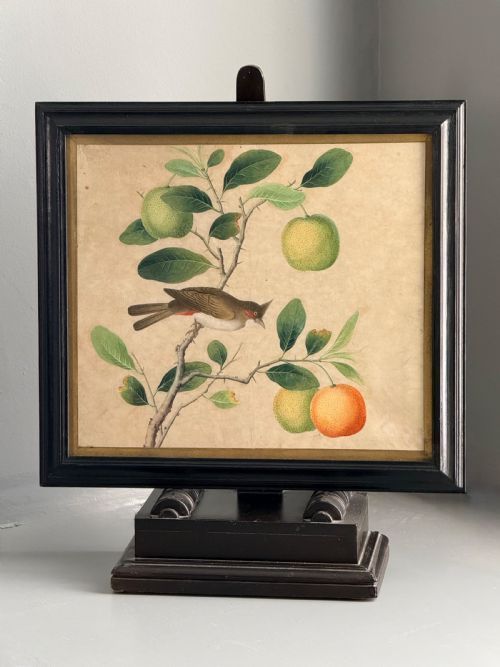
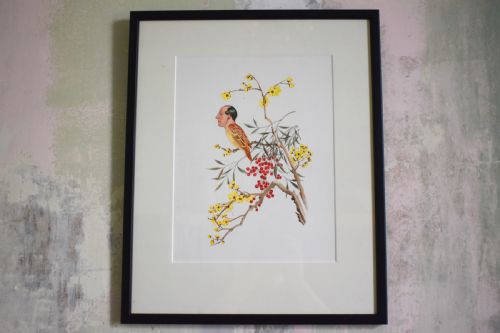
The pieces on this page span the nineteenth century, the Victorian and Edwardian eras, through to the nineteen-fifties, with many examples originating from British and Chinese traditions. You meet framed wall art that captures specific flowers like pansies, wallflowers, and camellias, often preserved behind glass in period wood frames.
Many of these watercolours function as direct observations of nature, recording the structure of blossoms, fruit, and foliage with careful brushwork. They offer a tangible connection to historical horticulture and domestic interior decoration.
Materials and technique
Artists create these works using watercolour pigment, gouache, and ink applied directly onto paper supports, sometimes utilising pith paper for specific historical or regional traditions. Watercolour paint allows for translucent washes that build colour gradually, while gouache introduces opaque highlights to define petals and leaves.
Works are frequently housed behind glass to protect the paper surface from atmospheric moisture and handling, mounted within wood frames appropriate to their period of creation.
Several artists clearly had a strong partiality for jugs, repeatedly painting flowers crammed into ceramic vessels alongside bowls of fruit.
Quality and execution
The distinction between standard decorative botanical studies and superior works rests on the precision of the draughtsmanship and the handling of pigment. Skilled artists capture the botanical accuracy of a stem or blossom while maintaining freshness in the watercolour washes.
Condition also plays a central role in the character of each piece, particularly the preservation of the paper support and the retention of original pigment vibrancy without excessive fading.
James Tower·Henrietta Creswell·William Edward Fox·Lester Sutcliffe·Lilian Stannard·William Hough·Edith Barrow·Rowland Henry Hill·Grace Hastie·Phyllis I Hibbert·Marian Chase·Alfred W Parsons·Jabez Bligh·Owen Bowen·Charlotte Isa James·Alice Macallan Swan·Beatrice Parsons·Marion Broom·Edith Alice Andrews·John Sherrin·Minnie Smythe
The Botanical Watercolour on Paper Glossary
- Watercolour pigment
- Finely ground colour particles mixed with a water-soluble binder, used to create transparent washes on paper.
- Gouache
- An opaque water-based paint containing pigment, water, and a binding agent, often combined with watercolour for added density.
- Pith paper
- A delicate material prepared from the cellular pith of the Tetrapanax papyrifer plant, historically utilised in Chinese export painting.
- Still life
- An artwork depicting inanimate subject matter, typically featuring arranged groupings of cut flowers, fruit, or vases.
Botanical Watercolour on Paper: Frequently Asked Questions
How should I frame and hang these watercolours?
Keep these works out of direct sunlight to prevent the watercolour pigments from fading on the paper. Use conservation-grade framing behind glass with a suitable mount to stop the paper touching the glass directly.
Position them in rooms with stable humidity levels, away from damp areas like kitchens or unheated spaces, to protect both the paper and the wooden frame.
What subjects appear most often in these paintings?
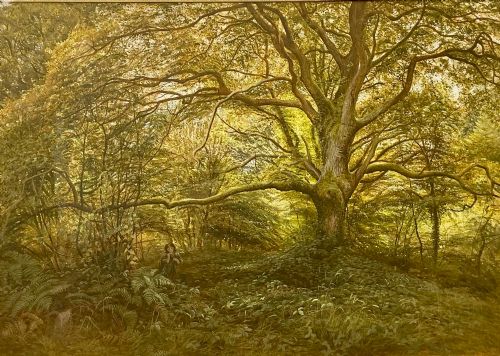
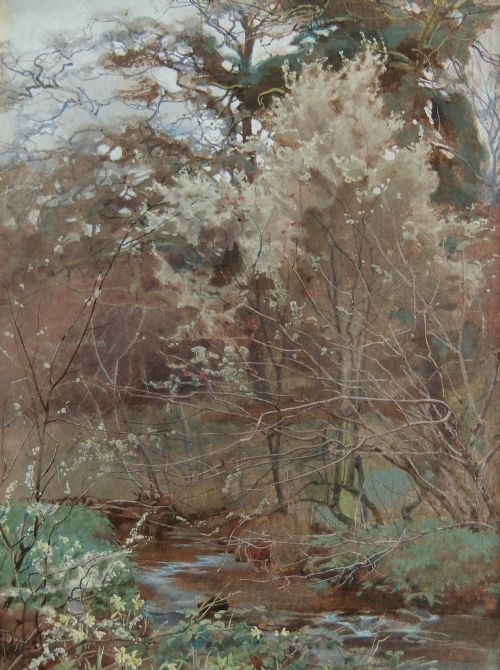
Floral still life compositions dominate the selection, featuring vases, baskets, and jugs filled with seasonal blooms such as roses, pansies, azaleas, and wallflowers. You also find garden views, woodland scenes, and specific botanical studies of fruit.
Many of these pieces reflect the nineteenth and twentieth-century interest in horticulture, capturing transient natural forms with detailed observation.
How do I identify the period of a piece?
Look to the stylistic markers of the frame, the character of the paper, and the specific floral arrangements, which often align with Victorian, Edwardian, or mid-century aesthetic preferences. Signatures and inscriptions on the reverse or front of the paper can also point toward a particular decade or artist.
Comparing the handling of the pigment with dated examples from the same era helps narrow down the timeframe of creation.
Are these works original paintings?
Every piece recorded here is an original painting executed by hand rather than a modern reproduction or print. You can examine the brushstrokes, the pooling of watercolour pigment, and the texture of the paper surface under magnification to confirm the hand-painted nature.
Each artist applied their chosen medium directly to the paper support, resulting in a unique artwork.