

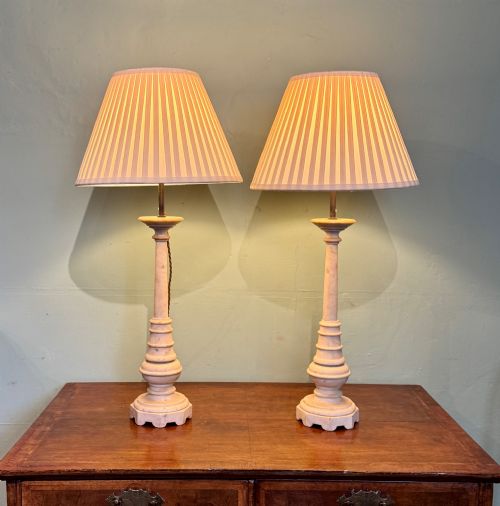

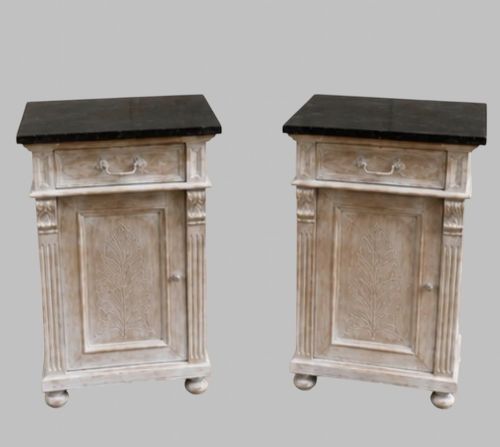
White Bedside Tables
White bedside tables bring a clean, light surface to the bedroom, pairing period charm with functional bedside storage.
White Bedside Tables
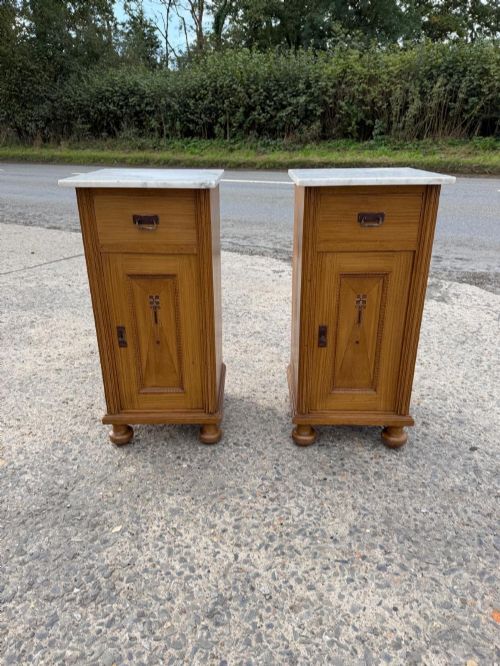
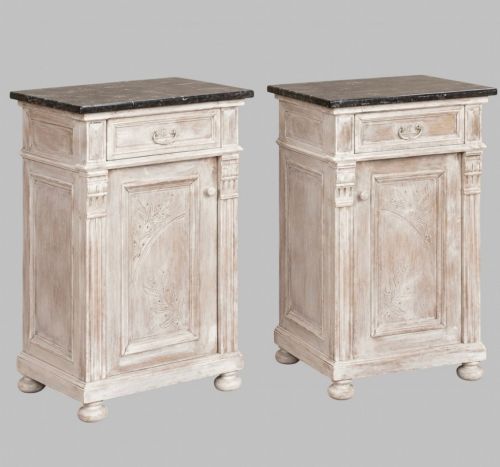
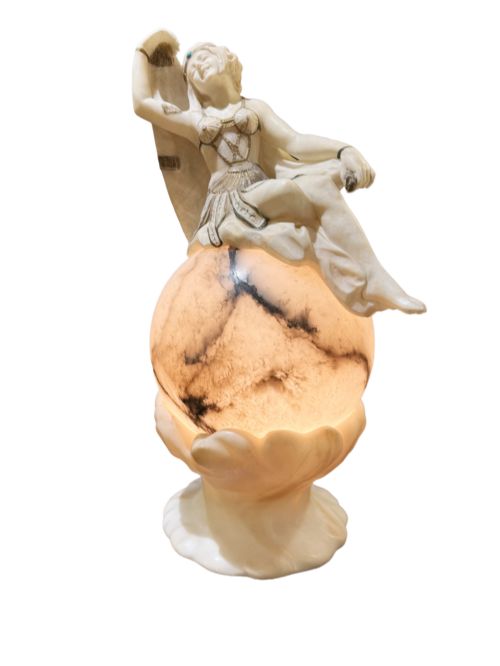
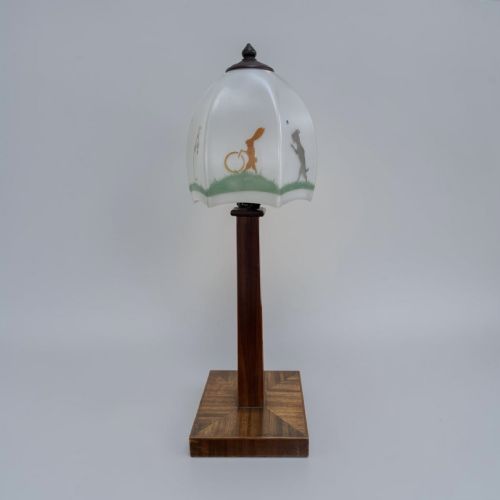
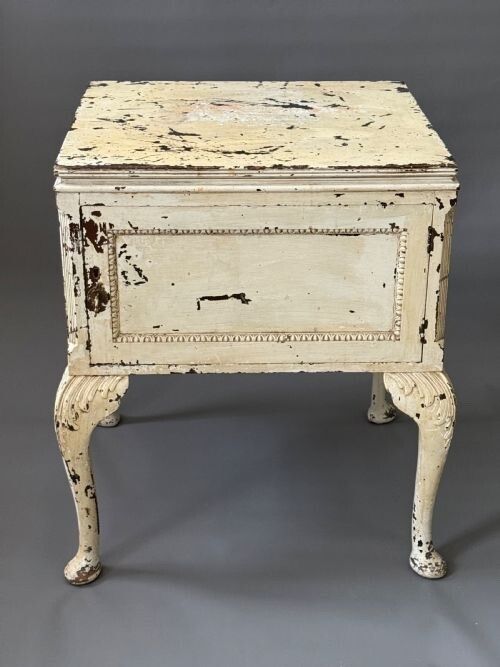
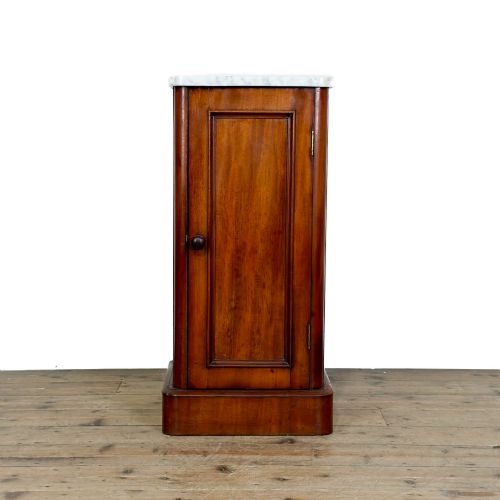
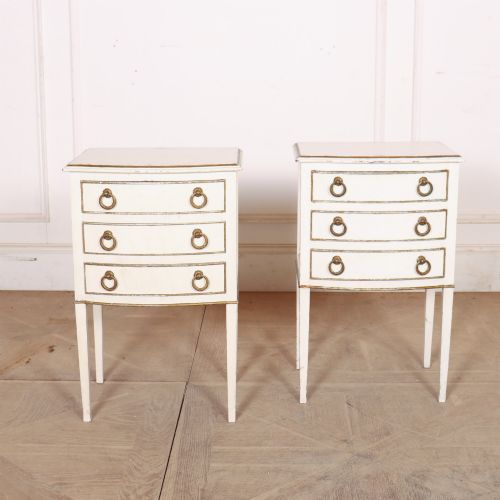
White bedside tables encompass small cabinets, cupboards, and chests designed to sit beside a bed, often featuring painted finishes or marble surfaces. When searching for white bedside tables, buyers encounter pieces ranging from nineteenth-century examples to twentieth-century French and East European designs.
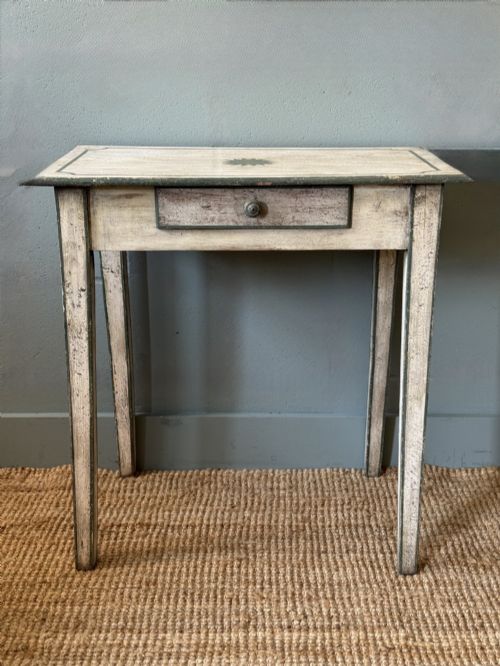
The selection here draws primarily on painted wood forms, including pine and mahogany, alongside variations with marble tops. Many options appear as matched pairs, originating from periods such as the Victorian era, the nineteen-twenties, and nineteen-hundred.
Materials and construction
Makers utilised timber such as pine, mahogany, fruitwood, and oak as the foundational structure for these cabinets. Surfaces often received layers of paint, sometimes combined with contrasting marble tops for durability and finish.
Joinery techniques reflect the period of origin, from nineteenth-century joinery to early twentieth-century production methods. Metal hardware, including brass, copper, and gilt bronze, occasionally supplements the woodwork on handles and trim.
White Bedside Tables Retail Price Guide 2026
Typical asking prices for white bedside tables among the pieces listed under this phrase on Sellingantiques today, from the lower quarter to the upper quarter. They describe what is for sale here now, not the wider market.
Some nineteenth-century bedside cabinets still bear the faint, chalky traces of old apothecary jars once kept safely out of the morning light.
Assessing quality and execution
Quality rests in the integrity of the timber framing and the preservation of the original painted finish rather than a modern resprayed coat. Superior examples display balanced proportions, crisp joinery in the drawers and carcase, and well-fitted marble slabs.
The finesse of decorative details, such as hand-painted motifs or patinated hardware, separates standard utility pieces from finer decorative works. Originality of components and surface depth dictate the standing of an individual cabinet.
The White Bedside Tables Glossary
- Bedside cabinet
- A small enclosed piece of furniture with a door or drawers, intended for placement next to a bed for nighttime storage. These items often include a shelf or compartment behind a single door.
- Marble top
- A slab of polished stone fitted to the upper surface of a cabinet. This feature provided a durable, water-resistant station for jugs, glasses, or wash equipment.
- Painted wood
- Timber treated with decorative pigment or opaque coating rather than left in a clear polished grain. This finish was common in various regional European cabinet-making traditions.
- Demi-lune
- A half-moon shape in furniture design, describing tables or cabinets with a flat back for placement against a wall and a curved front.
- Chinoiserie
- A European stylistic interpretation of Chinese artistic motifs and techniques, frequently applied to decorative surfaces and furniture during past centuries.
White Bedside Tables: Frequently Asked Questions
What periods do these white bedside tables date from?
The pieces span the nineteenth and early twentieth centuries, covering Victorian production alongside nineteen-hundreds and Art Deco eras.
Manufacturing origins include France, Sweden, Britain, and Eastern Europe, each bringing distinct regional characteristics to the painted surfaces and proportions.
Are these tables usually sold as pairs?
A significant portion of the selection consists of matched pairs, originating from domestic suites where symmetry was preferred beside a bed.
Single cabinets also appear, offering flexibility for smaller bedrooms or asymmetric room layouts.
What materials are combined with the wood?
Marble tops frequently appear on these cabinets, providing a hard-wearing surface that contrasts with the painted timber bodies.
Metal elements such as brass or bronze occasionally feature on handles, hinges, or decorative trims.
How do I identify a painted pine cabinet?
Painted pine pieces typically show a softer softwood grain beneath historical layers of pigment, often originating from regional European workshops.
Examination of the interior construction and drawer dovetails helps confirm the period of manufacture.