
White and Gold Porcelain
White and gold porcelain combines lustrous metallic gilding with brilliant white ceramic bodies across centuries of decorative forms.
White and Gold Porcelain
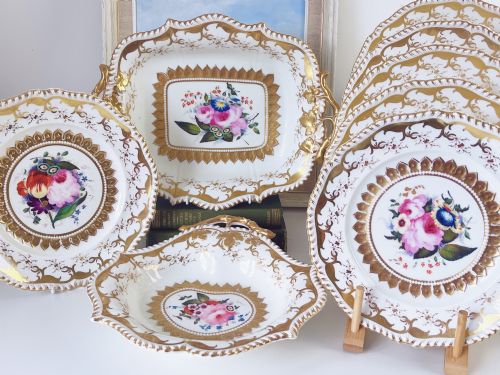
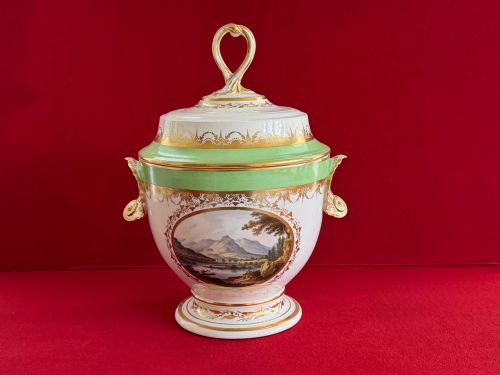
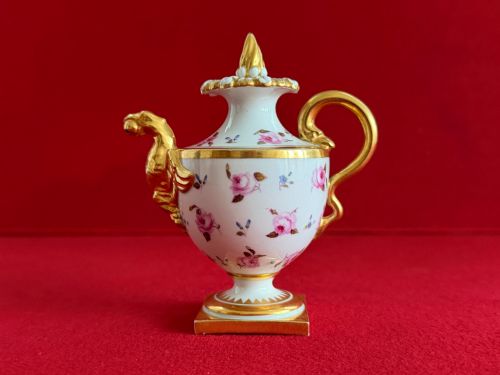
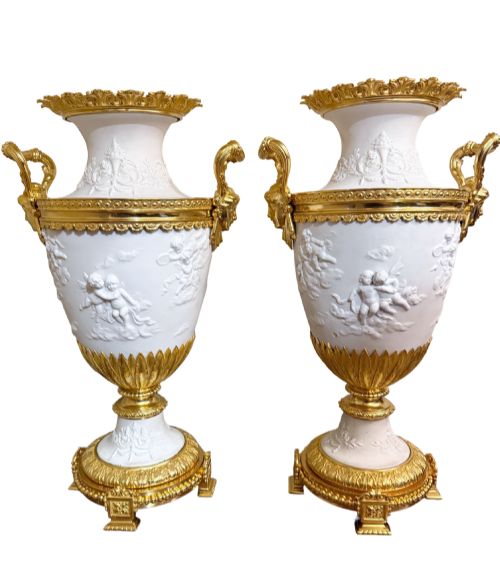
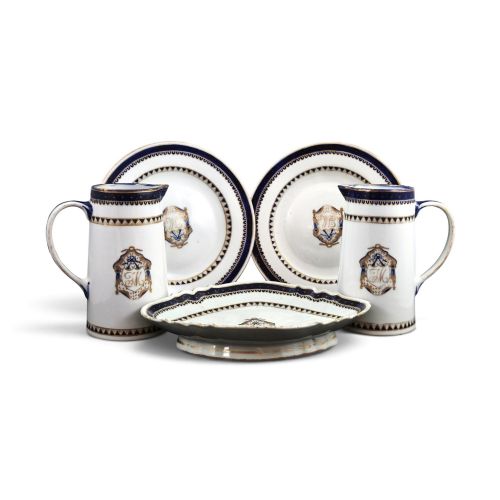
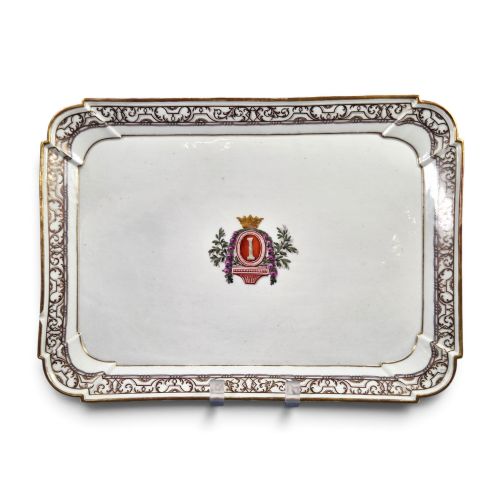
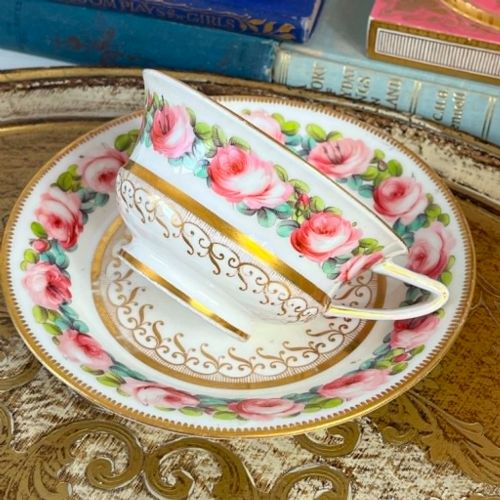
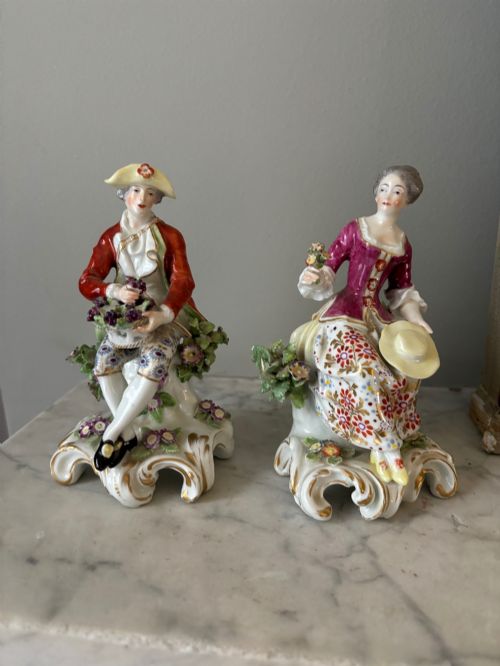
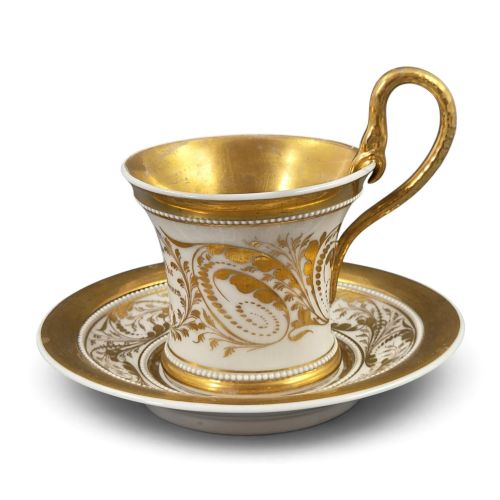
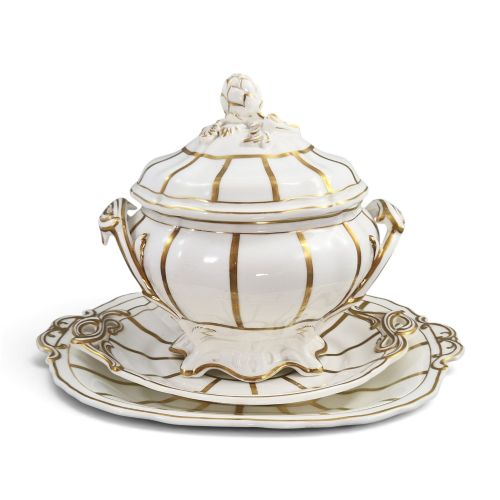
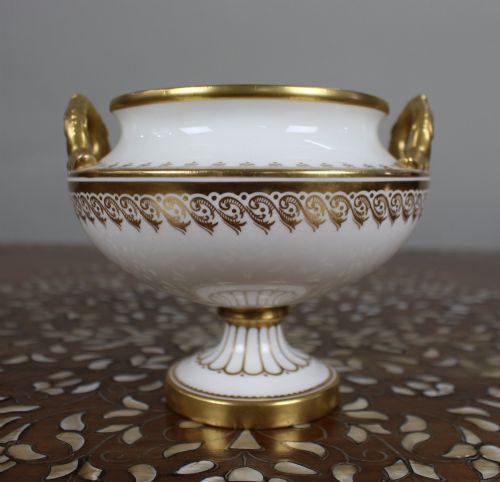
White and gold porcelain encompasses a wide array of tableware, decorative vessels, and figures produced across the eighteenth, nineteenth, and early twentieth centuries. When searching for white and gold porcelain, buyers encounter utility forms such as teacups, saucers, services, and tureens alongside ornamental objects like vases, urns, and candlesticks.
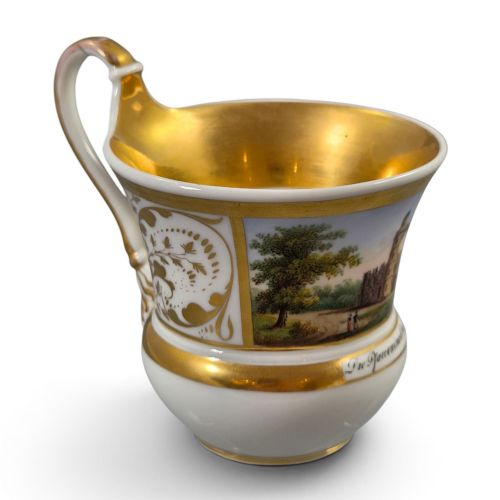
The objects originate from prominent European factories and export kilns, spanning Regency, Georgian, Victorian, and Edwardian periods. Pieces range from simple bone china duos with restrained gilt lines to heavily decorated exhibition vases and topographical cabinet cups.
How it was made
Manufacturers utilised fine ceramic bases including hard-paste porcelain and bone china, which provided a smooth white surface ideal for decoration. Artisans applied gold leaf, gilt, and enamel paint by hand, frequently incorporating handpainted landscapes, flowers, and monograms before firing the pieces to fix the metallic and colour details.
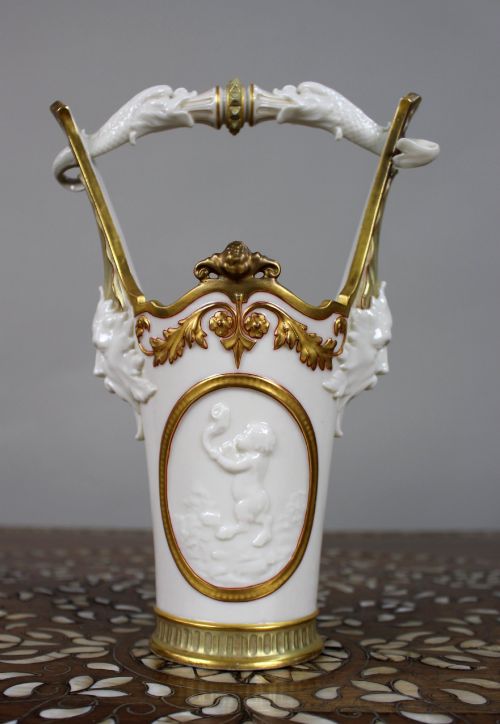
Techniques varied from delicate brushwork on cabinet plates and trios to moulded surface details found on parian ware, baskets, and candlesticks. Gilding was often burnished to create contrasting matte and bright metallic finishes against the white ceramic body.
Listings feature porcelain forms spanning the 18th century, Regency period, and Victorian era, utilising materials like gold leaf, bone china, and enamel.
What varies in quality
Quality in these ceramics rests upon the fineness of the porcelain body, the precision of the moulding, and the artistry of the handpainting and gilding. Pieces decorated by named artists or produced by leading factories demonstrate superior execution in their intricate motifs and careful burnishing.
Standard utility wares display simpler gilt bandings and transfer-printed or sparse floral designs, whereas exhibition pieces and presentation cups showcase detailed topographical scenes, raised gilding, and complex forms.
Grainger Lee And Co·Derby Porcelain·H And R Daniel·Flight Barr And Barr·Sevres·Ludwigsburg Porcelain·Davenport·Royal Worcester·Edme Sampsom·KPM Berlin·Ridgway·Minton·Chamberlains Worcester·Spode·Meissen·Crown Derby·Wedgwood·Coalport
The White and Gold Porcelain Glossary
- Bone china
- A type of soft-paste porcelain incorporating animal bone ash, producing a strong, milky white body suited to intricate tableware.
- Hard-paste porcelain
- A durable ceramic material fired at high temperatures using kaolin and petuntse, originating in China and later replicated in Europe.
- Gilding
- The application of gold leaf or gold paint to ceramic surfaces, used extensively to highlight rims, handles, and painted panels.
- Trio
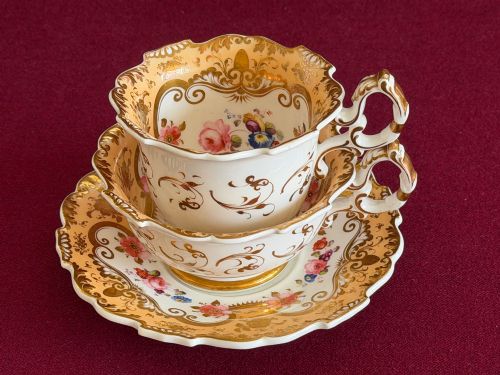
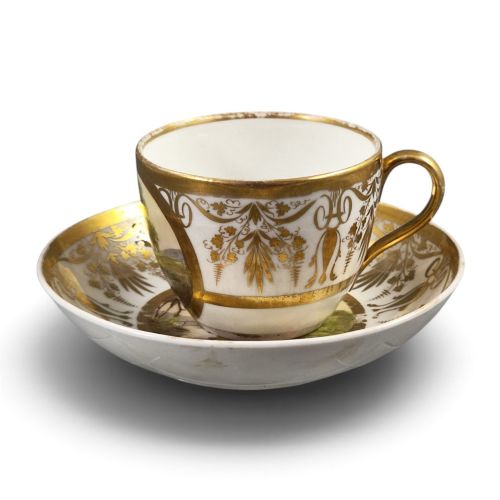
- A matching set comprising a teacup, a saucer, and a matching plate for tea service.
- Sucrier
- A small covered vessel designed specifically for holding and serving refined sugar.
White and Gold Porcelain: Frequently Asked Questions
What is white and gold porcelain?
White and gold porcelain refers to ceramic tableware and decorative objects manufactured with a white body and decorated with gold leaf, gilt, or enamel.
These pieces range from everyday tea sets and cabinet cups to large exhibition vases and commemorative plates produced across multiple centuries.
How do I identify the period of a piece?
Dating relies on factory marks, shape styles, and the specific painting techniques employed by the decorators.
Objects from the Georgian and Regency eras often feature handpainted botanical or topographical scenes, while Victorian and later pieces introduce diverse revival styles and aesthetic movement motifs.
How were these porcelain items used?
Many items served practical functions in formal dining and tea rituals, including dessert services, teacups, sauce tureens, and chocolate cups.
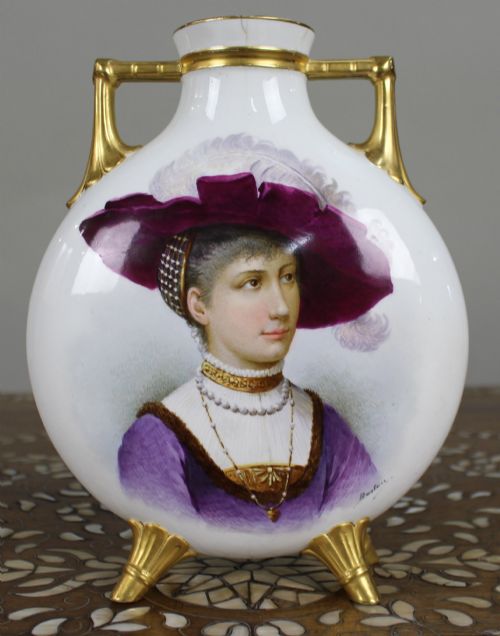
Other forms, such as decorative plates, moon flasks, and pedestals, were strictly ornamental, designed to be displayed on cabinets or mantelpieces.
How should I care for antique porcelain?
Antique porcelain requires gentle hand washing in lukewarm water with mild soap to protect fragile enamel and delicate gilding.
Avoid using dishwashers, abrasive sponges, or soaking the pieces for extended periods, as these methods can wear down the historic metallic decoration.