





Whisky Decanter Pair
A whisky decanter pair brings symmetry and shared service to a sideboard, offering matching vessels designed to hold spirits side by side.
Whisky Decanter Pair
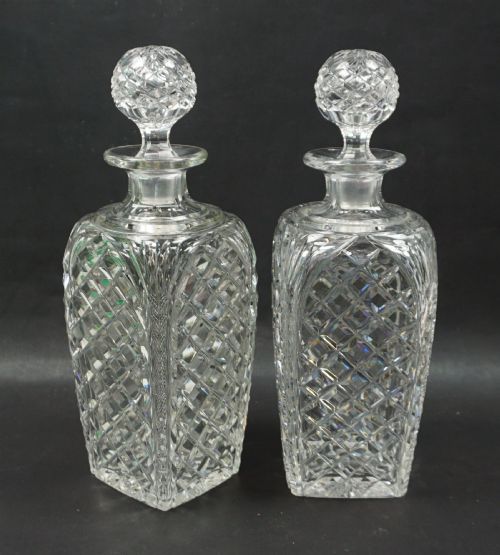
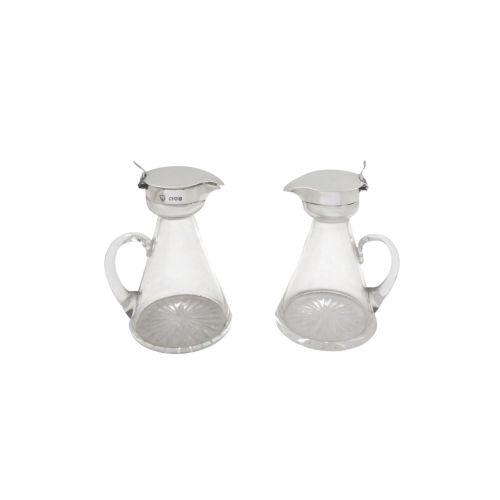
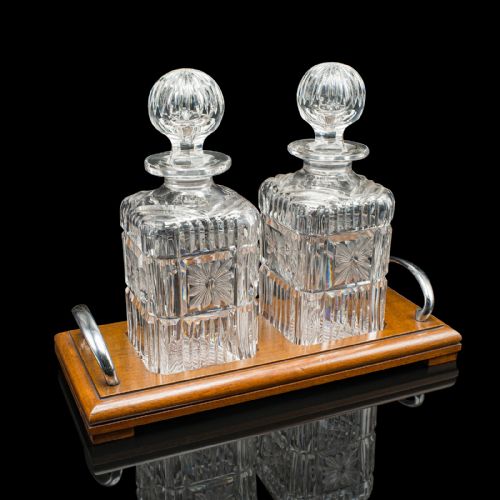
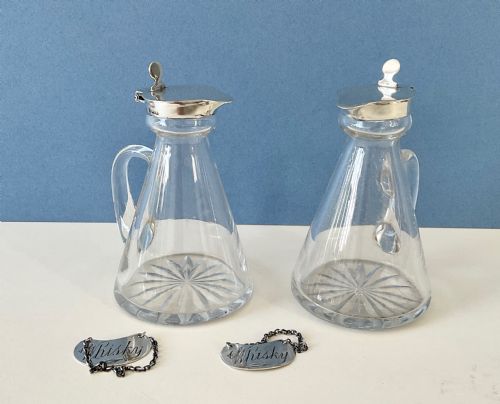
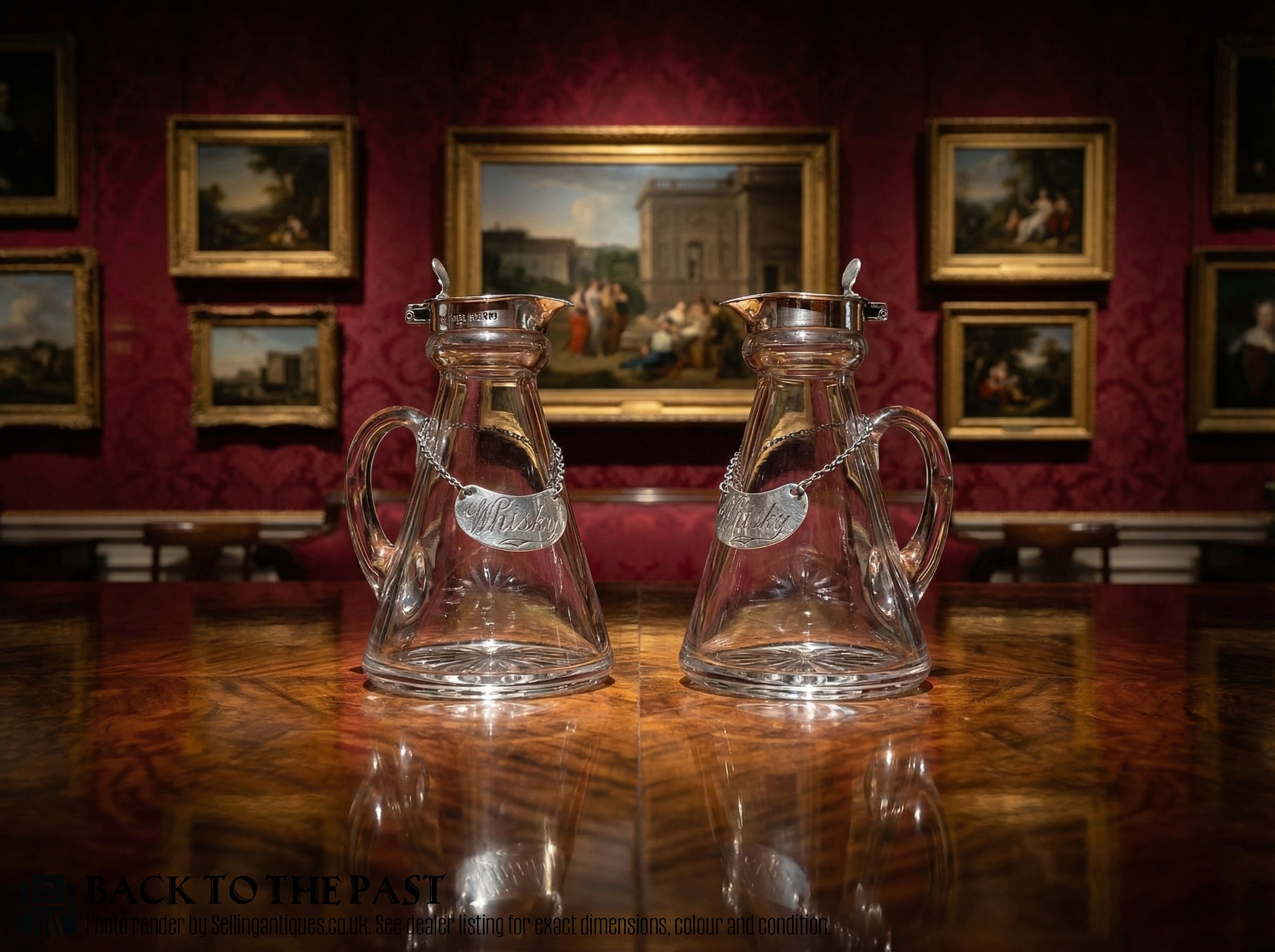
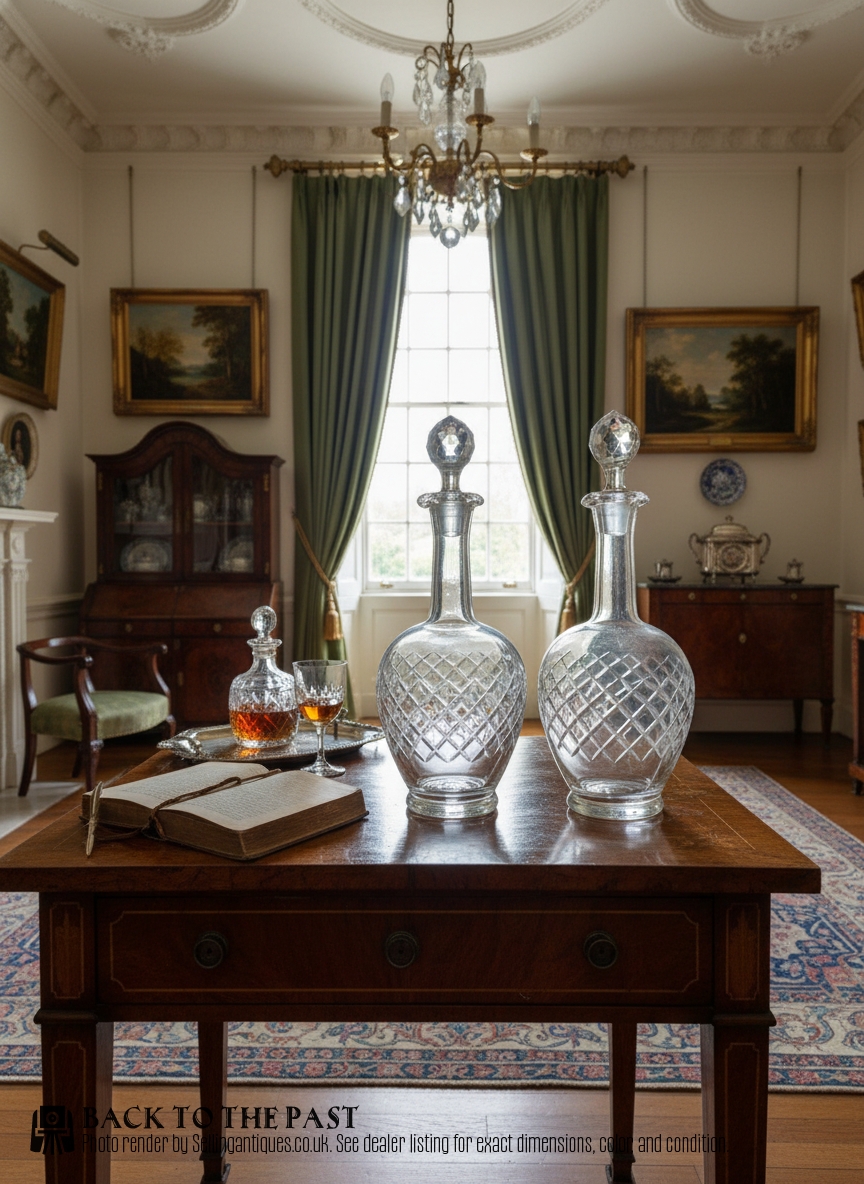
When you search for a whisky decanter pair, you encounter matched sets originating from the eighteenth century through to the mid-twentieth century. The Edwardian era and the early nineteen-hundreds dominate the pieces available, offering both full-sized spirit decanters and smaller personal vessels known as noggins. These sets frequently combine glass bodies with sterling silver mounts, blending utility with formal dining display.
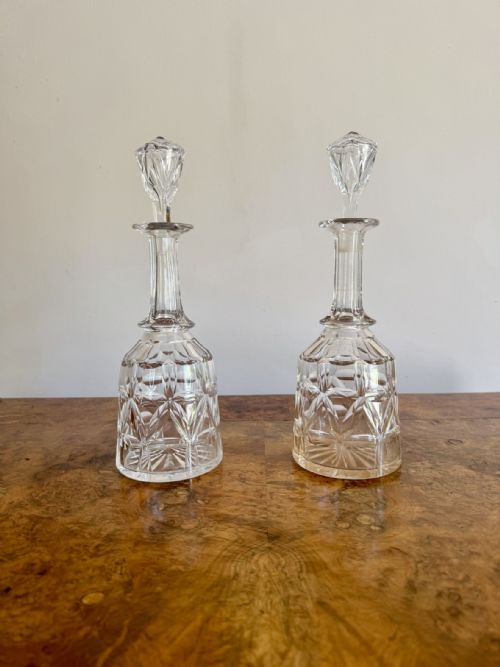
The forms range from square-section tapered crystal bottles to hobnail-cut Victorian jugs and miniature personal flagons. Many examples feature engraved labels or silver collars, while others rely on heavy facet cutting to catch the light. Buyers most often meet Edwardian cut glass designs and silver-topped whiskey noggins when browsing this selection.
How they were made
Makers shaped the bodies using lead crystal, cut glass, or blown glass, often employing optical blowing techniques to create subtle internal patterns. Heavy cutting wheels carved geometric facets and hobnail textures directly into the glass surface, requiring steady hands and deep skill. Craftsmen then fitted sterling silver collars, stoppers, and mounts to complete the necks and rims.
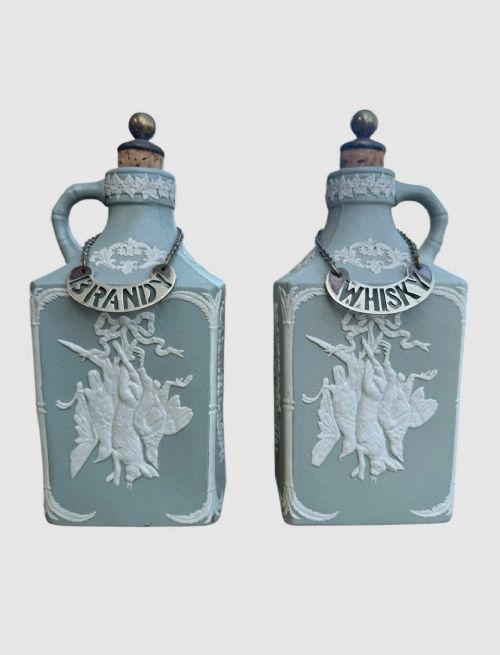
Metalwork involved casting and hammering sterling silver, frequently adding hallmarks to record the year and assay office. Engravers added titles such as whisky or brandy directly onto the glass panels using wheel-engraving methods. These combined materials resulted in robust vessels meant for daily use on dining tables and in smoking rooms.
Whisky Decanter Pair Retail Price Guide 2026
Typical asking prices for whisky decanter pair among the pieces listed under this phrase on Sellingantiques today, from the lower quarter to the upper quarter. They describe what is for sale here now, not the wider market.
Listings feature items spanning the eighteenth century, the Victorian era, the Edwardian period, and the mid-twentieth century.
What varies in quality
The brilliance of the crystal and the crispness of the cutting define the visual standing of a set. Superior pieces display deep, sharply rendered facets that refract light cleanly, whereas lesser examples show softer, shallower grinding on the glass body. The weight and clarity of the metal mounts also distinguish finer production from standard commercial work.
Matching consistency between the two vessels determines the integrity of a pair. Differences in stopper fit, glass tint, or silver hallmarks suggest assembled companions rather than original pairings from the maker's bench. Superior sets maintain identical proportions and wear patterns across both items.
James Powell·Hukin & Heath·Mappin & Webb
The Whisky Decanter Pair Glossary
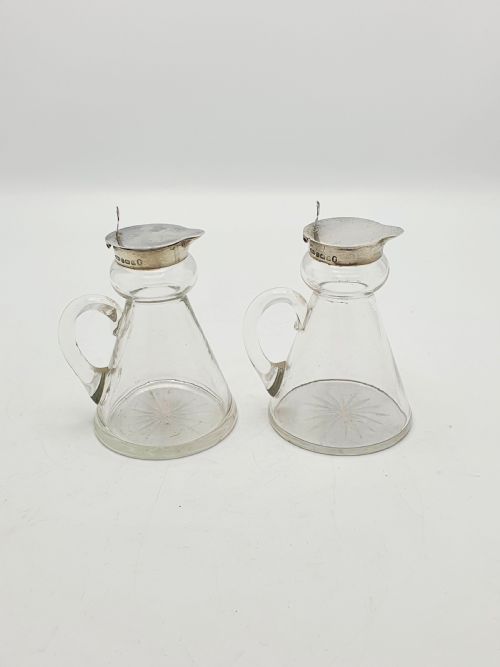
- Whiskey Noggin
- A small personal spirit decanter, usually holding a single glass of whisky, often fitted with a silver lip and a hinged or loop handle.
- Cut Glass
- Glass shaped and patterned by holding it against rotating abrasive wheels, producing deep geometric facets.
- Lead Crystal
- Glass containing metallic oxide that increases weight, brilliance, and clarity, allowing for sharper decorative cutting.
- Sterling Silver
- An alloy of silver containing ninety-two point five percent silver by mass, standard for the mounts and bottle collars found on better decanters.
- Jasperware
- A type of fine stoneware developed in the eighteenth century, appearing on specific spirit flagons within the selection.
- Hobnail Cut
- A raised, multi-faceted pattern resembling the hobnails on heavy boots, frequently used on Victorian glass bodies to improve grip and sparkle.
Whisky Decanter Pair: Frequently Asked Questions
What is a whisky noggin?
A whisky noggin is a miniature personal decanter designed to hold a single measure of spirit for an individual guest. These small vessels typically feature a handle and a silver lip for easy pouring.
They gained popularity in the late nineteenth and early twentieth centuries for domestic bar service and smoking rooms.
How do I clean an old decanter?
Old decanters require careful hand washing with warm water and mild detergent, avoiding sudden temperature changes that can crack historic glass. Soft bottle brushes help reach interior residue without scratching the inner surface.
Stoppers should be washed separately and left out until the interior dries completely.
Are the stoppers original?
Original stoppers generally share the same glass tint, wear patterns, and grinding marks as the neck of the decanter. Matching numbers or factory grinding marks on both the base and the stopper often confirm they belong together.
Replacements usually show slight discrepancies in fit or clarity under bright light.
How do I date a silver-mounted decanter?
Sterling silver mounts carry hallmarks that indicate the assay office, the maker's mark, and the exact year of production. These stamps provide a reliable guide for dating the entire piece when the glass and mounts were made together.
Style indicators like Edwardian star-cutting or Victorian hobnail patterns offer further clues when hallmarks are absent or worn.