



Wheeled Tea Trolley
A wheeled tea trolley is a mobile serving piece designed for effortless hospitality, combining practical tiers with period timber or metal work.
Wheeled Tea Trolley
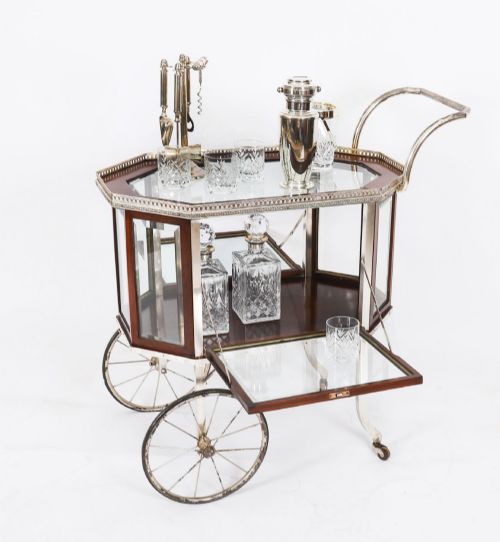
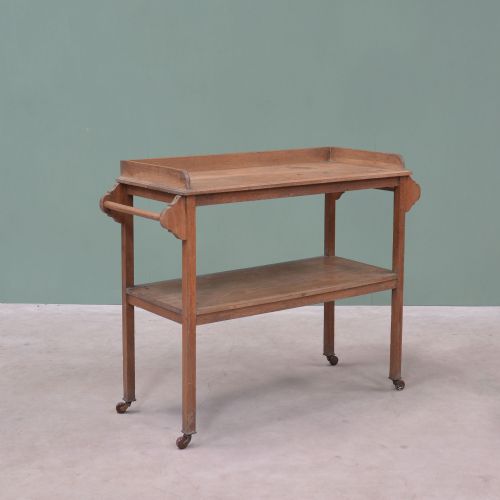
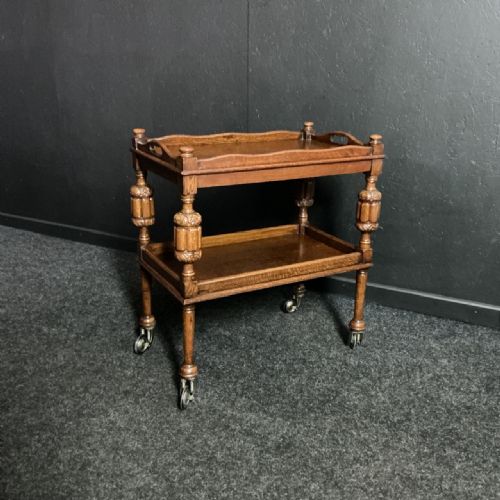
When you search for a wheeled tea trolley, you encounter practical mobile furniture designed for serving beverages and food across rooms. These pieces appear in forms ranging from simple two-tier timber servers to elaborate bar carts with folding tops.
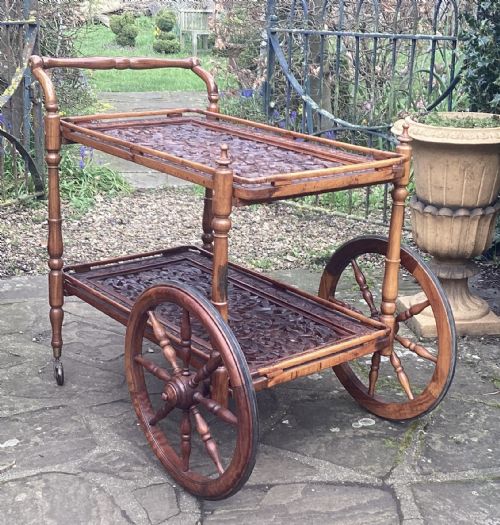
The selections span periods from the Victorian era through the Edwardian years and into the 1920s and 1930s. You meet styles including Art Deco, Jacobean Revival, French Neoclassical, and Anglo-Indian designs.
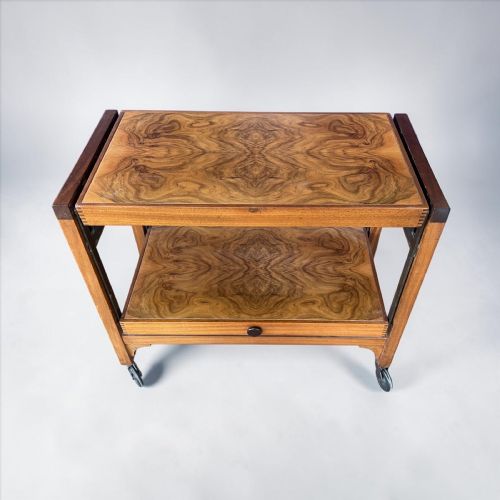
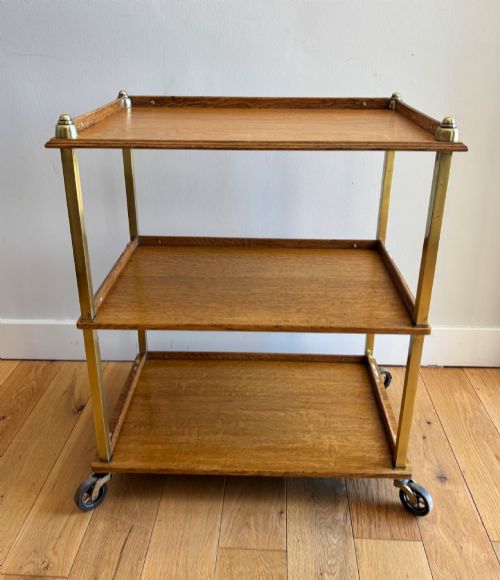
Common configurations include multi-tiered structures, metamorphic designs, and models featuring lift-off trays. Oak and mahogany dominate the timber examples, while brass, glass, and goatskin appear in decorative variants.
How they were made
Maker construction relies on traditional cabinet-making timbers such as solid oak and mahogany, shaped into multi-tiered frameworks with integrated wheels. Joinery methods support daily movement while maintaining structural rigidity across multiple levels.
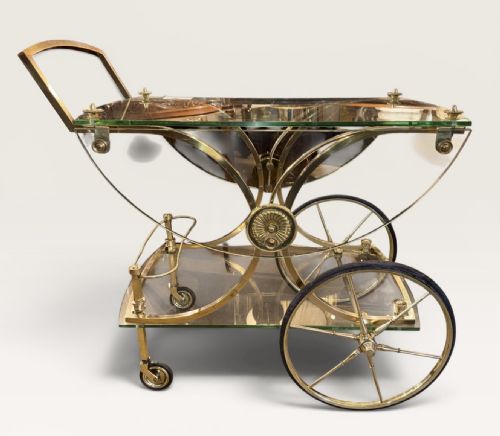
Metal elements incorporate brass and silver plate, often paired with glass inserts for serving surfaces or fitted with specialised mechanisms like folding tops and metamorphic frames.
Surface treatments range from polished wood finishes to intricate hand-carved hardwood details and exotic coverings such as goatskin applied to structural frames.
Listings feature oak, mahogany, walnut, teak, brass, glass, and goatskin across various historical periods.
What varies in quality
Quality rests in the integrity of the timber selection and the precision of mechanical elements like folding leaves, lift-off trays, and metamorphic action. Superior pieces demonstrate seamless movement and robust joints that withstand frequent repositioning.
Material variation marks the difference between standard utility furniture and high-status decorative items, with specialised finishes like goatskin, fine brass work, and detailed hand-carving elevating specific pieces above simple utilitarian designs.
Maison Bagues·Aldo Tura
The Wheeled Tea Trolley Glossary
- Etagere
- An open multi-tiered piece of furniture used for displaying or serving items. It provides several accessible levels supported by upright columns.
- Metamorphic
- Describing furniture that transforms from one form into another, such as a trolley expanding its top surface. This mechanism allows a compact server to double its usable area.
- Silver Plate
- A thin layer of silver applied to a base metal core to provide a reflective finish. It offers the appearance of solid silver while maintaining durability for serving ware.
Wheeled Tea Trolley: Frequently Asked Questions
What is a wheeled tea trolley used for?
These mobile pieces transport tea, beverages, and food items between rooms for serving guests.
They function as portable side tables that bring refreshments directly to seating areas during social gatherings.
How do I identify an Edwardian tea trolley?
Edwardian examples typically feature light oak or mahogany construction with simple lines and functional wheeled bases.
Many incorporate folding leaves or multiple tiers designed for domestic hospitality during the early twentieth century.
Are Art Deco tea trolleys different?
Art Deco pieces favor sleek geometries, contrasting materials like brass and glass, or exotic finishes such as goatskin.
They reflect the modernist design shifts of the 1920s and 1930s compared to earlier revival styles.
How should I care for a wooden trolley?
Keep wooden surfaces away from direct heat sources and excessive moisture to protect the polished finish.
Regular dusting and occasional application of appropriate wood wax maintain the condition of the timber.