



Wheel Engraved Tumbler
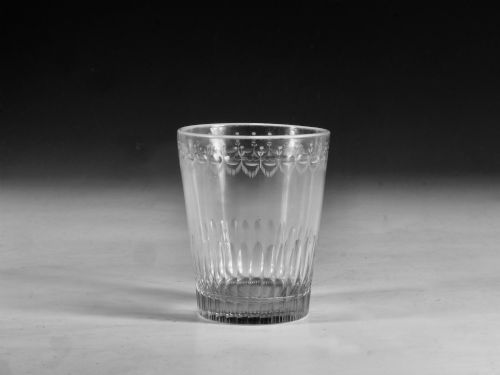
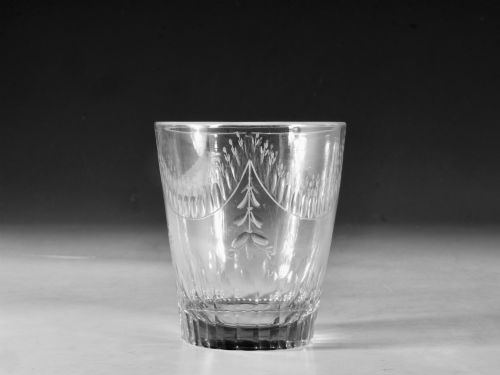
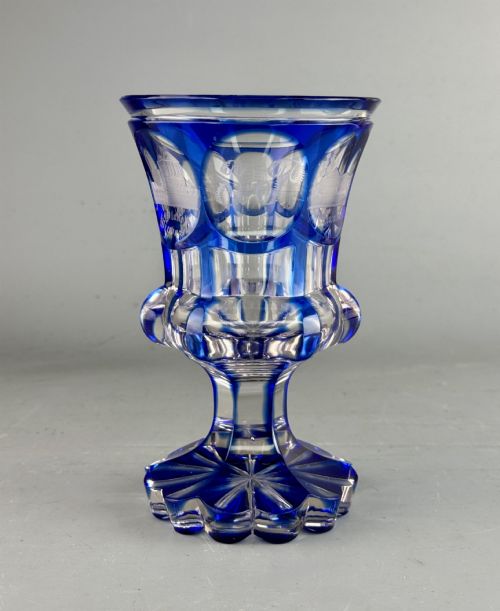
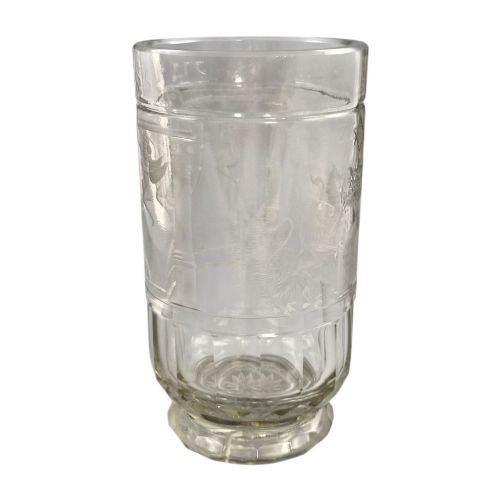
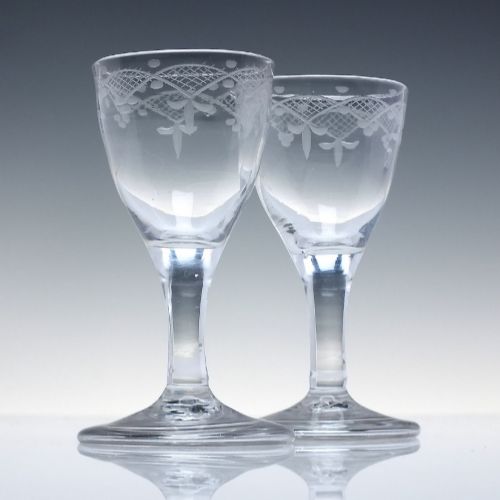
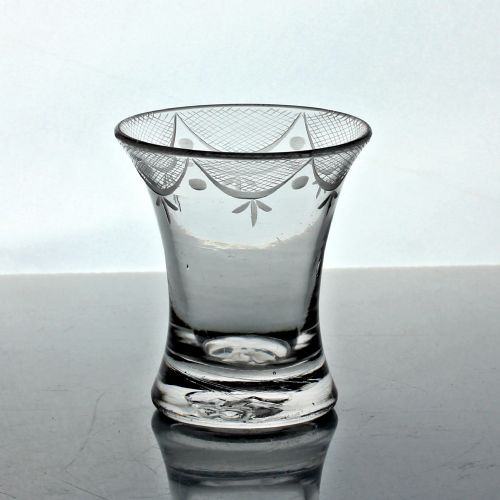
These wheel engraved tumblers span Georgian, Victorian and later periods in clear, cobalt and ruby glass.
Wheel Engraved Tumbler
A wheel engraved tumbler is a drinking vessel or small beaker worked with a rotating wheel to cut decorative motifs into the surface of the glass. When searching for a wheel engraved tumbler, collectors generally encounter pieces ranging from eighteenth-century Georgian examples to nineteenth-century Bohemian and Victorian productions.
How they were made
The foundation of each vessel lies in hot glass techniques, with makers hand-blowing clear, lead, cobalt or ruby glass into traditional drinking and display forms. Artisans then utilised rotating stone or copper wheels of varying sizes to grind intricate patterns directly into the cooled surface.
Overlay techniques appear in specific pieces where a layer of coloured glass, such as ruby or cobalt, is fused over a clear glass body before the engraver cuts through the outer layer to expose the contrasting colour underneath. Folded feet and polished pontil marks frequently indicate eighteenth-century manufacturing methods.
Wheel Engraved Tumbler Retail Price Guide 2026
Typical asking prices for wheel engraved tumbler among the pieces listed under this phrase on Sellingantiques today, from the lower quarter to the upper quarter. They describe what is for sale here now, not the wider market.
What varies in quality
Quality in a wheel engraved tumbler rests principally upon the depth, precision and confidence of the wheel work on the glass surface. Superior pieces exhibit crisp lines and subtle shading achieved through varied wheel pressures, whereas simpler examples show shallower, more hurried cutting.
The choice of material and metal also determines the standing of a piece, with heavy clear lead glass or rich overlaid ruby and cobalt glasses sitting at the higher end of the range. The sophistication of the design, from simple floral swags to detailed figural or Masonic iconography, dictates the distinction of the work.
The Wheel Engraved Tumbler Glossary
- Pontil mark
- The rough scar left on the base of a blown glass vessel where the pontil rod was snapped off after shaping. This mark is often ground smooth or polished on finer pieces.
- Lead glass
- Glass containing lead oxide, which increases the weight, brilliance and refractive index of the material. It provided a softer surface that was particularly suited to wheel engraving.
- Overlay glass
- A vessel formed of two or more distinct layers of glass, usually a clear body encased in a coloured outer layer. The engraver cuts through the outer colour to reveal the contrasting layer beneath.
- Firing glass
- A heavy-bottomed drinking glass designed in the eighteenth century for toasts at club or Masonic meetings. The thick base produced a sharp sound when set down upon a table.
Wheel Engraved Tumbler: Frequently Asked Questions
How do I date an old tumbler?
Dating relies upon a combination of material weight, pontil characteristics and stylistic motifs present on the glass. Eighteenth-century examples often display folded feet or heavy lead metal, while nineteenth-century pieces frequently utilise coloured glass overlays.
Changes in engraving depth and subject matter also offer chronological clues. Earlier British pieces tend toward floral swags and geometric borders, whereas continental Victorian items often feature complex architectural or figural scenes.
Were these glasses meant for drinking?
Many of these vessels served functional roles for spirits, ale or drams during social gatherings and formal meals. Heavy bases and sturdy walls were designed to withstand regular use.
Larger vessels and ceremonial beakers functioned more as display pieces or presentation items rather than everyday tableware. Collectors today generally treat these delicate objects with care, limiting their use to display.
What is Bohemian glass?
Bohemian glass refers to holloware produced in the historical region of Bohemia, now part of the Czech Republic, renowned for its tradition of glassmaking. The region became particularly famous during the nineteenth century for rich coloured glass and deep wheel engraving.
Pieces from this origin often include spa goblets and flash glass beakers featuring elaborate coats of arms or local town views. The intense cobalt and ruby colours are characteristic hallmarks of these regional workshops.
How should I clean my glass?
Cleaning antique glass requires gentle hand washing in lukewarm water with mild soap to protect the polished surface. Harsh chemicals and modern dishwashers can scratch or cloud the historic material.
Care should be taken around the rim and base, avoiding sudden temperature changes that might stress the old metal. Soft cloths are best for drying and removing water spots without leaving lint.