
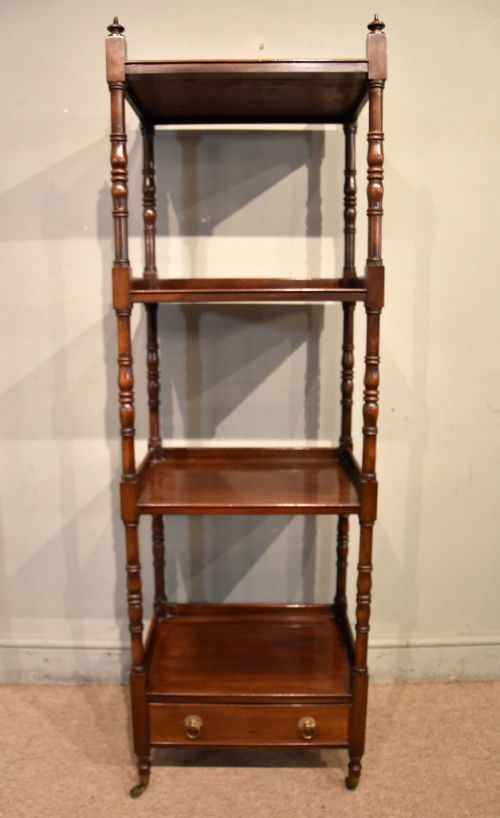
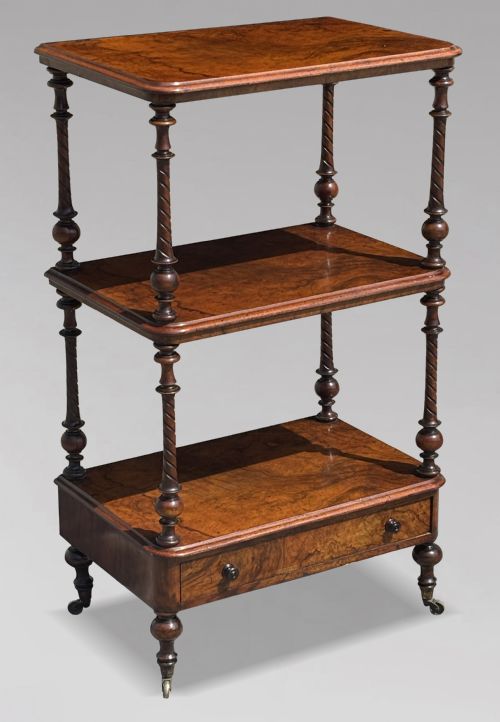
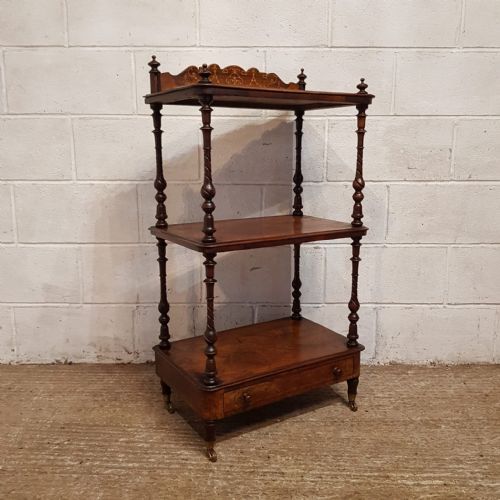


Whatnot with Drawer
A whatnot with drawer is a tiered open display stand that brings practical storage and vertical shelving into period rooms.
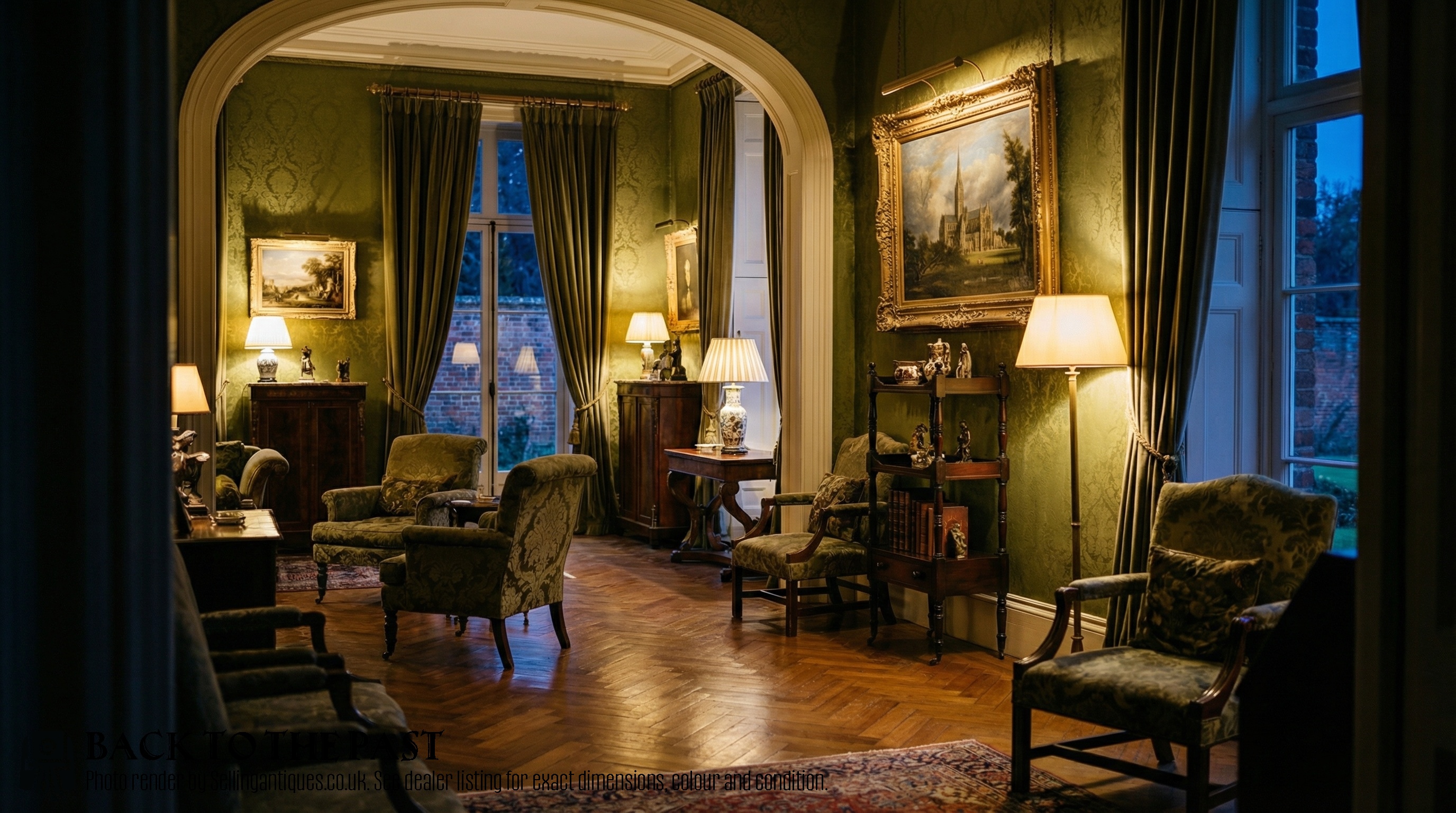
Whatnot with Drawer
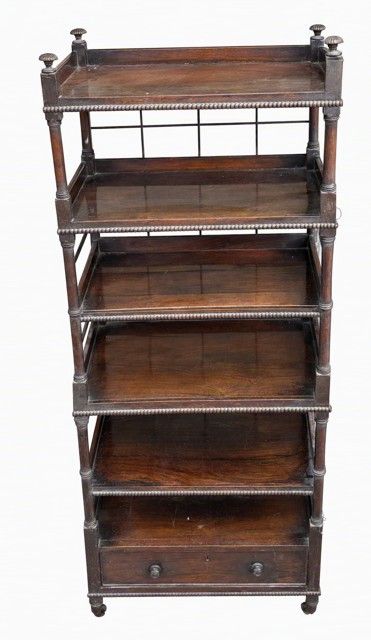
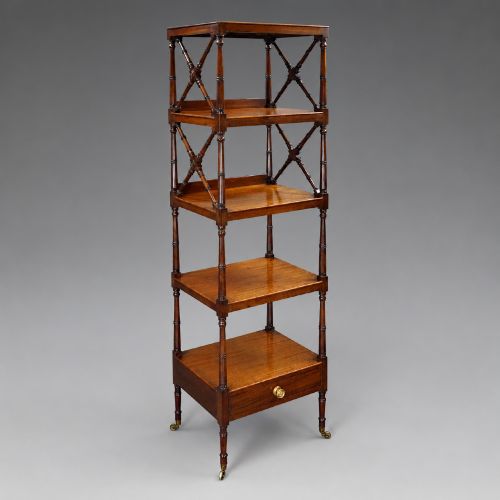
A whatnot with drawer is a tiered open shelving unit designed to display ornaments, books or small items while offering concealed storage in a base or side drawer. These pieces appear frequently across the Georgian, Regency, William IV and Victorian periods, reflecting a sustained demand for multi-level display furniture in British homes. Buyers will encounter both three-tier and four-tier forms alongside taller five-tier examples, often constructed with turned supports or upright legs.
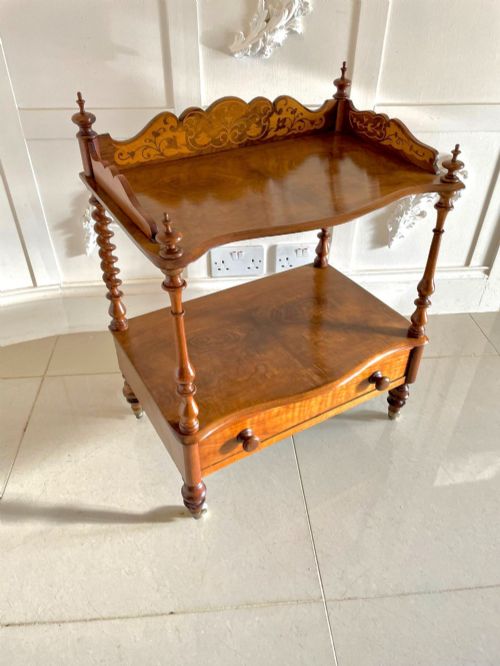
Mahogany and rosewood dominate the surviving examples, complemented by occasional pieces in walnut, burr walnut and ebony. The drawer configuration varies, appearing singly at the base, within a cupboard base, or alongside a cellarette in late Georgian and Victorian formats. Some iterations include mirrors, brass details or inlaid boxwood, expanding their visual reach beyond simple shelving.
The term whatnot covers related open display furniture such as étagères, display shelves and canterbury pieces that incorporate drawer storage. While many are straightforward tiered stands, others integrate specialised compartments like cushion-fronted drawers or lower cupboards. This variety ensures that a buyer searching for this form meets pieces suited to both compact spaces and larger reception rooms.
Materials and construction
Cabinet makers relied primarily on dense timbers like mahogany and rosewood to support multiple open shelves without structural sagging. Walnut and burr walnut also appear, occasionally accented with contrasting boxwood stringing or ebony inlays to define the tiers and drawer fronts. These hardwoods were selected for their stability and capacity to take a fine polish across upright supports and shelves.
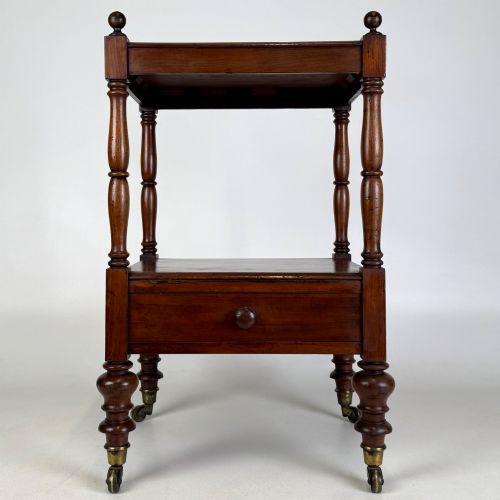
Brass fittings, including castors and small handles, provide mobility and operational detail to the drawer sections. Turned wooden feet and upright pillars connect the tiers, demonstrating traditional joinery adapted to multi-level stacking. The inclusion of mirrors in certain Victorian pieces introduces glass elements secured within wooden frames above the drawer level.
Some nineteenth-century makers hid bottle cellarettes inside the base, turning a humble display shelf into a secret cabinet for evening tipples.
Markers of quality
Quality in a whatnot with drawer rests on the selection of timber and the crispness of its turning. Finer pieces display well-figured mahogany or richly grained rosewood matched across the shelves and drawer fascias. The integration of the drawer into the tiered framework shows the maker's skill, ensuring smooth operation without disrupting the vertical balance of the stand.
Subtlety of detail distinguishes standard production from superior workshops. Inlaid boxwood, ebony accents, or well-cast brass elements elevate the piece visually. The stability of the stacked tiers and the neatness of the turned columns reveal the precision applied during original construction.
Samson & Son London
The Whatnot with Drawer Glossary
- Whatnot
- A set of open shelves for displaying small objects or books, typically featuring multiple tiers and one or more drawers. The form emerged in the Georgian period and remained popular through the Victorian era.
- Etagere
- A French term for a piece of furniture consisting of a set of open shelves for displaying ornaments, synonymous with many whatnot forms. These pieces emphasise tiered display space.
- Cellarette
- A compartment or drawer designed to hold bottles, occasionally integrated into the base of larger mahogany pieces. It provides specialised storage within the framework of a display stand.
- Canterbury
- A low tiered stand featuring slivens or partitions for holding music sheets or books, sometimes combined with a drawer in Victorian iterations. It shares the multi-tiered construction of the standard whatnot.
- Burr walnut
- A decorative wood veneer showing swirling grain patterns caused by growths on the walnut tree. It is used on high-status Victorian pieces to create rich surface visual texture.
Whatnot with Drawer: Frequently Asked Questions
What is a whatnot with drawer?
A whatnot with drawer is a multi-tiered open shelving unit designed for display, featuring an integrated drawer in the base or lower section for concealed storage.
These pieces combine vertical display shelves with practical compartments, appearing in mahogany, rosewood and walnut across the Georgian and Victorian eras.
How were these stands used originally?
They were used in parlours and drawing rooms to display ornaments, books and small decorative items while keeping smaller essentials tucked away in the drawer.
The open tiers allowed owners to exhibit collections, while the base drawer provided tidy storage for household items.
How do I style a whatnot with drawer at home?
Place it against a living room or hallway wall to hold books, ceramics or small plants on the open shelves, using the drawer for everyday clutter.
Its compact footprint allows it to fit into corners or beside seating without dominating the room.
How do I distinguish Georgian from Victorian models?
Georgian models often feature cleaner lines, simpler mahogany timbers and classic proportions, reflecting restraint in their turned supports and drawer placement.
Victorian examples frequently introduce richer veneers like burr walnut, darker ebony stringing, mirrors, or more elaborate turning and carving.