
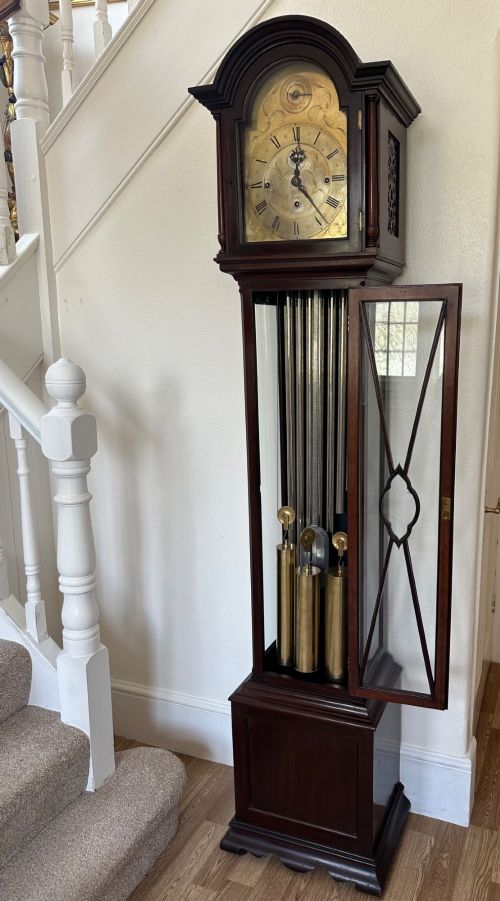


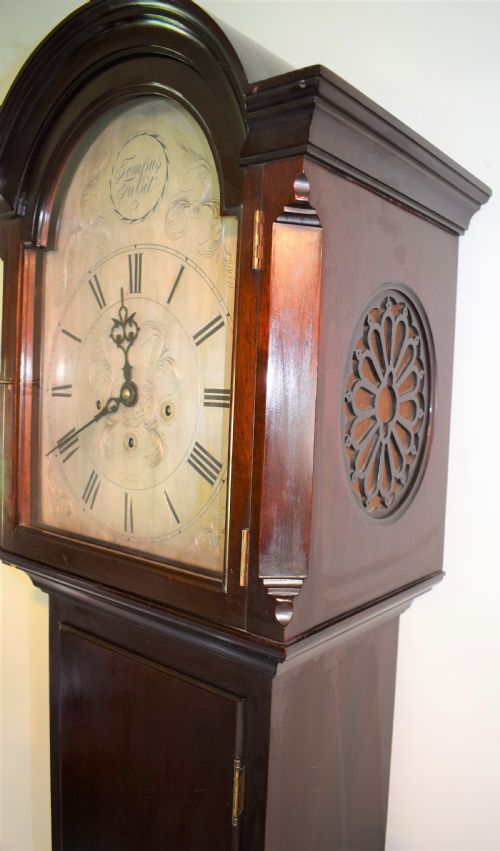

Westminster Chime Floor Clock
These westminster chime floor clock examples bring resonant quarter chimes and stately height into a room, offering both mechanical interest and period presence.
Westminster Chime Floor Clock
When you search for a westminster chime floor clock, you encounter tall timepieces designed to mark the quarters and hours with traditional melodies. The selections span the Victorian era, the Edwardian period, and into the 1920s and 1930s, encompassing full-sized grandfathers as well as more compact grandmother clocks.
The evidence shows diverse forms including slim longcase clocks and smaller musical models, often housed in traditional British wood cases. Styles range across Georgian and Gothic revivals, alongside striking Chinoiserie lacquer finishes that bring decorative variety to the tall clock format.
Materials and movement construction
Casework relies heavily on solid timber and veneer, with mahogany and oak appearing frequently alongside decorated lacquer surfaces. Glass doors protect the dial and pendulum, while brass and silvered metal furnish the visible face and internal mechanical components.
Movements incorporate complex quarter-chiming mechanisms, utilising bells, tubular gongs, or musical tune cylinders to generate the characteristic sound. Weight-driven systems and spring-driven setups both power these intricate timekeepers, requiring careful assembly by skilled makers.
Distinctions in craftsmanship and casework
Superior examples reveal themselves through the crisp execution of the dial engraving, the clarity and resonance of the chiming mechanism, and the careful selection of timber grain in the case. Finer movements maintain steady timekeeping and smooth chime delivery across the quarter hours.
Case construction quality shows in the depth of the mouldings, the proportion of the hood and trunk, and the preservation of original decorative finishes. Pieces bearing the marks of established retailers or specialised horologists often display a higher degree of finishing refinement.
Gillett and Johnston·Camerer Cuss and Co·Geo Tarratt of Leicester·JJ Elliot
The Westminster Chime Floor Clock Glossary
- Grandmother clock
- A smaller, more slender version of the traditional longcase clock, typically standing under six feet tall. These scaled-down pieces became particularly popular during the early twentieth century.
- Longcase clock
- A tall, weight-driven pendulum clock housed in a protective wooden case consisting of a hood, trunk, and base. Often referred to colloquially as a grandfather clock.
- Tubular bell movement
- A chiming system that uses suspended brass tubes instead of traditional gongs or bells to produce deep, resonant musical notes. This mechanism was favoured in larger Edwardian and later musical clocks.
- Quarter chiming
- A movement complication that sounds a melodic sequence on every quarter hour, culminating in a full hour strike. The Westminster tune is the most common melody associated with this arrangement.
Westminster Chime Floor Clock: Frequently Asked Questions
What is a westminster chime floor clock?
A westminster chime floor clock is a tall timepiece, such as a grandfather or grandmother clock, equipped with a movement that plays the familiar four-note Westminster quarter-hour melody.
These pieces combine functional timekeeping with decorative woodwork and acoustic chime mechanisms designed to fill a domestic interior with sound.
How do I tell a grandfather clock from a grandmother clock?
The primary distinction lies in overall height and proportion, with grandmother clocks built noticeably shorter and more slender than standard grandfather clocks.
This smaller format made them suitable for smaller domestic spaces while retaining the weight-driven or spring-driven chiming movements of their larger counterparts.
What materials are used in these clocks?
Casework is constructed predominantly from traditional timbers like mahogany and oak, occasionally featuring decorative Chinoiserie lacquer work.
Internal dials and fittings utilise brass and silvered metal, protected by glass panels set into the wooden doors.
How do these clocks keep time and chime?
These timepieces rely on mechanical movements powered by weights or springs, governing the swing of a pendulum to regulate the seconds.
Train wheels release hammers to strike bells, gongs, or tubular tubes at each quarter hour, playing the scheduled musical sequence before striking the full hour.