
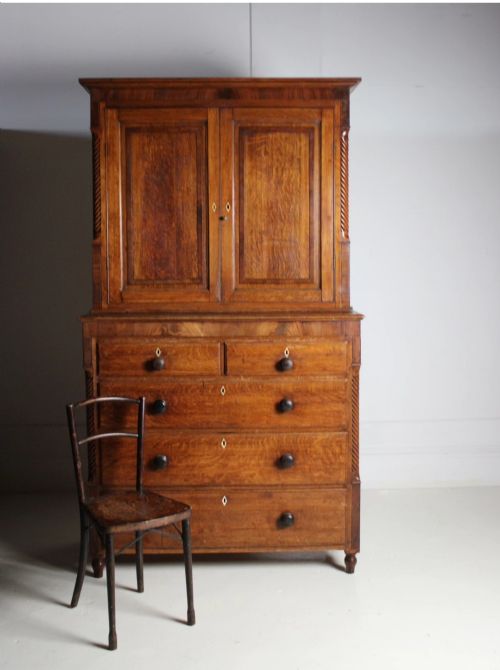
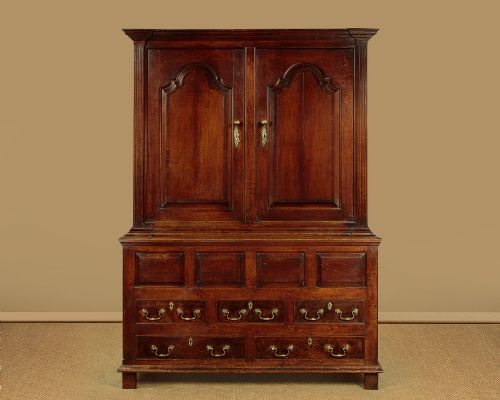
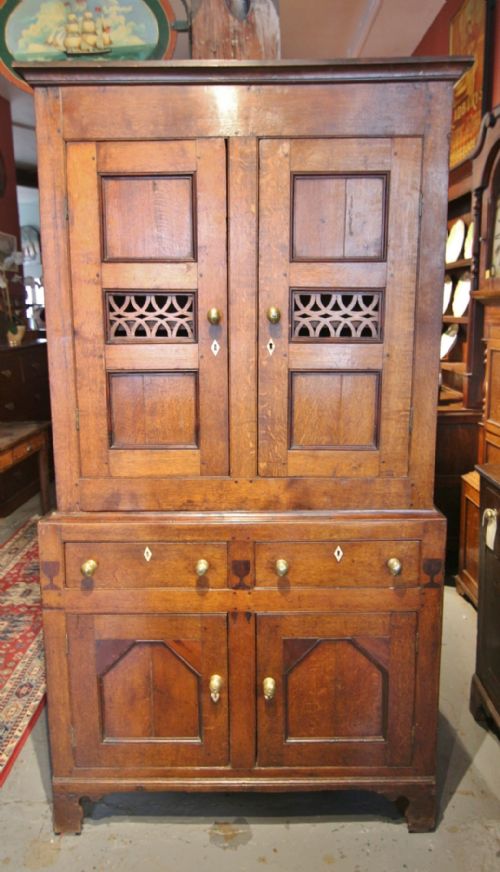
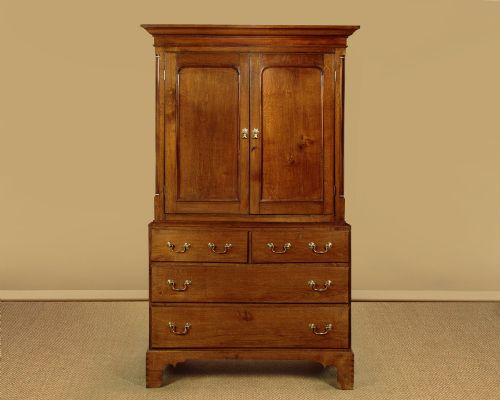


Welsh Oak Housekeeper Cupboard
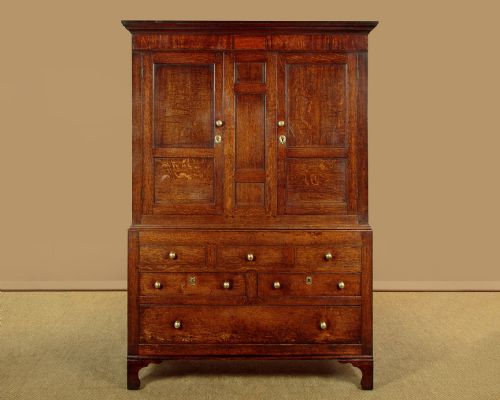
A welsh oak housekeeper cupboard is a substantial country storage piece built to hold household provisions, linens, and garments.
Welsh Oak Housekeeper Cupboard
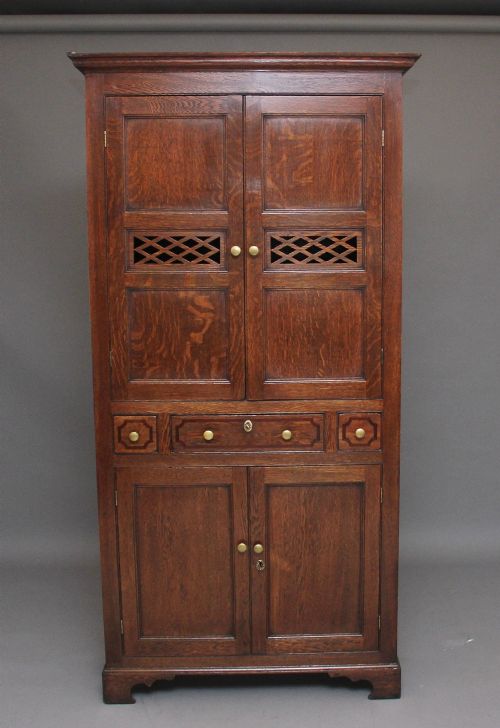
A welsh oak housekeeper cupboard represents the robust utilitarian storage furniture produced in Welsh and English country workshops during the eighteenth and nineteenth centuries. Buyers searching for a welsh oak housekeeper cupboard encounter multi-stage press cupboards, food cupboards, and livery presses spanning the Georgian and Victorian eras. These large case pieces typically combine upper storage compartments with lower cupboard doors or drawer arrangements, reflecting the domestic requirements of rural households.
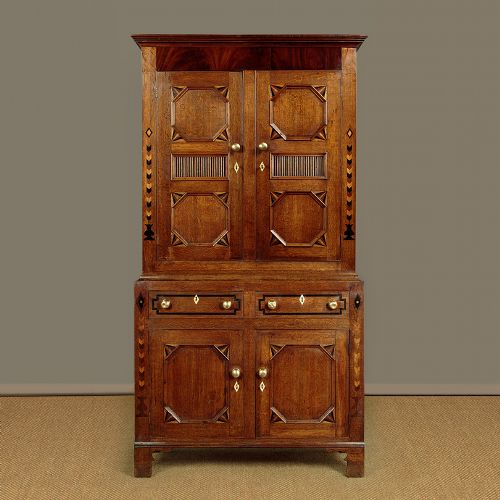
The material identity centres on solid oak construction, often enriched with regional decorative vernacular details such as inlaid contrasting woods or carved panels. Examples range from tall two-stage press cupboards and linen presses to specialised food storage forms like bread and cheese cupboards and tack cupboards. Surviving pieces frequently display the regional characteristics of North Wales, Anglesey, or the Welsh Marches, maintaining a heavy, utilitarian architecture designed for daily rural domesticity.
How They Were Made
Local cabinetmakers constructed these substantial carcases using solid timber planks secured with traditional joinery, integrating oak alongside secondary timbers. The surface decoration relies heavily on contrasting woods and detailed marquetry inlay, utilising materials such as mahogany, bone, ebony, holly, and inlaid wood to accent panels and cornices. Iron hardware provides functional strength for hinges and mounts, while brass handles and escutcheons add refined detail to opening doors and drawers.
Regional construction methods varied from slab-side framing to complex multi-stage stacking, seen in forms like the cwpwrdd deuddarn and tridarn. Cabinetmakers shaped panels with bevels and applied mouldings, employing hand tools to finish the dense timber surfaces. The integration of contrasting inlay work demonstrates skilled craftsmanship applied to utilitarian farmhouse furniture.
Listings feature oak storage pieces from the Georgian and Victorian eras, incorporating materials like brass, bone, and marquetry inlay.
What Varies In Quality
The architectural ambition of the piece dictates its standing, distinguishing simple vernacular food stores from sophisticated multi-stage press cupboards with intricate marquetry. Refinement in the proportion of the upper and lower stages and the complexity of the cornice mouldings elevate certain examples above standard workshop production. The presence of specialised regional forms, such as unique Cardiganshire layouts or detailed architectural cabinetry, separates exceptional regional specimens from utilitarian storage.
The integration and survival of decorative elements like contrasting wood inlay, bone highlights, and original brass hardware contribute significantly to an example's overall character. Timber selection matters, particularly the grain figuration of the primary oak and the precision of the contrasting holly or ebony stringing. A harmonious balance between robust country construction and careful decorative detailing marks the upper echelon of these domestic case pieces.
The Welsh Oak Housekeeper Cupboard Glossary
- Cwpwrdd Deuddarn
- A traditional Welsh two-stage cupboard featuring enclosed upper and lower compartments, often decorated with panelled doors.
- Livery Press
- A large storage cabinet traditionally utilised for hanging garments and storing household textiles or clothing.
- Marquetry Inlay
- The art of applying decorative pieces of veneer or contrasting wood to a solid timber structure to form geometric or pictorial patterns.
- Linen Press
- A tall piece of furniture designed specifically for storing folded linens, frequently incorporating sliding trays or internal shelves behind heavy doors.
- Vernacular
- Architecture and furniture design rooted in local traditions, using regional materials and techniques rather than polite metropolitan styles.
Welsh Oak Housekeeper Cupboard: Frequently Asked Questions
What is a housekeeper cupboard used for?
These large pieces served as the central storage hubs in traditional homes for household linens, blankets, and dry provisions.
Lower sections often accommodated heavier items or foodstuffs, while upper compartments held garments and household supplies.
How do you date an oak cupboard?
Dating relies on examining construction techniques, joinery methods, hardware types, and stylistic vernacular details.
Georgian examples display specific architectural proportions and regional inlay work that distinguish them from later nineteenth-century productions.
Where were these cupboards made?
Most pieces originate from Welsh country workshops, encompassing regions like Anglesey, North Wales, and the Welsh Marches.
Local cabinetmakers built them to suit the specific domestic storage needs of rural farming communities.
How do I care for antique oak furniture?
Protect the dense timber by maintaining stable room humidity and avoiding direct exposure to strong sunlight or heat sources.
Apply traditional wax sparingly to nourish the dry wood surface and preserve its natural finish over time.