


Weathered Wood Folk Sculpture
These weathered wood folk sculpture pieces bring raw texture and vernacular character into a room.
Weathered Wood Folk Sculpture
When you search for weathered wood folk sculpture, you are looking at utilitarian objects and vernacular carvings shaped by hand across the eighteenth, nineteenth, and early twentieth centuries. These pieces carry the marks of rural work, outdoor exposure, and domestic handling over generations.
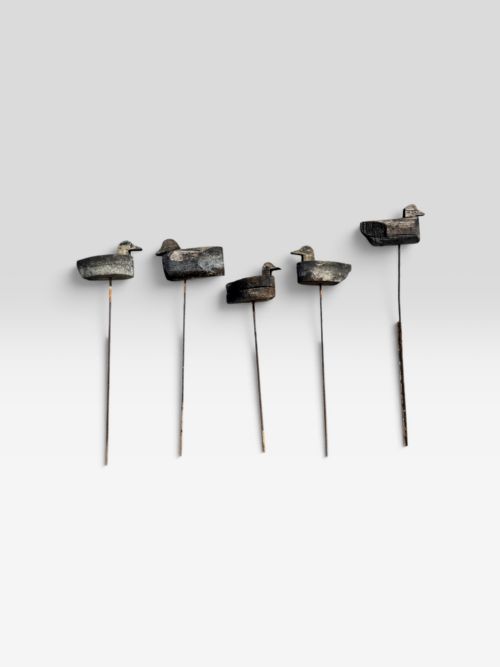
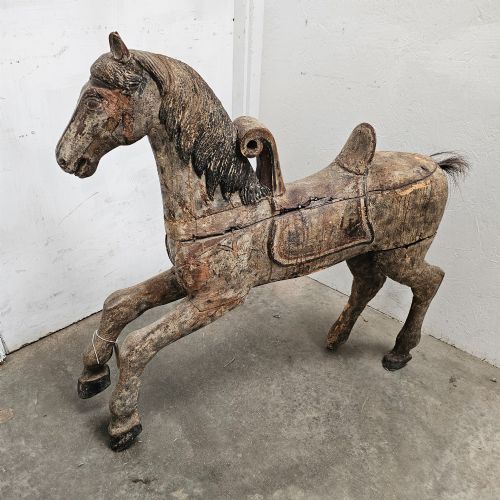
On this page, you will most frequently meet carved figures, decoy ducks, carousel animals, and structural fragments originating from French, German, American, and Chinese traditions. Elm, oak, timber, and hazel provide the physical substance of these works, often combined with iron, metal, or horsehair.
The styles span French country, primitive folk art, and regional devotional carving rather than polished court aesthetics. Each object serves as a record of local material culture and unacademic artistic expression.
How they were made
Maker-carvers worked with green or seasoned timber, utilising cleaving tools, adzes, and gouges to shape elm, oak, and hazel into figures, decoys, and utilitarian racks. The grain of the wood dictated the flow of the carving, leaving tool marks visible across the surface.
Exposure to weather, agricultural use, and natural shrinking over centuries created the characteristic eroded surfaces and dry patinas seen on these pieces. Iron and metal components, such as fixings or structural brackets, were hand-forged to reinforce timber assemblies.
Listings feature wood, iron, elm, oak, and horsehair across the eighteenth and nineteenth centuries.
What varies in quality
The strength of a piece lies in the decisiveness of the carving and the unforced nature of its surface wear. Direct, bold carving holds the eye better than timid detail work on vernacular subjects.
Patina determines the visual depth of the object, distinguishing pieces that have weathered naturally in barns or fields from those with altered or cleaned surfaces. The integrity of the remaining timber and the honesty of the construction matter far more than pristine preservation.
The Weathered Wood Folk Sculpture Glossary
- Folk art
- Utilitarian or decorative objects made outside the academic tradition by rural artisans or self-taught makers. These works prioritise function and direct expression over formal proportion.
- Patina
- The surface texture, colour, and sheen developed by wood and metal through age, handling, and environmental exposure. It acts as a visual timeline of the object's existence.
- Primitive
- A descriptive term for early or unrefined craftsmanship that relies on simple tools and direct construction methods. It denotes an unpretentious approach to form.
- Vernacular
- Objects designed and built to local needs using available regional materials rather than following a national academic style. This encompasses agricultural equipment, drying racks, and local carvings.
- Decoy
- A carved or assembled wooden bird utilised by hunters to attract waterfowl. They combine functional silhouette work with expressive surface painting and carving.
Weathered Wood Folk Sculpture: Frequently Asked Questions
What is weathered wood folk sculpture?
These pieces are hand-carved objects, decoys, and architectural elements created by regional makers using local timber. They reflect utilitarian needs and traditional local art forms.
Over decades or centuries, exposure to the elements has worn away the soft grain of the wood, leaving deeply textured surfaces and dry patinas.
How were these wooden pieces used originally?
Many objects served practical purposes in agriculture, such as threshing boards, drying racks, and working decoy ducks deployed on ponds and rivers.
Other items fulfilled religious or decorative functions, including carved devotional figures and carousel horses made for public entertainment.
How do I live with folk sculpture?
These sculptures suit minimalist and traditional interiors alike, providing a strong focal point through their raw textures and sculptural silhouettes. Place them on plain surfaces where light can catch the tool marks and grain.
Keep them away from direct heat sources and sudden humidity changes to preserve the stability of the dry timber.
How do I date weathered wooden carvings?
Dating relies on tool marks, construction methods, and the degree of natural timber shrinkage and wear. Eighteenth-century pieces often show hand-riven surfaces and heavy adze work.
Nineteenth and early twentieth-century examples incorporate machine-sawn elements alongside hand carving, reflecting the transition of rural crafts.