

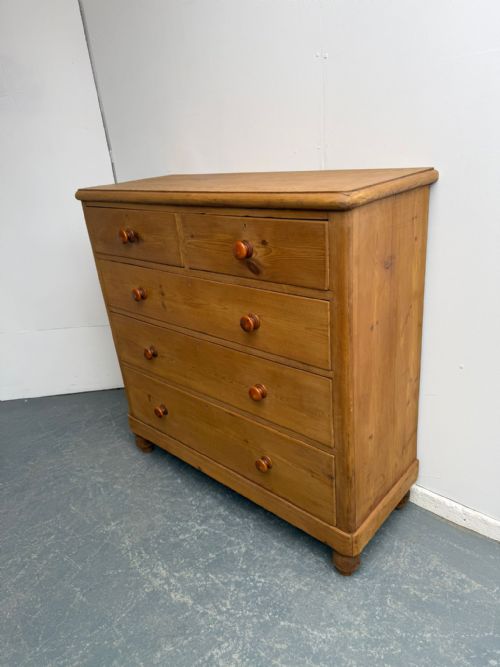

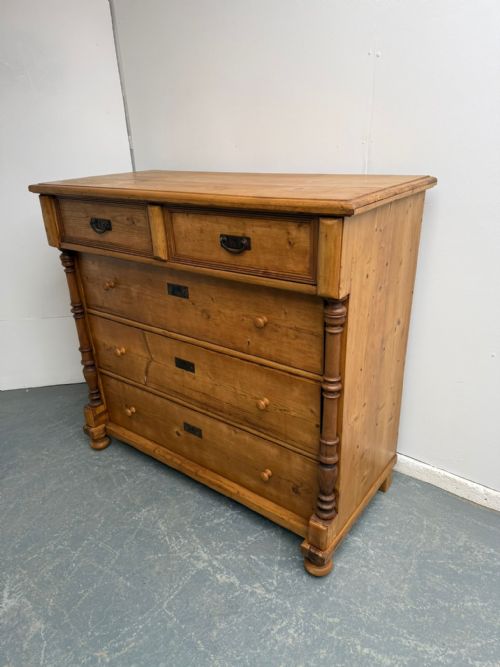
Waxed Pine Bedroom Chest
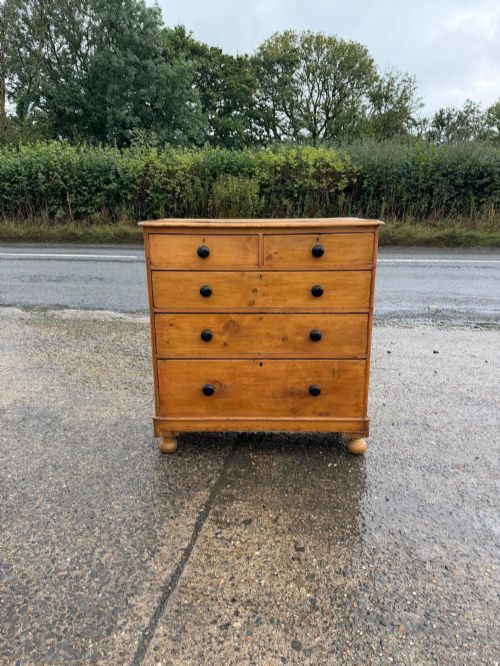
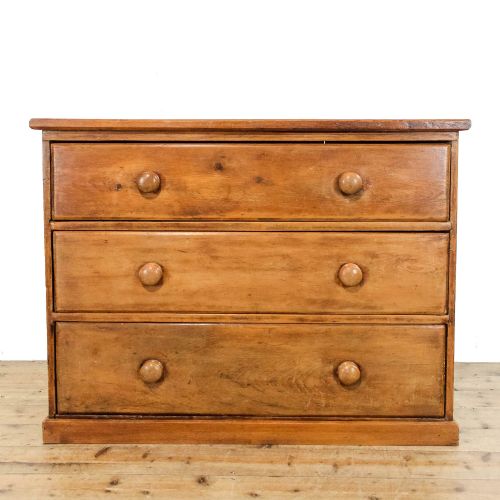
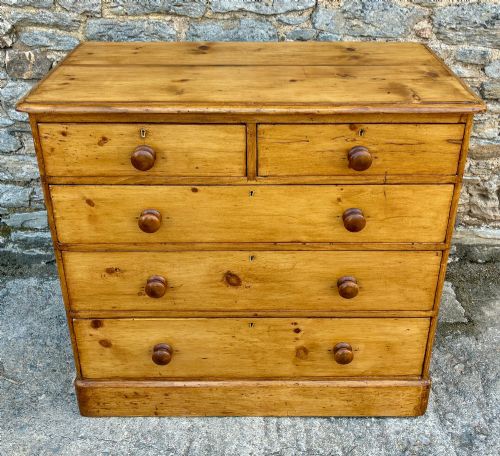
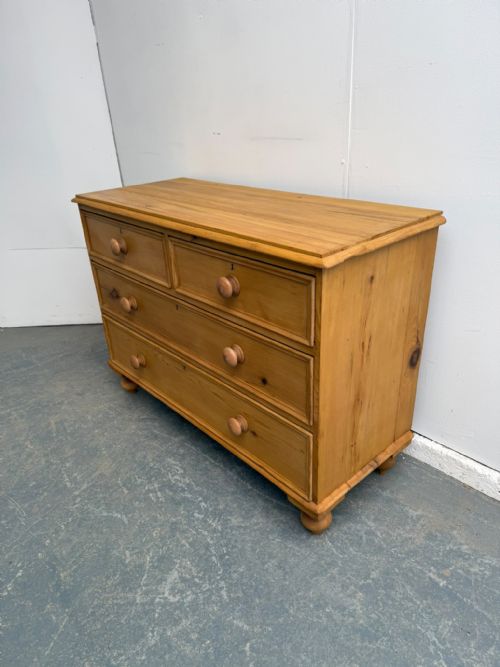
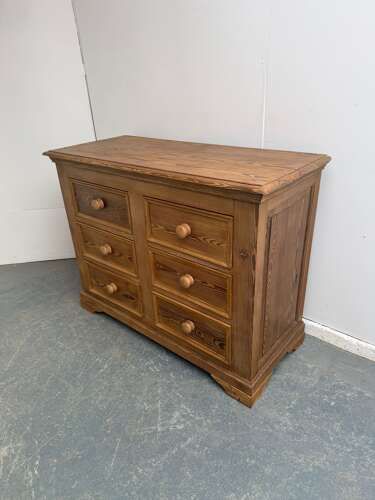
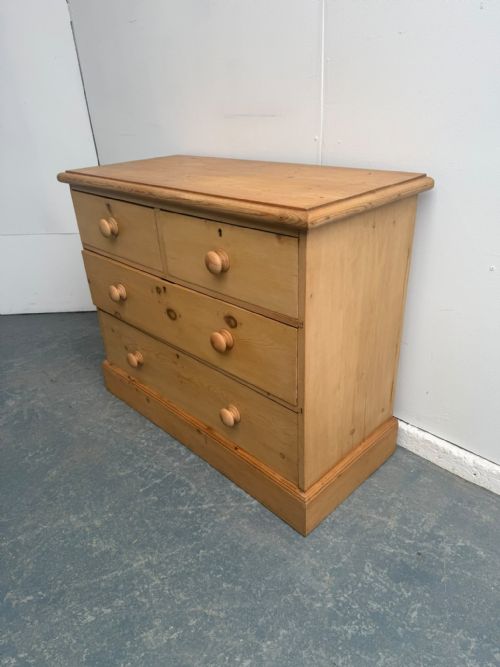
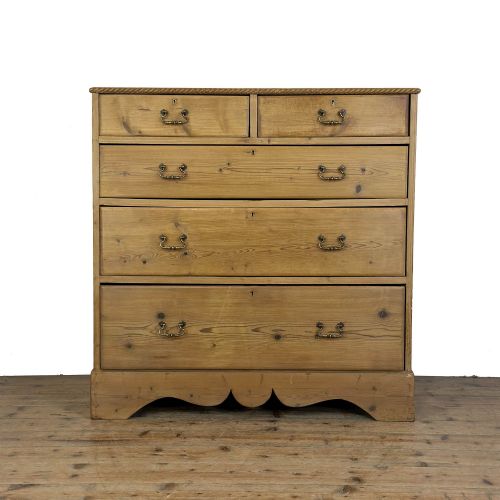
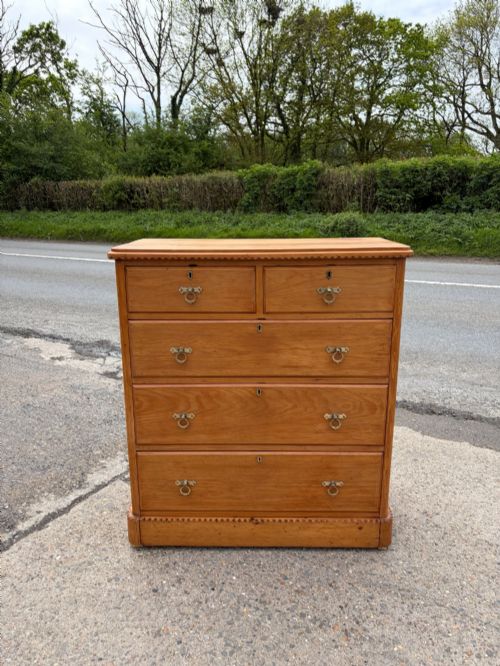
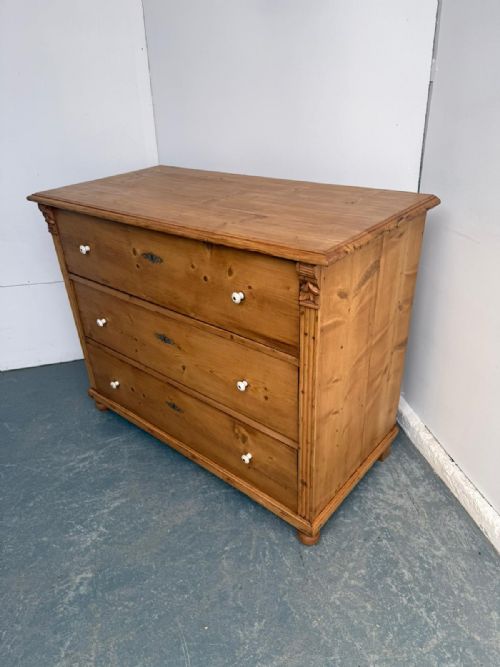
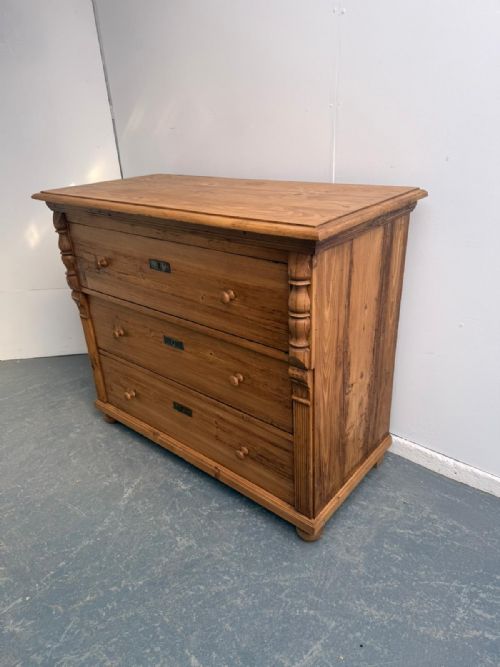
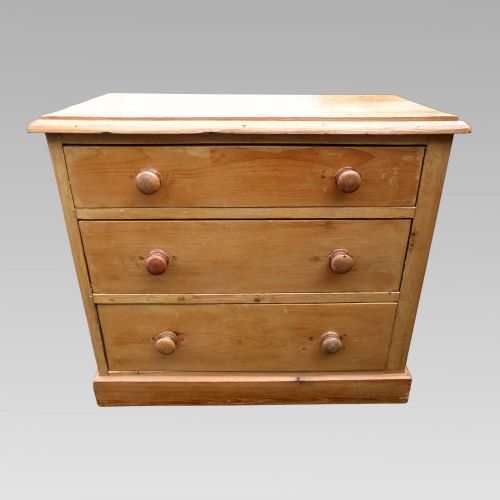
These waxed pine bedroom chest examples range from compact three-drawer units to tall five-drawer bedroom storage pieces.
Waxed Pine Bedroom Chest
A waxed pine bedroom chest provides domestic storage through stacked drawers constructed in regional workshops and larger cabinet makers. The pieces listed here span the Georgian and Victorian periods, extending into Edwardian examples and the early twentieth century.
Most items on this page take the form of chests of drawers, alongside linen presses and linen cupboards. Configurations include low wide formats, narrow panelled builds, and two-over-three drawer arrangements.
Country and regional variations appear frequently, including English, Irish and continental European workshops. Makers utilised native and imported softwoods finished with wax or left ready for surface treatment.
Materials and construction methods
Carpenters built these carcases primarily from pine, applying wax finishes to protect the wood and deepen the grain. Secondary woods support internal drawer linings and back panels.
Iron and brass hardware secures the drawers and doors, accompanied by ceramic elements on specific handles. Structural joins rely on traditional drawer construction and plank end assemblies.
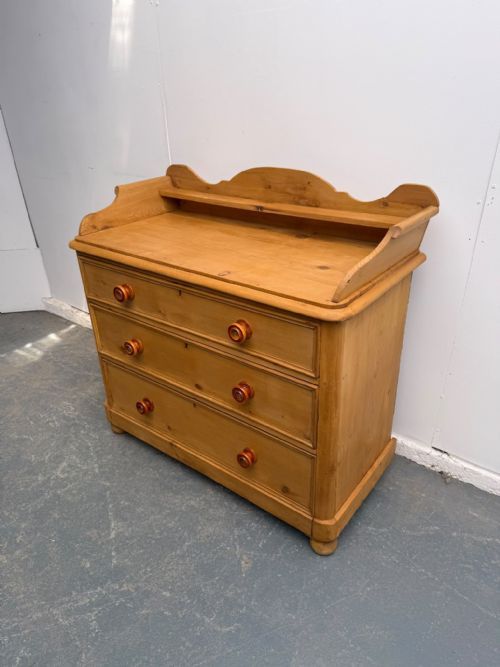
Object forms include chests of drawers, linen presses, and linen cupboards with gallery backs.
Distinctions in build and proportion
Proportion and scale dictate the visual weight of a room, separating low wide formats from tall columnar variants and linen cupboards. Details such as bracket feet, gallery backs, and columned sides elevate standard functional pieces into finer examples of regional cabinet work.
The integrity of the timber and the depth of the wax finish determine the tactile quality of the surface. Original fixtures and well-maintained drawer runners ensure smooth daily operation across Georgian and Victorian iterations.
The Waxed Pine Bedroom Chest Glossary
- Waxed pine
- Timber treated with natural wax to seal the grain and produce a soft sheen. This finish highlights the knots and growth rings characteristic of softwood furniture.
- Linen press
- A tall storage piece comprising upper cupboard doors enclosing sliding trays or shelves above a chest of drawers. These items provided dedicated storage for household linens and garments.
- Bracket foot
- A structural foot fitted beneath the bottom corners of a chest, often shaped with simple curves in Georgian and Victorian cabinet work.
- Gallery back
- A raised timber barrier fixed to the top rear surface of a chest to prevent items from sliding off. This feature appears on select Victorian and nineteenth-century examples.
- Plank end
- Construction style where the vertical sides of a chest are formed from solid single planks rather than panelled frames.
Waxed Pine Bedroom Chest: Frequently Asked Questions
What periods do these chests date from?
The pieces span the Georgian and Victorian eras, with examples reaching into the Edwardian period and the early twentieth century.
Craftsmen built these items across various European regions, reflecting distinct vernacular traditions in softwood furniture.
How do linen presses differ from standard chests?
Linen presses combine upper cabinet storage with lower drawer sections, whereas standard chests consist solely of stacked drawers.
Both forms served domestic storage needs in bedrooms and landings.
What is a gallery back?
A gallery back is a low wooden rail attached to the top rear edge of a chest of drawers.
It secures objects placed on the top surface from sliding off.
How should I maintain a waxed pine surface?
Maintain the wood by applying a natural furniture wax periodically to nourish the soft timber and preserve the sheen.
Avoid placing these chests near direct heat sources to prevent the pine from drying out.