

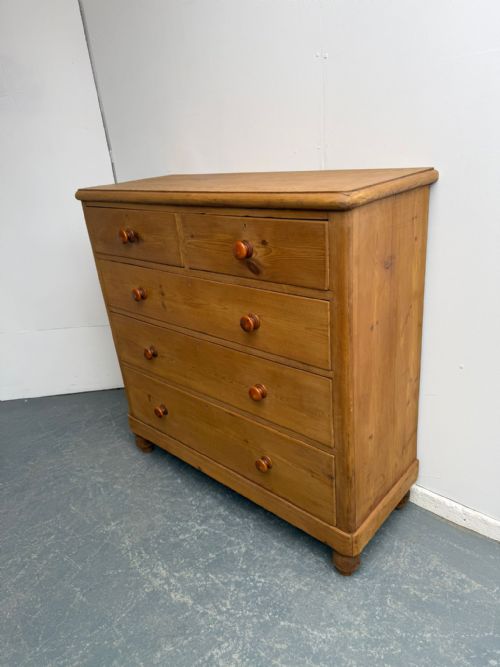


English Country Pine Chest
An English country pine chest brings honest utility and warmth to a room, offering practical storage built from domestic softwood.
English Country Pine Chest
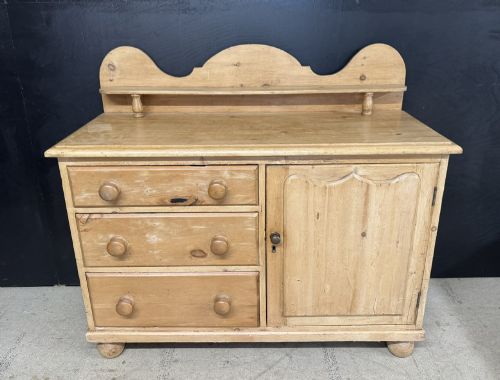
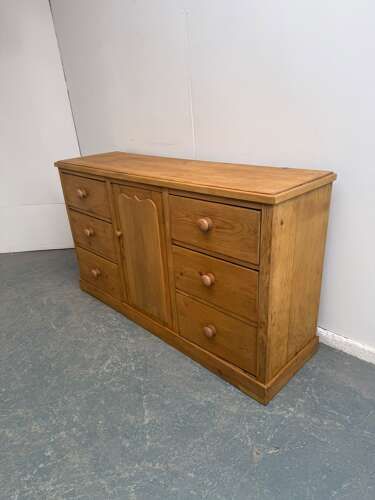
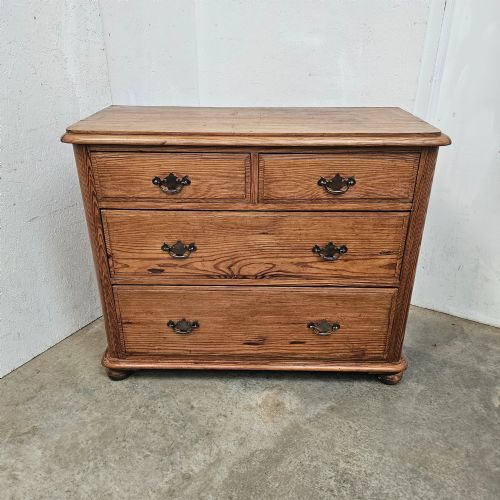
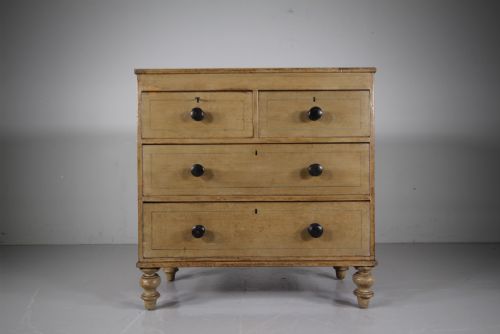
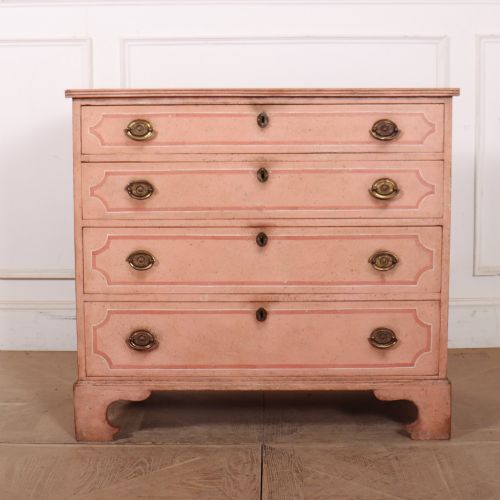
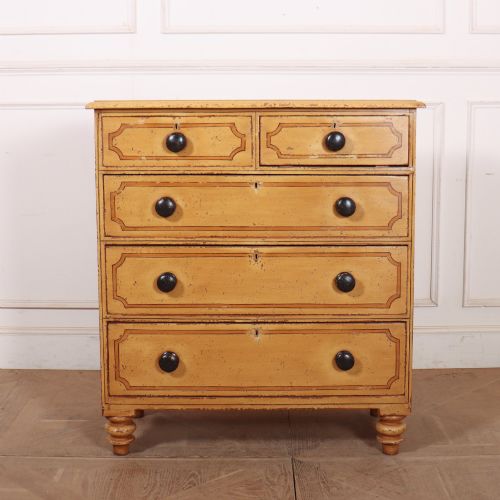
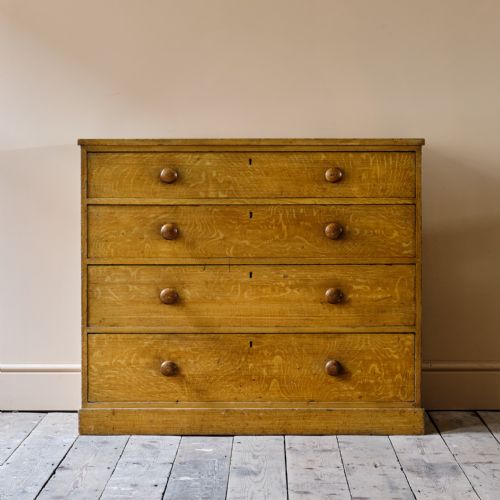
An English country pine chest provides straightforward storage in domestic settings, taking the form of chests of drawers, dressers, and chiffoniers. These pieces emerge across the nineteenth century, including Victorian, Edwardian, Regency, and Georgian periods, reflecting regional domestic use.
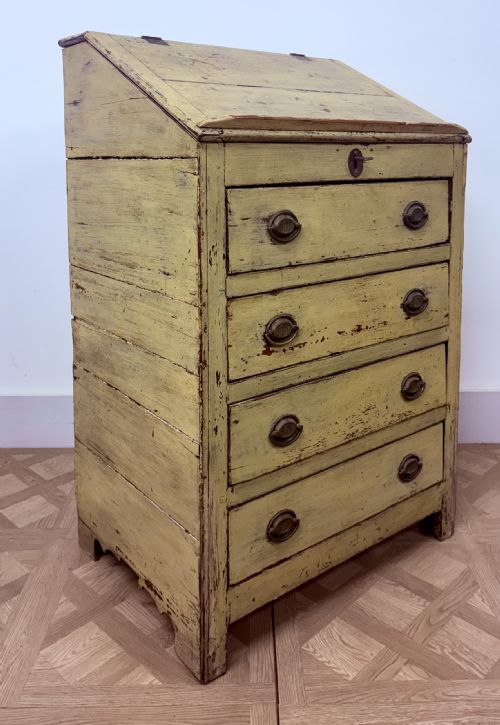
Buyers encounter surfaces finished in clear wax, original paint, simulated painted wood, and scumble finishes. Proportions range from smaller bedside cabinets and three-drawer units to large five-drawer chests and kitchen dresser bases.
Assessing quality in pine furniture
Quality rests in the survival of original surfaces, such as early paint layers and scumble finishes, rather than stripped bare wood. Well-preserved timbers retain their natural grain and patination without excessive modern replacement.
Structural integrity depends on sound drawer construction and original brass or metal hardware remaining intact. Pieces featuring gallery backs, fitted writing slopes, or uncompromised proportions demonstrate superior cabinetmaking origins.
Listings feature pieces spanning the Georgian, Regency, Victorian, and Edwardian periods, constructed primarily from pine and pitch pine.
The English Country Pine Chest Glossary
- Pine
- A softwood derived from conifer trees, widely utilised in British cabinetmaking for domestic furniture due to its workability and abundance. It forms the primary structural material for these country pieces.
- Pitch pine
- A denser, more resinous variety of pine with a pronounced grain pattern. It provides increased durability and a distinctive reddish hue.
- Scumble paint
- A decorative glazing technique applied over a base coat to imitate finer hardwoods or create mottled patterns. Country furniture makers often employed this finish to elevate plain softwoods.
- Gallery back
- A low raised upstand attached to the rear edge of a top surface. This feature prevents items from sliding off the back.
- Chiffonier
- A compact sideboard or low cabinet equipped with drawers and lower storage cupboards. These appear in late nineteenth-century domestic interiors.
English Country Pine Chest: Frequently Asked Questions
How do I date a pine chest?
Dating relies upon construction methods, hardware types, and overall design proportions relative to documented historical styles. Georgian and Regency examples display different moulding profiles compared to later Victorian or Edwardian pieces.
Secondary evidence includes the presence of original paint layers, backboards, and drawer linings. Examining these details helps establish the manufacturing era.
Are painted finishes original?
Original painted surfaces show uniform wear patterns, oxidized pigments, and appropriate craquelure consistent with age. Scumble glazes and flat oil paints adhere tightly to the underlying softwood.
Later repainting often obscures timber edges or lacks the natural patination built up through decades of domestic cleaning and use.
What is pitch pine?
Pitch pine is a heavier, more durable softwood containing high resin content. It yields a distinctive, stripy grain that sets it apart from standard white pine.
Cabinetmakers selected pitch pine for pieces requiring extra strength and a richer visual texture.
How do I care for waxed pine?
Waxed pine benefits from occasional applications of traditional beeswax to nourish the soft timber and maintain its sheen. Avoid placing these pieces near direct heat sources or strong sunlight to prevent warping.
Dusting with a dry cloth preserves the existing wax layer without stripping the accumulated surface patina.