
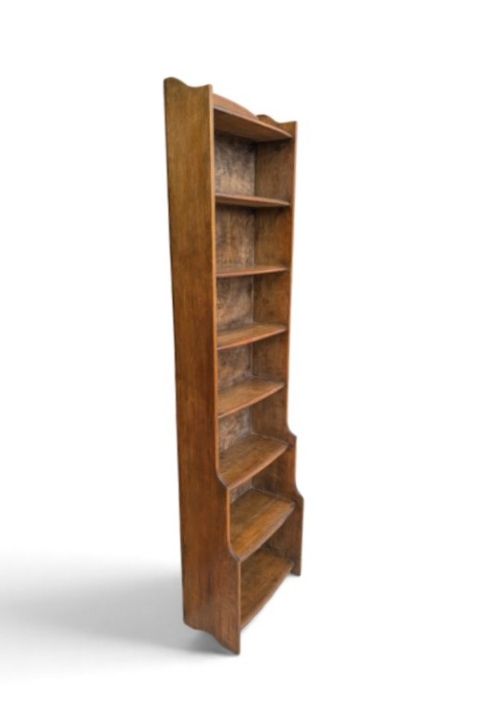
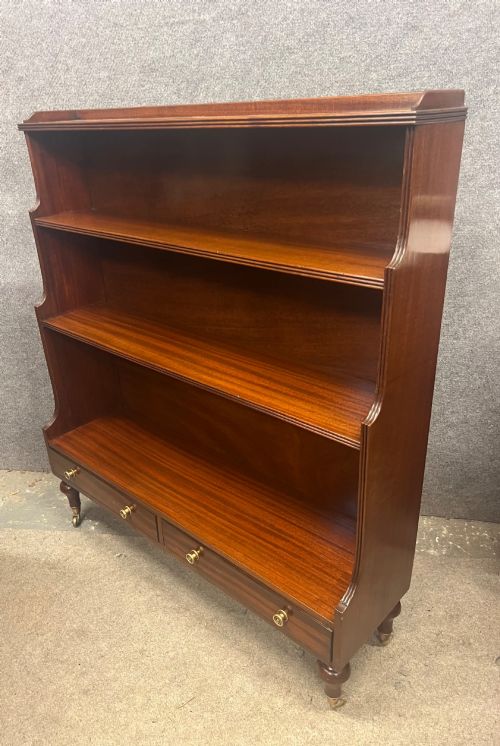
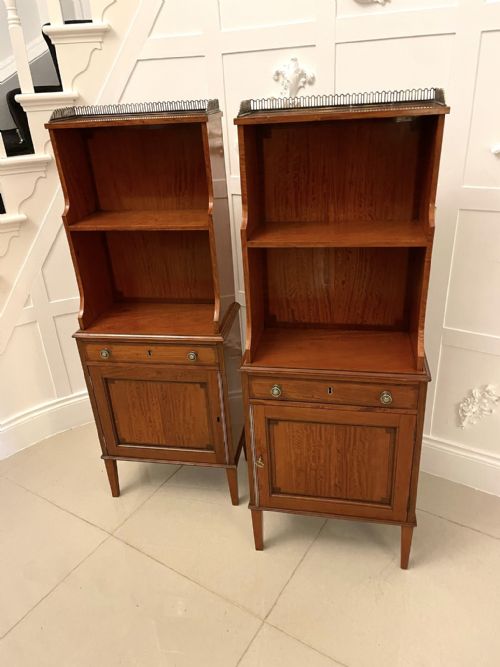
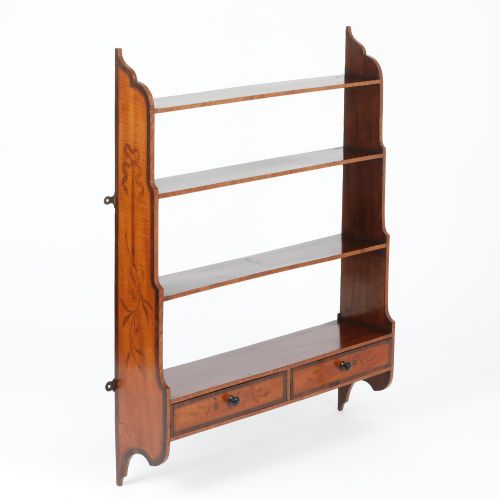
Waterfall Open Bookshelf
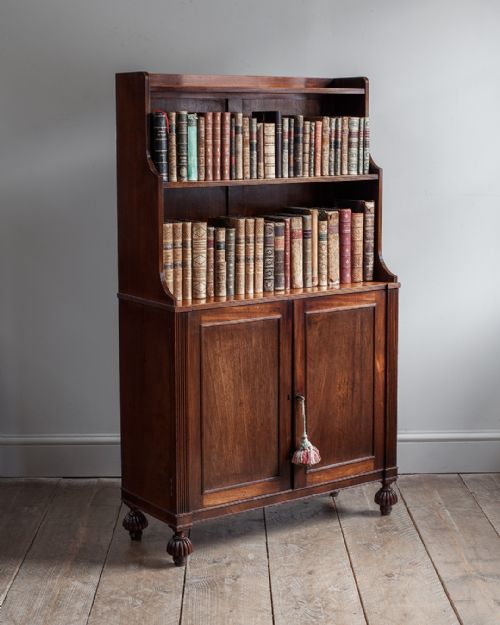
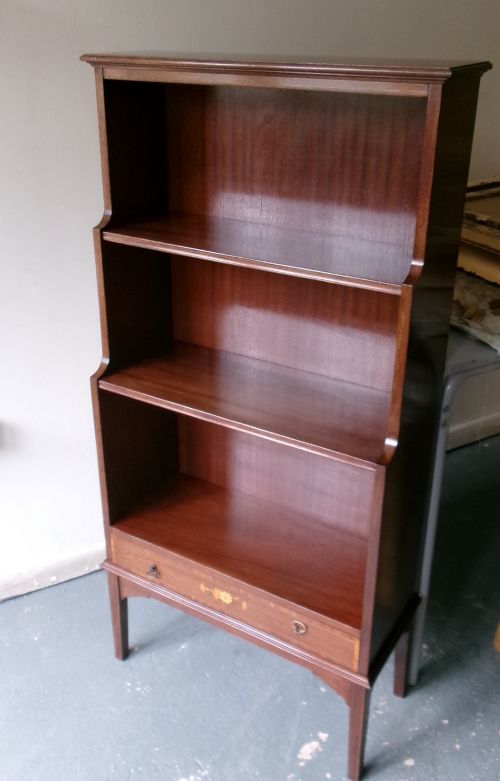
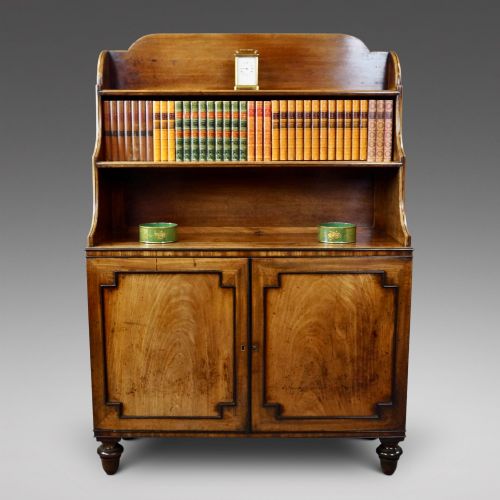
A waterfall open bookshelf brings tiered shelving into a room, offering graduated tiers that hold books while saving valuable floor space.
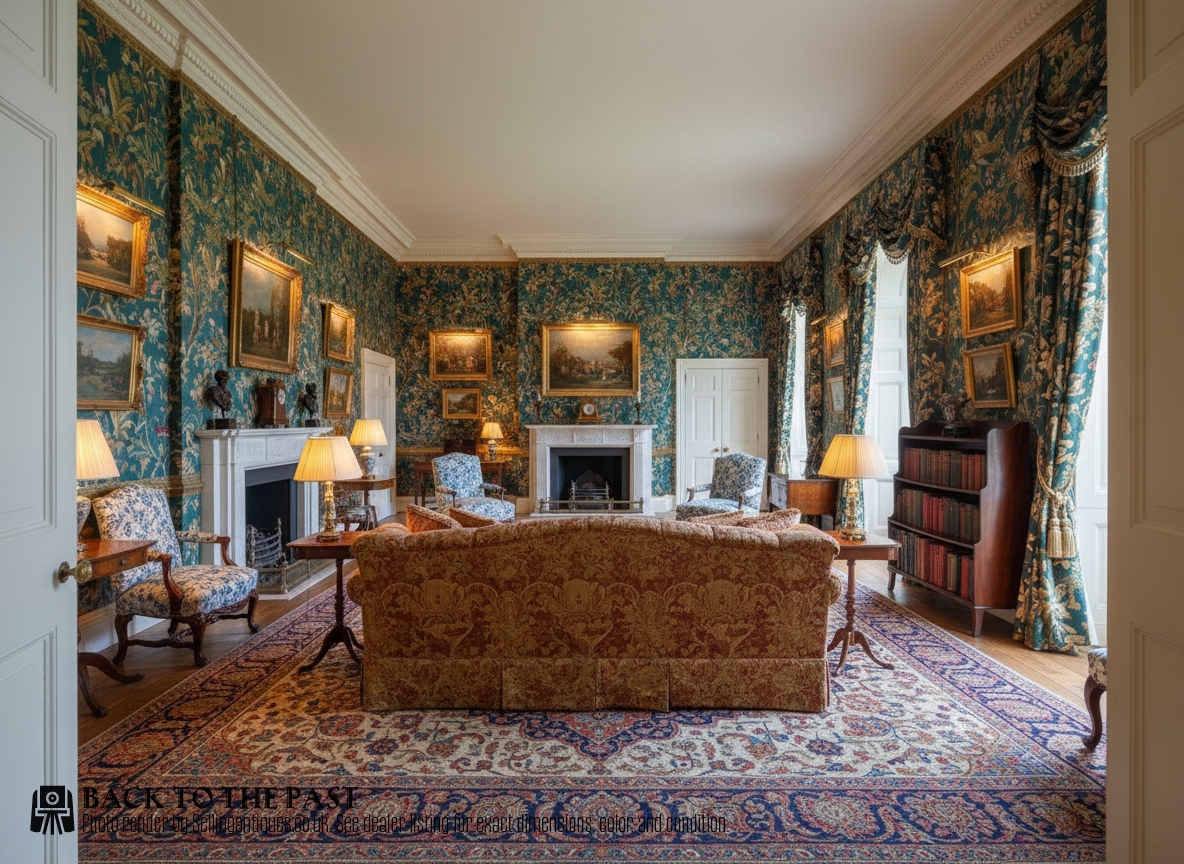
Waterfall Open Bookshelf
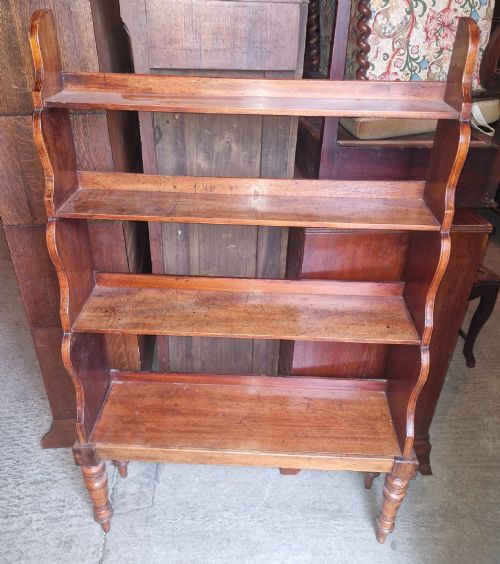
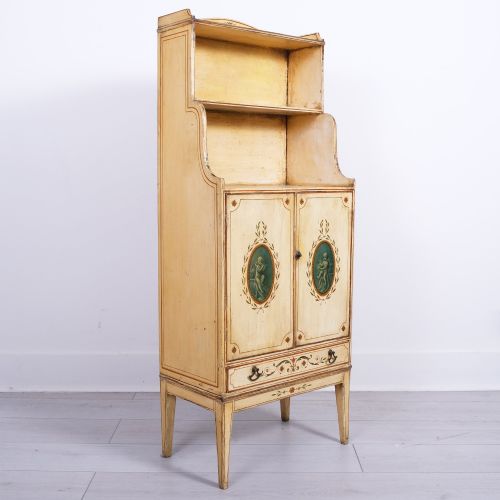
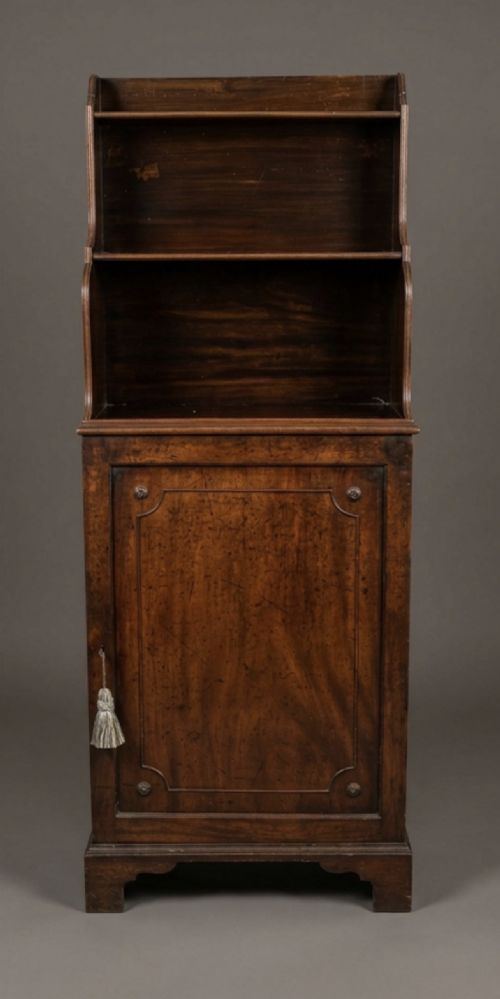
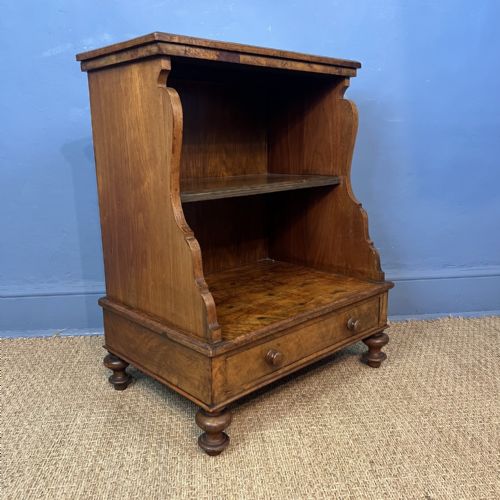
A waterfall open bookshelf provides stepped tiers of shelving that descend in size from bottom to top, creating an instantly recognisable silhouette. These pieces appear in forms ranging from freestanding library units to low bedside cabinets and wall-mounted hanging shelves.
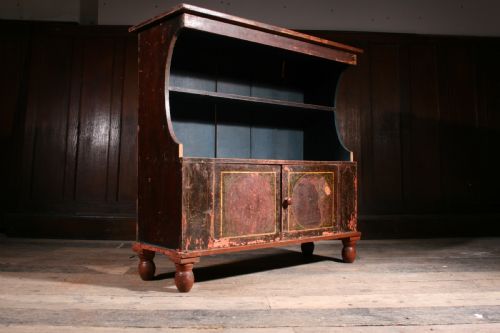
Makers working across the Georgian, Regency, Victorian and Edwardian periods shaped these items to display volumes and decorative objects within domestic interiors. Mahogany remains the dominant timber on this page, accompanied by rosewood, satinwood, oak and painted finishes.
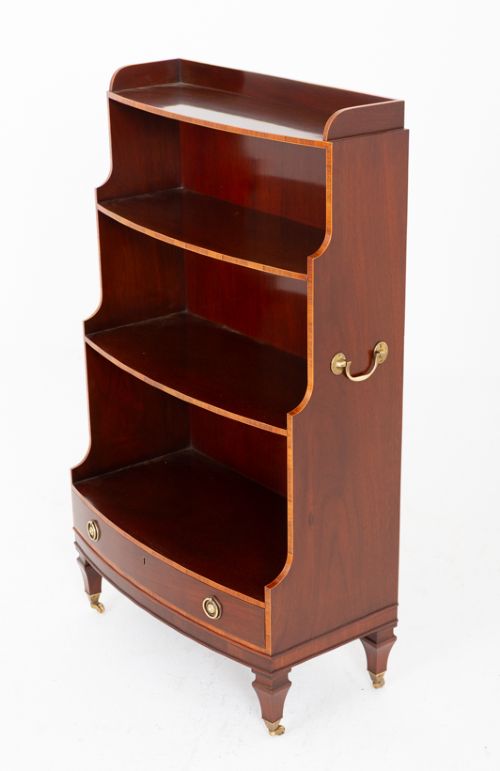
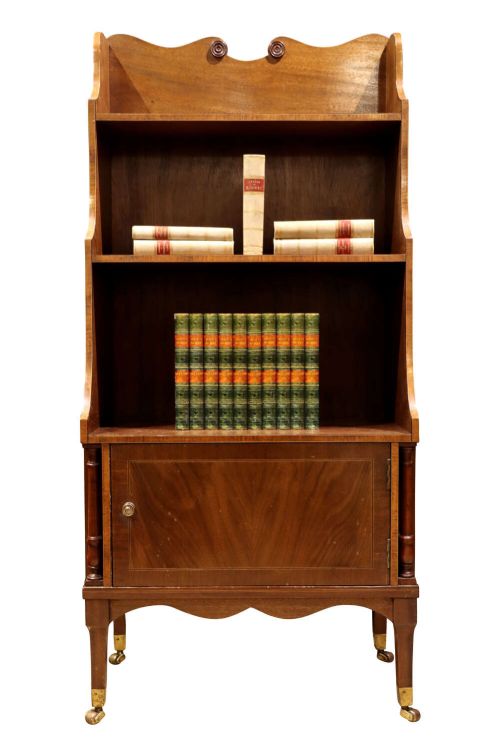
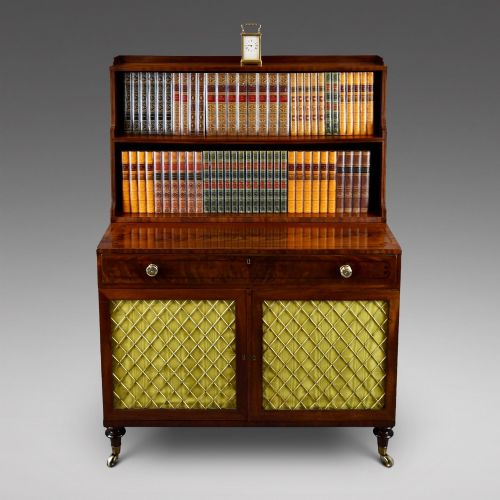
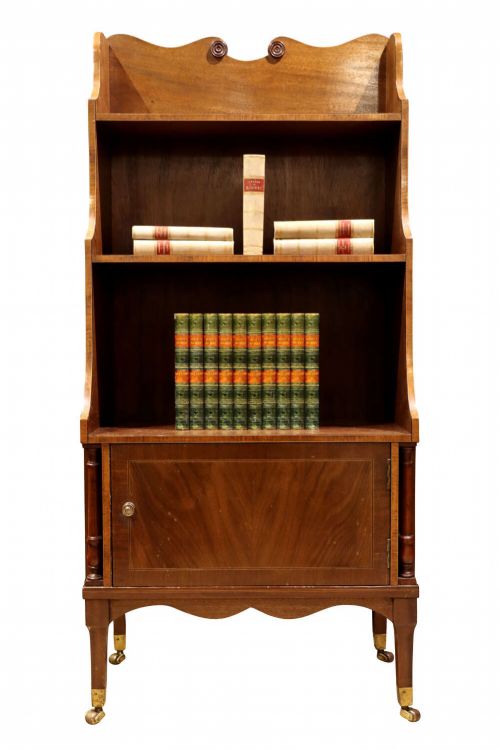
Freestanding variants often rest on brass castors, whilst others incorporate lower cupboards with doors to enclose storage space beneath the open tiers. Buyers encounter items varying from grand library bookcases down to small display shelves.
Materials and Construction
Cabinet makers utilised dense hardwoods such as mahogany, rosewood and oak to construct the tiered frames, occasionally employing satinwood for contrasting details. Crossbanding and boxwood stringing provide decorative borders along shelf edges and upright supports on finer pieces.
Construction techniques include graduated side panels cut to support each receding shelf tier, with some examples incorporating fret-cut woodwork or inlaid motifs. Brass castors support the feet of heavier freestanding pieces, allowing movement across floor surfaces.
Materials represented include mahogany, rosewood, oak, satinwood, pine, yew wood, burr walnut and painted wood surfaces.
Judging Quality
Quality reveals itself in the selection of timber figures, such as the rich grain of mahogany or the pattern found in burr walnut. The precision of crossbanding, boxwood stringing and inlaid details distinguishes standard examples from exceptional cabinet work.
Proportion and stability dictate the merit of a piece, with well-balanced graduated tiers offering both visual harmony and structural integrity. Maker attribution, such as work originating from Gillows or Shapland and Petter, elevates the standing of a bookcase.
Gillows·Shapland & Petter
The Waterfall Open Bookshelf Glossary
- Waterfall bookcase
- A set of open shelves stepped back in tiers from bottom to top. This design allows smaller books or objects to sit on upper ledges.
- Crossbanding
- A narrow strip of veneer laid around the border of a shelf or top panel so that the grain runs at right angles to the central surface. It frames the primary timber.
- Stringing
- A thin line of contrasting wood inlaid into the surface of a panel or support. Boxwood provides the pale contrast seen on mahogany pieces.
- Castor
- A small wheel fitted to the foot of a piece of furniture for mobility. Brass versions frequently appear on nineteenth-century library pieces.
- Etagere
- A set of open tiered shelves used for displaying ornaments. These items share similarities with freestanding waterfall shelving units.
Waterfall Open Bookshelf: Frequently Asked Questions
What is a waterfall open bookshelf?
A waterfall open bookshelf is a piece of furniture featuring stepped tiers that recede from the base to the top.
This graduation creates space for volumes and decorative objects while maintaining an open profile.
How do I style a waterfall bookshelf?
Arrange books vertically on the deeper lower shelves and smaller volumes or decorative objects on the upper tiers.
The stepped design draws the eye upward, making it suitable for corners or blank walls.
Were these shelves always freestanding?
Whilst many examples stand independently on the floor, others are designed as hanging shelves meant for wall attachment.
Some variants also incorporate enclosed cupboards beneath the open tiers.
Which woods were commonly used?
Mahogany is the most prevalent timber found on these pieces, alongside rosewood, satinwood and oak.
Cabinet makers also utilised painted finishes, burr walnut and yew wood.
How do I identify the period?
Period indicators include timber choices, inlay techniques such as boxwood stringing, and structural details like brass castors.
Georgian and Regency pieces lean towards rich mahogany, while Edwardian examples often feature lighter oak or inlaid satinwood.