
Antique Bookshelf Cupboard
An antique bookshelf cupboard combines open display shelving with enclosed storage, offering a practical solution for books and household objects.
Antique Bookshelf Cupboard
When you search for an antique bookshelf cupboard, you encounter a practical hybrid of open shelving and enclosed base storage designed to display volumes while concealing household items. These pieces bridge the gap between libraries and parlours, providing vertical storage without dominating a room.
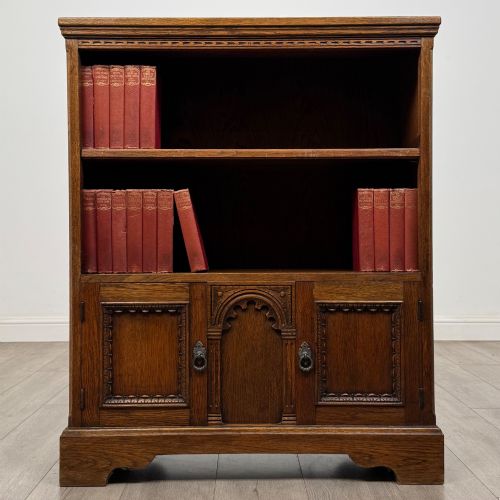
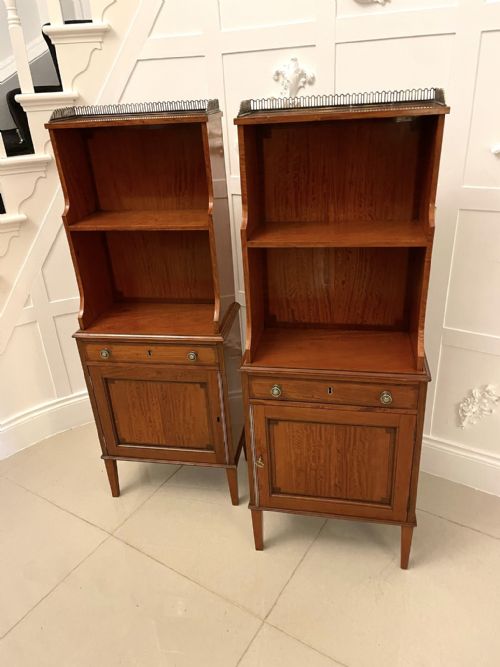
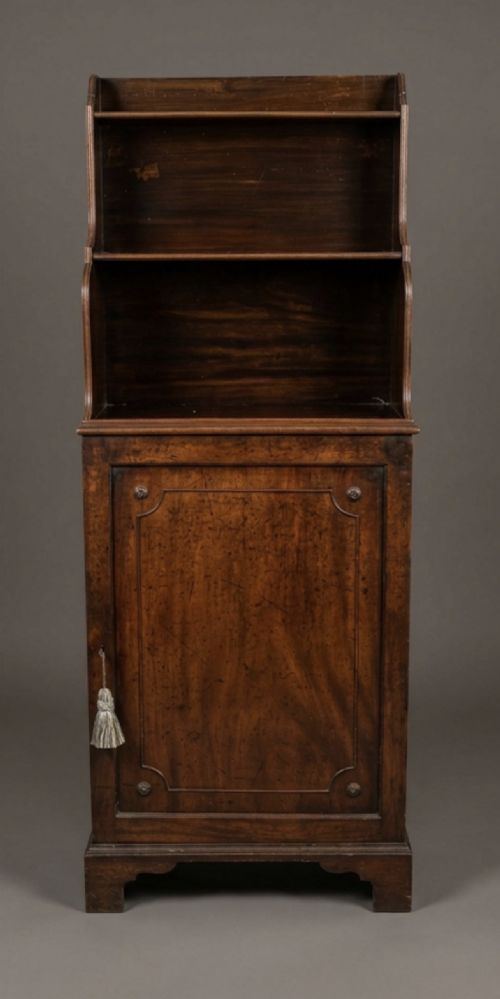
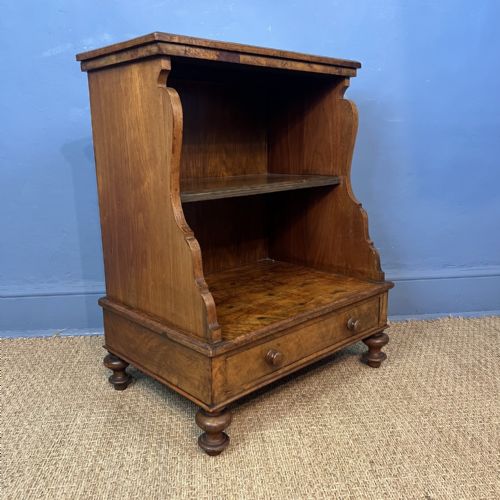
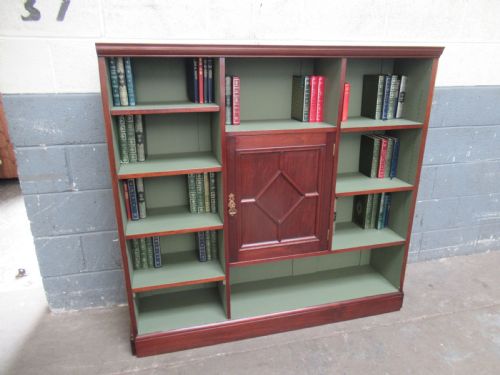
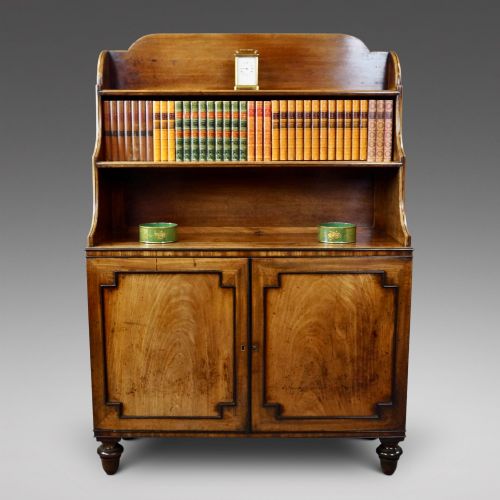
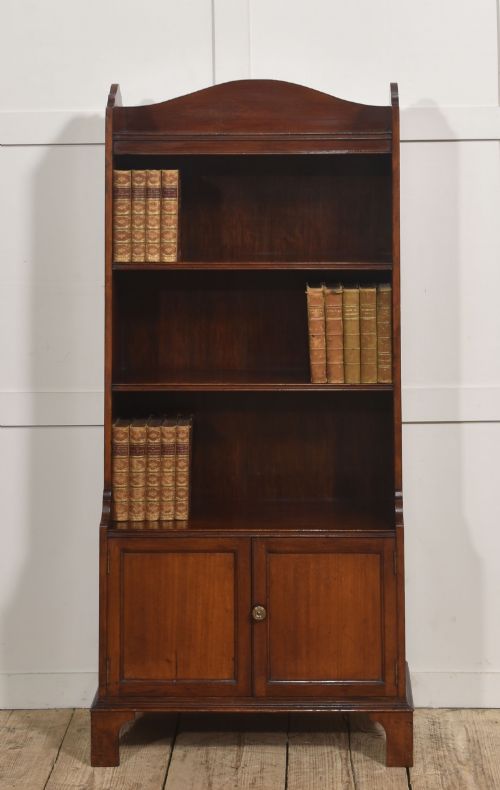
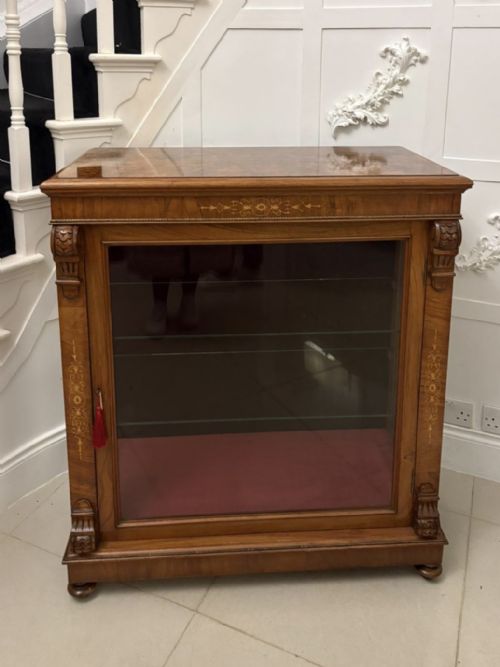
The pieces on this page span the Georgian, Victorian, and Edwardian periods, alongside Regency and early twentieth-century examples. You will find forms ranging from low open bookcases and waterfall bookcases to corner cabinets and display cabinets with cupboard bases.
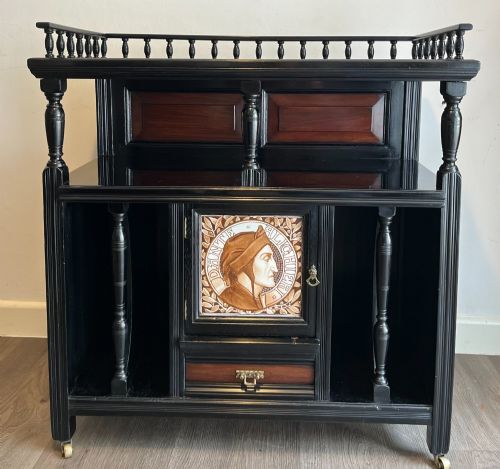
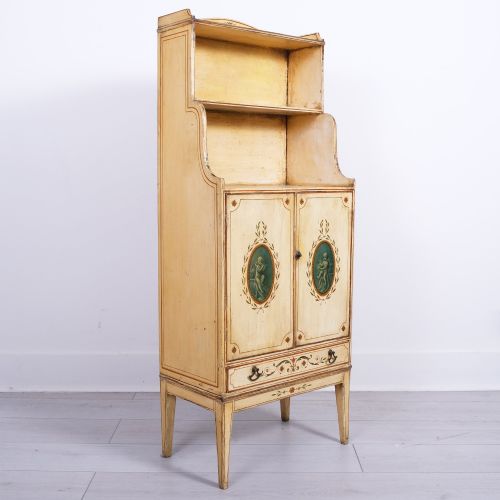
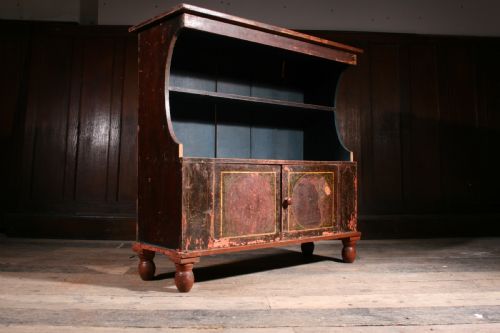
Mahogany and oak predominate across these listings, accompanied by walnut, satinwood, and painted finishes. Makers such as Gillows, John Moyr Smith, and Shapland and Petter occasionally appear among the larger selection of vernacular and workshop-made furniture.
How they were made
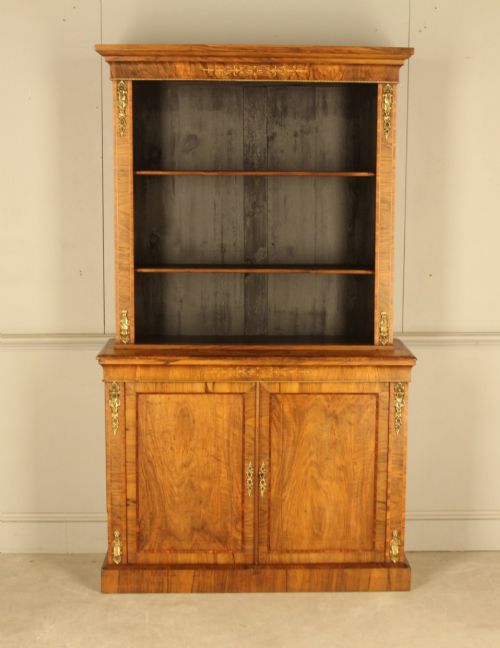
Cabinetmakers constructed these pieces primarily from solid hardwoods such as mahogany and oak, often incorporating decorative veneers like satinwood, walnut, and burr walnut over secondary timbers. Surfaces were finished with polish, paint, or original grained treatments, while structural details included brass mounts, castors, and gilt highlights.
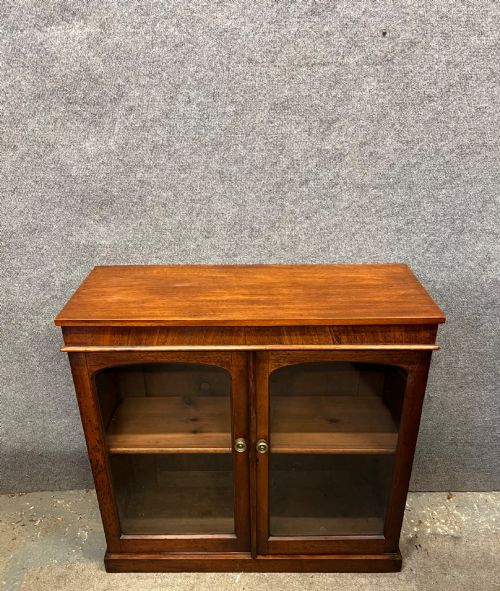
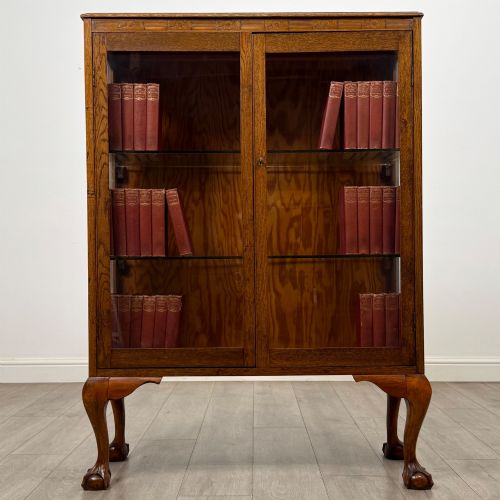
Joinery techniques matched the period and function, utilising sturdy tenon joints for structural frames and dovetailed construction for drawers within cupboard bases. Glass panels in doors were secured with wooden glazing bars, and shelving systems frequently relied on adjustable wooden pegs or fixed uprights.
Listings feature eighteenth-century George III examples alongside nineteenth-century Victorian and Edwardian pieces executed in mahogany, oak, walnut, and satinwood.
What varies in quality
The refinement of the timber selection and veneer patterning marks the upper tier of these pieces, where cabinetmakers chose richly figured mahogany, satinwood, or burr walnut for prominent surfaces. Fineness in secondary details - such as crisp mouldings, original brass castors, and delicate inlay - distinguishes workshop pieces from simpler vernacular items.
Structural integrity and originality of surface finish dictate long-term worth, with pieces retaining their original paint, polish, or grained finish holding greater visual harmony. The integration between the upper bookshelf and the lower cupboard base reveals the maker's hand, particularly where proportions remain balanced and joinery remains tight.
Gillows·John Moyr Smith·Shapland and Petter
The Antique Bookshelf Cupboard Glossary
- Waterfall bookcase
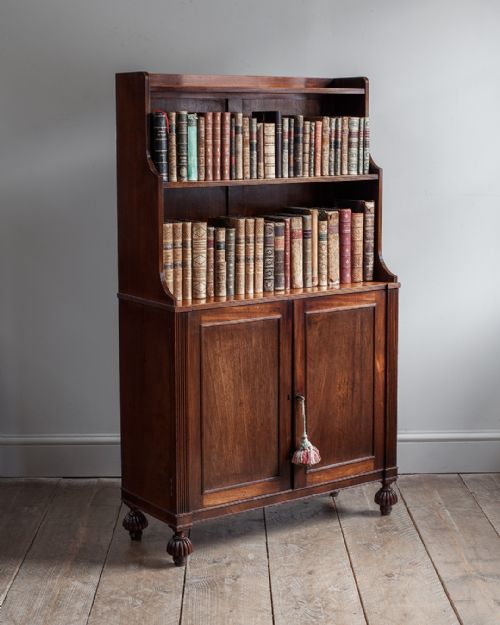
- A tiered set of open shelves diminishing in depth from bottom to top, often featuring a small cupboard base below.
- Open bookcase
- A piece of furniture consisting solely of upright sides and horizontal shelves without doors.
- Whatnot
- A piece of open shelving with multiple tiers supported by slender pillars, used for displaying ornaments and small books.
- Ormolu
- Gilt-bronze mounts applied as decorative ornaments to furniture, frequently seen on Regency and nineteenth-century pieces.
- Grained finish
- A painted surface treatment designed to imitate the appearance of more expensive or exotic hardwoods.
Antique Bookshelf Cupboard: Frequently Asked Questions
What is an antique bookshelf cupboard?
An antique bookshelf cupboard is a dual-purpose piece of furniture featuring open or glazed shelving above an enclosed cabinet base with doors. It provides accessible display space for volumes while keeping utilitarian items stored away.
These pieces emerged in various forms across the Georgian, Victorian, and Edwardian eras, adapting to the storage needs of domestic libraries and sitting rooms.
How do I date an antique bookcase?
Dating relies on observing timber choices, construction techniques, and stylistic markers associated with specific periods like the Regency or Edwardian era. Details such as dovetailing methods, hardware types, and wood finishes help narrow down the decade of manufacture.
Comparing the piece to documented examples from workshops or pattern books provides further confirmation of its age and origin.
Where were these cupboards used?
These cabinets served primarily in studies, libraries, and drawing rooms where books and household miscellany required orderly storage. Their compact proportions also suited them for bedrooms and entrance halls.
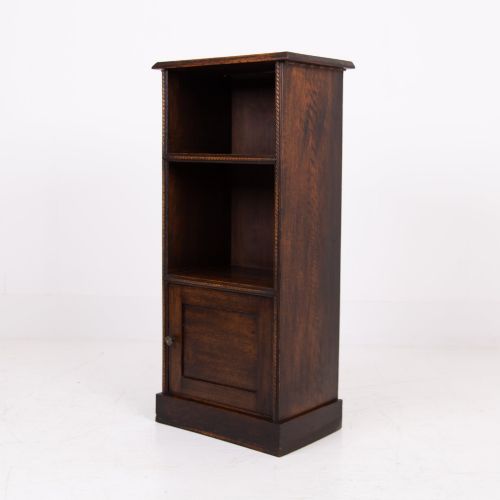
Lower models often functioned as side cabinets or bedside units while maintaining a dual display and storage function.
Are waterfall bookcases stable?
Waterfall bookcases are generally stable, utilising a stepped profile where each shelf is shallower than the one below it. This design distributes weight toward the lower, deeper shelves.
Larger examples often incorporate a heavier cupboard base that anchors the piece securely to the floor.