

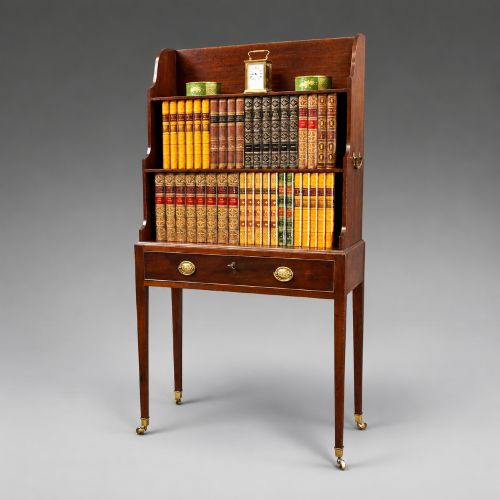
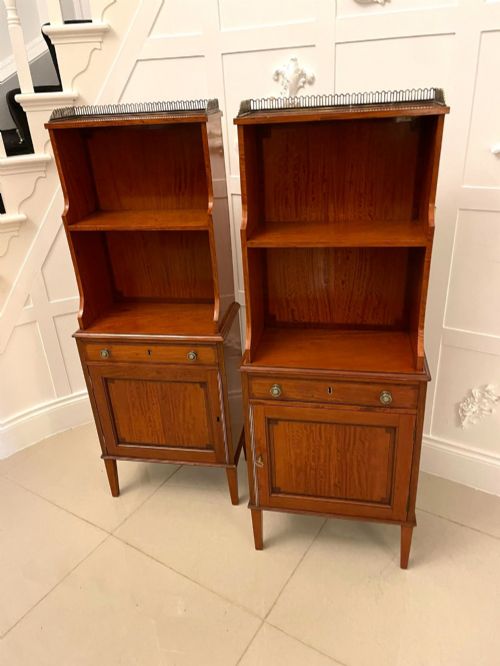
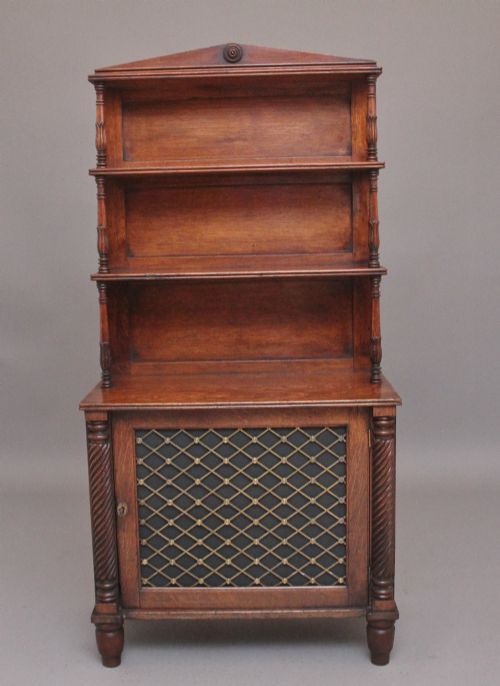
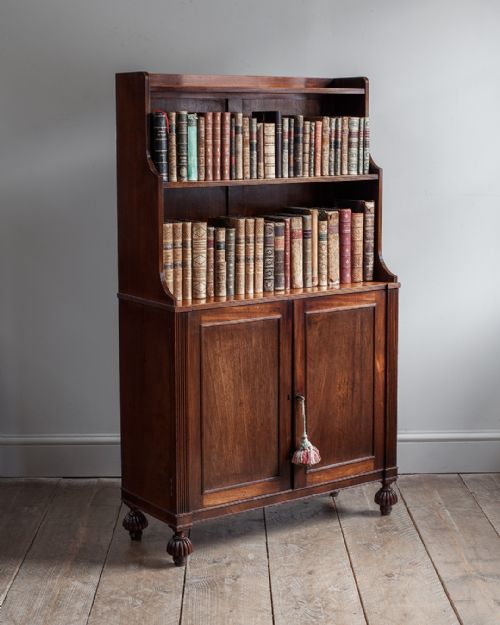
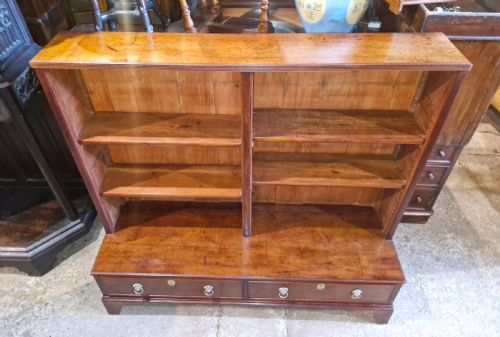


Regency Tiered Bookshelf
A regency tiered bookshelf is a practical display piece offering stacked open shelving in rich timbers that elevates a room.
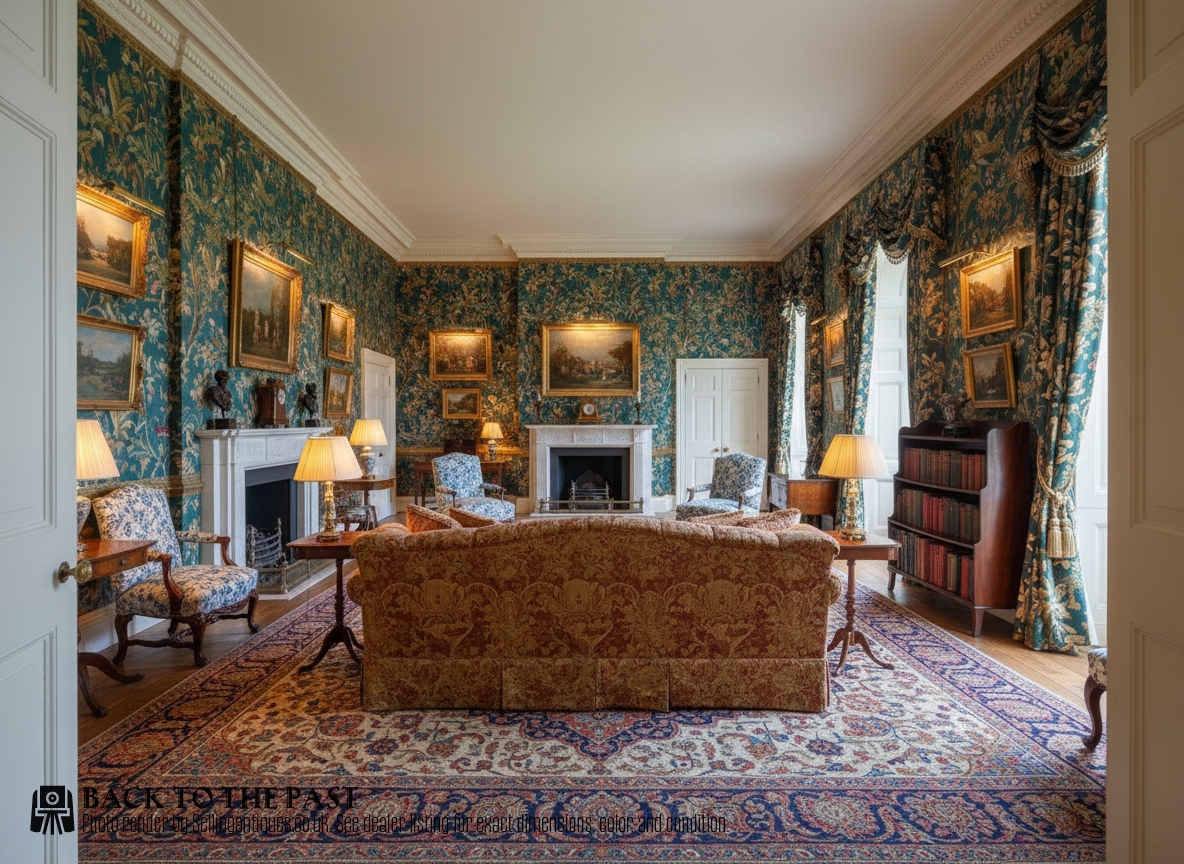
Regency Tiered Bookshelf
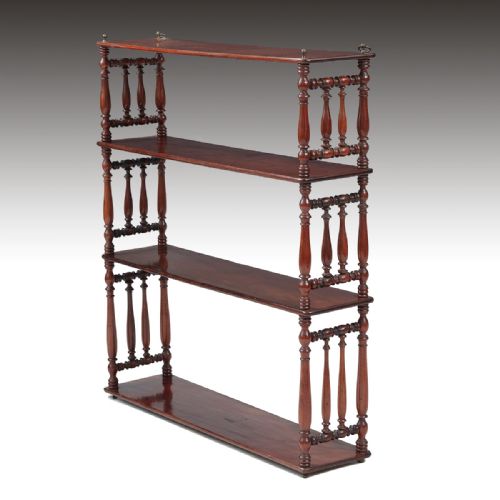
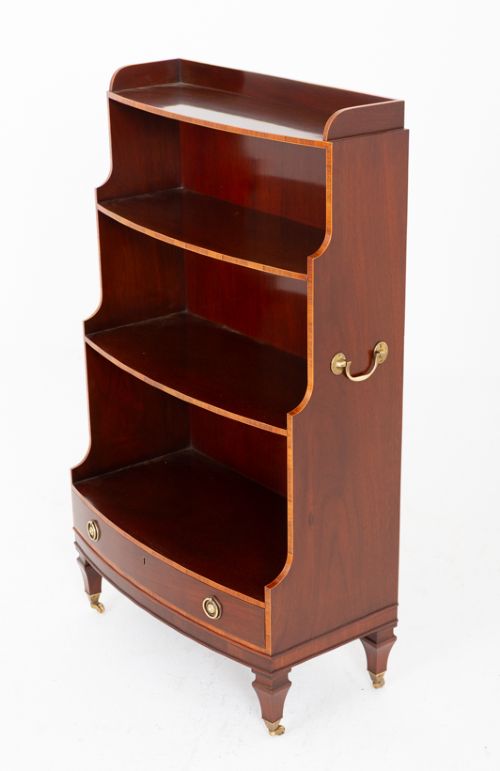
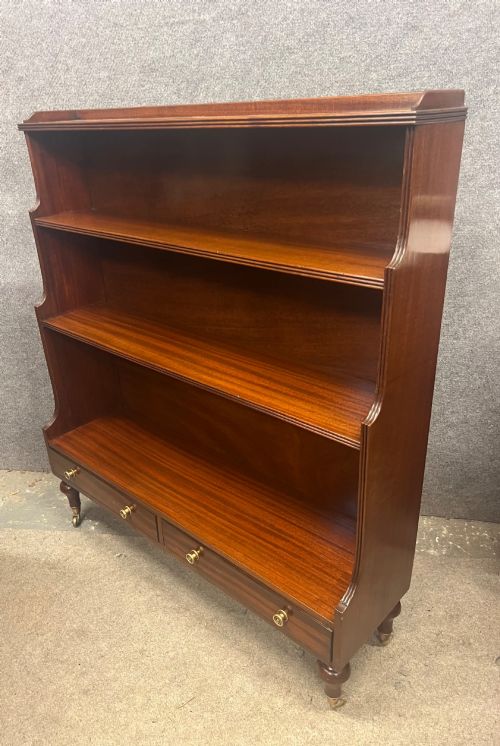
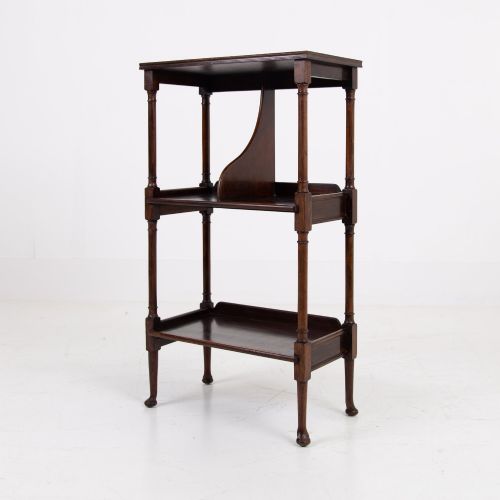
When you search for a regency tiered bookshelf, you encounter multi-tiered furniture designed for displaying books and decorative objects in domestic spaces. These items appear in various formats, from freestanding open bookcases and waterfall designs to hanging wall shelves and multi-tiered whatnots.
The pieces on this page span the Regency period itself as well as later revivals from the nineteenth and twentieth centuries. Mahogany and rosewood predominate, accompanied by occasional examples in satinwood, teak, pine, and painted finishes.
Forms range from compact portable bookshelves and dwarf bookcases to tall stands and tiered shelving units with cupboards or drawers. Buyers frequently meet waterfall bookcase configurations alongside traditional three-tier and six-tier étagères.
How they were made
Cabinetmakers utilised solid timbers and veneers, building structural carcasses in mahogany and rosewood. Decorative detailing often involved contrasting crossbanding and boxwood stringing along the tiered edges.
Regency Tiered Bookshelf Retail Price Guide 2026
Typical asking prices for regency tiered bookshelf among the pieces listed under this phrase on Sellingantiques today, from the lower quarter to the upper quarter. They describe what is for sale here now, not the wider market.
Listings combine genuine Regency examples with later revivals from the early twentieth century, spanning mahogany, rosewood, and satinwood.
What varies in quality
The distinction between standard utility items and finer examples rests in timber selection and decorative restraint. Pieces featuring choice rosewood grains or precise crossbanding sit above plain utility pine or later mass-produced revival items.
The Regency Tiered Bookshelf Glossary
- Waterfall bookcase
- A tiered open bookcase where each successive shelf steps back from the one below it, creating a cascading profile. This form gained popularity during the Regency era.
- Whatnot
- A piece of furniture consisting of a set of open shelves for displaying small objects or books. They frequently feature three or more tiers supported by slender uprights.
- Crossbanding
- A strip of veneer applied to the border of a surface where the grain runs perpendicular to the central panel. It provides a neat framing effect on shelves and tabletops.
- Stringing
- A thin inlay of contrasting wood, such as boxwood, inserted into grooves on a timber surface. Cabinetmakers used this technique to outline drawers, shelves, and panels.
- Étagère
- A French term for a piece of furniture with open shelves for displaying ornaments. It is often synonymous with a whatnot.
Regency Tiered Bookshelf: Frequently Asked Questions
How do I use a whatnot?
A whatnot serves as an open display stand for books, ceramics, and small decorative objects in a drawing room or study. The multiple tiers allow you to arrange items by height and utility.
Freestanding versions fit easily into corners or against walls, while hanging variants mount directly onto plaster surfaces.
Are these shelves portable?
Certain nineteenth-century examples are specifically described as portable bookshelves, designed for easy movement between rooms or temporary placement. They share the same tiered construction as larger freestanding models.
Most standard bookcases and whatnots remain substantial furniture items rather than folding travel pieces.
How do I identify a Regency period piece?
Regency pieces often utilise dark exotic timbers like mahogany and rosewood, sometimes enhanced with brass inlay or boxwood stringing. Stylistic markers include clean architectural lines and balanced proportions.
Later revival items from the twentieth century reproduce these classic forms using similar materials and detailing.