
Waterfall Glass Pendant
Waterfall glass pendant lights bring cascading crystal and brass structure into a room, offering period charm through tiered drops.
Waterfall Glass Pendant
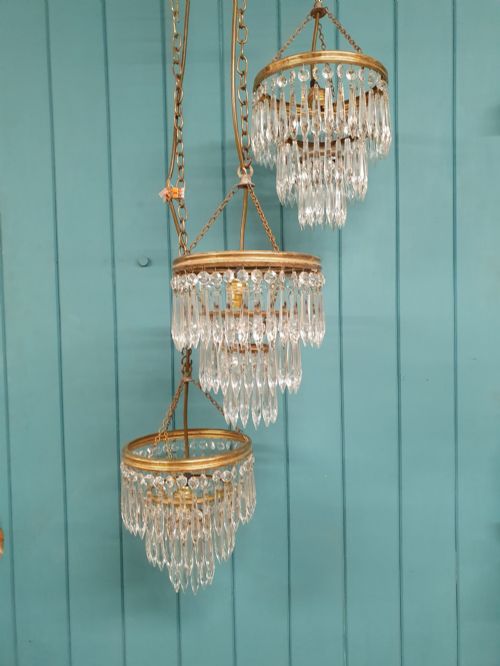
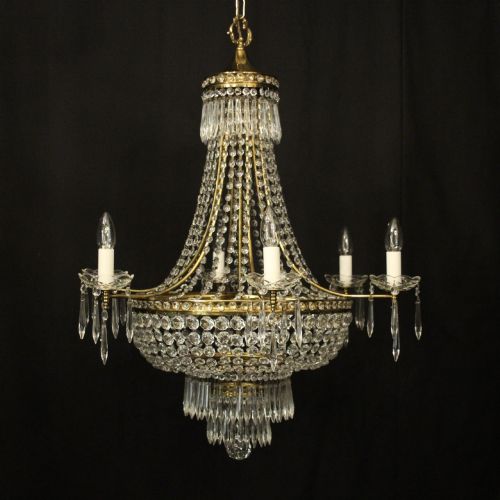
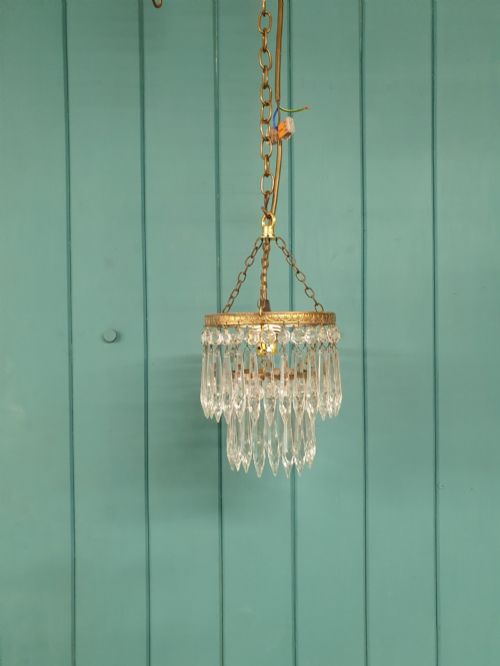
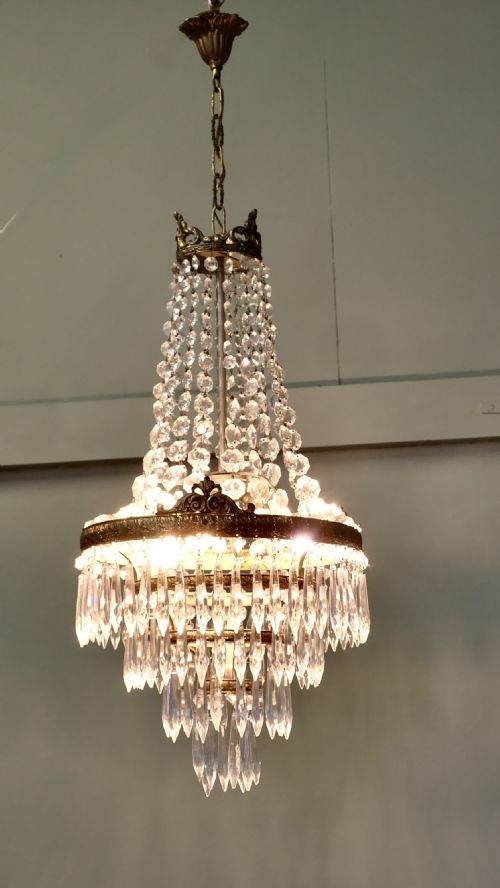
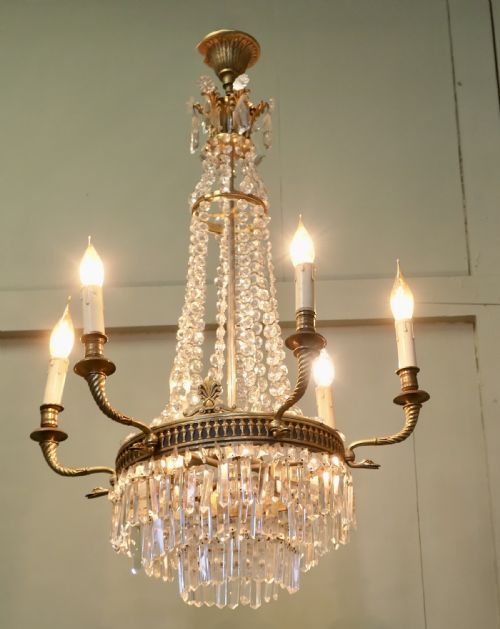
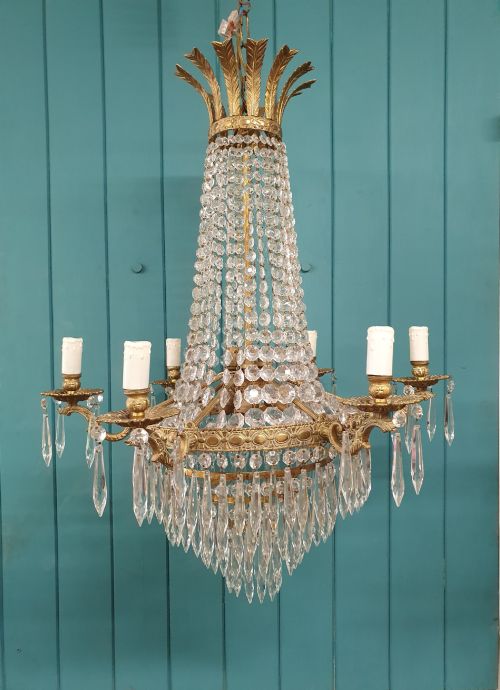
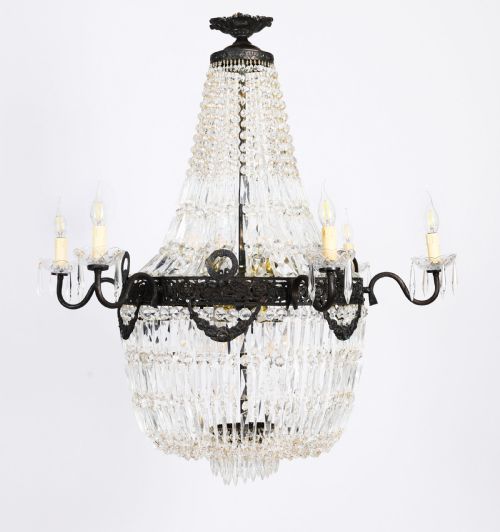
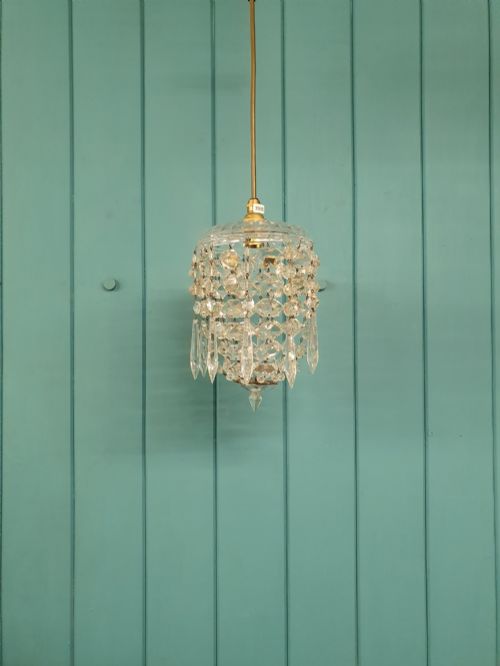
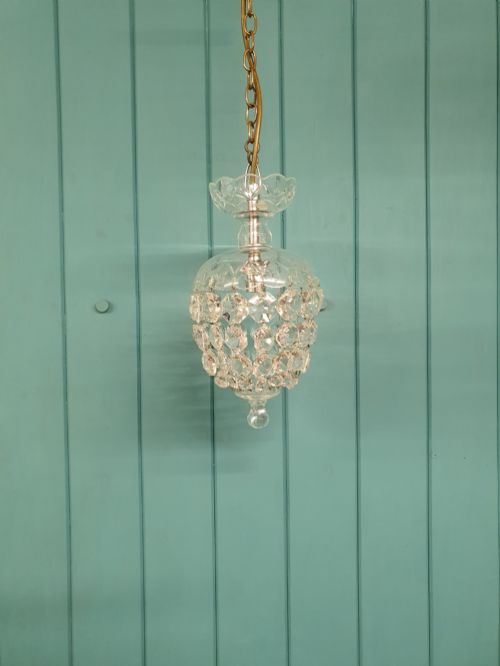
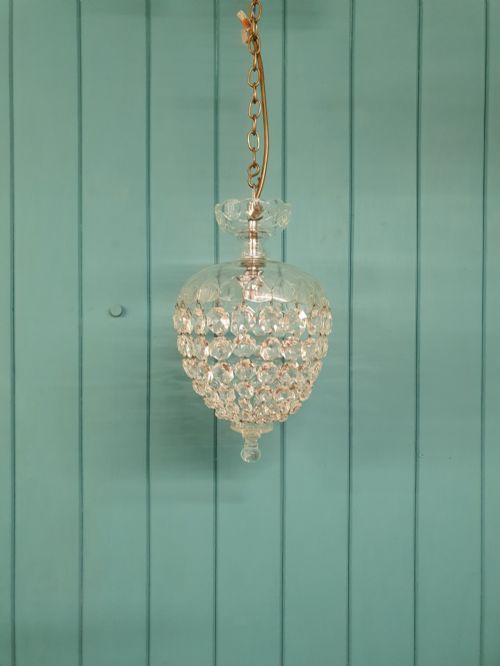
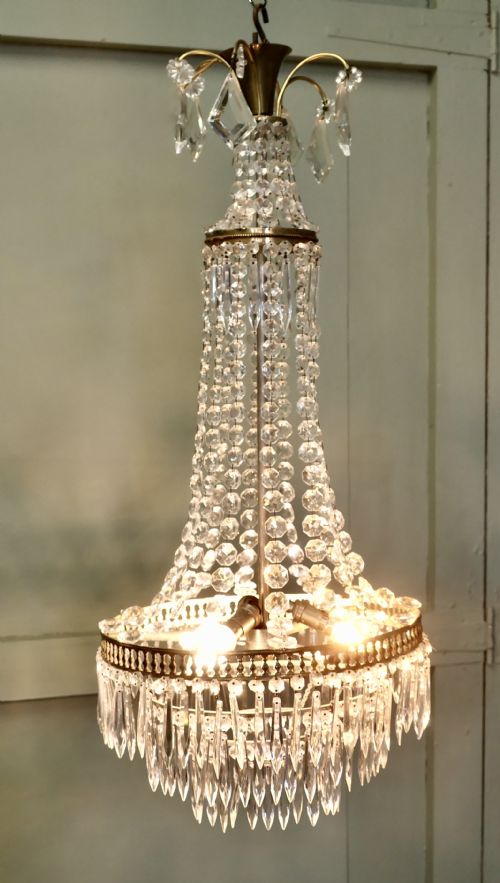
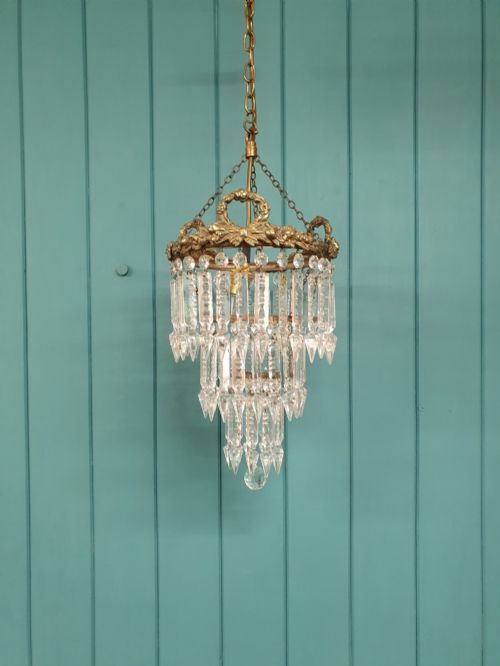
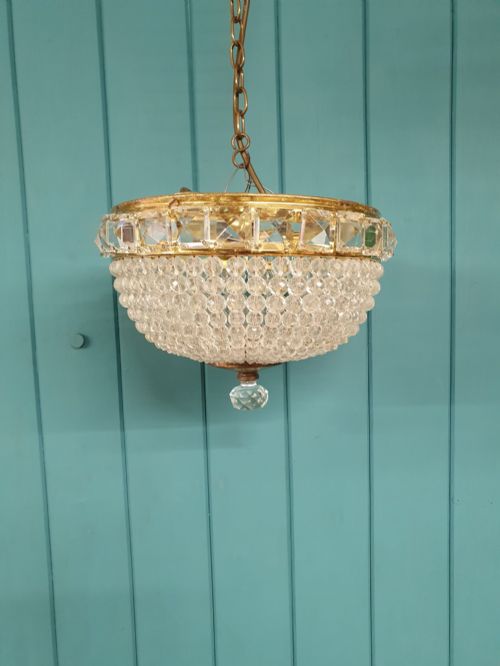
A waterfall glass pendant is typically encountered as a smaller hanging ceiling light, often styled as a bag, dome, or spike chandelier dating from the Edwardian era up to the 1930s. These pieces originate from French and British domestic spaces, utilising suspended tiers of glass drops.
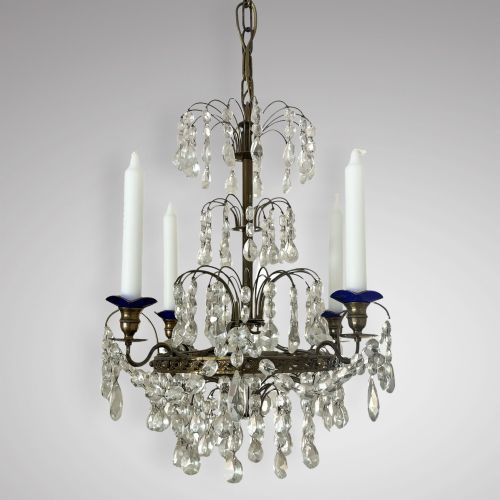
The form relies on cascading rows of prisms that direct and refract light downward from a central frame. Buyers seeking this aesthetic will find single light plafonieres alongside multi-branch fixtures spanning various compact and large formats.
How they were made
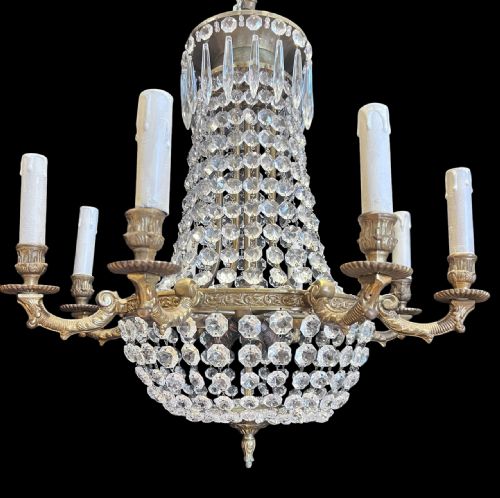
Makers constructed the primary framework using cast brass, gilt brass, or bronze, shaping metal mounts to support the weight of suspended components. Wire frameworks also hold intricate floral and geometric arrangements.
Glass elements combine cut crystal, moulded drops, and lustre beads strung together to form the tent and waterfall silhouettes. These crystal components catch ambient and direct interior illumination.
Some diminutive bag chandeliers measure a mere five inches across, proving that grand cascading crystal aesthetics can arrive in miniature.
What varies in quality
Quality rests in the precision of the metal casting and the clarity of the cut glass. Finer examples display heavier bronze or brass mounts paired with sharp, highly polished crystal prisms that maximise light refraction.
Construction methods also distinguish output, with superior pieces featuring secure wire bindings and robust frame integration. Simpler iterations rely on lighter gauge wire and basic moulded glass rather than hand-cut crystal.
The Waterfall Glass Pendant Glossary
- Tent and waterfall
- A lighting configuration featuring an upper triangular section of strung beads above a cascading lower tier of crystal drops. This arrangement creates a distinct sloping silhouette.
- Bag chandelier
- A flat-backed or basket-shaped pendant light covered in dense vertical strings of crystal prisms. It sits close to the ceiling or hangs from a short chain.
- Plafoniere
- A ceiling-mounted or shallow hanging glass bowl fixture that directs light outward. These single-light fittings often feature decorative metal rims.
- Cut crystal
- Glass that has been laboriously ground and polished on a wheel to create faceted edges. This process enhances the sparkle when light passes through the material.
- Spike chandelier
- A pendant design characterised by a central vertical drop or spike surrounded by cascading crystal strands. The format concentrates visual weight toward the lower centre.
Waterfall Glass Pendant: Frequently Asked Questions
Where should I hang a waterfall glass pendant?
These fixtures suit hallways, bedrooms, and smaller reception rooms where ceiling height permits a hanging pendant. Their compact forms provide localized illumination without dominating the spatial proportions of the room.
Larger multi-light variants function effectively above dining tables or within stairwells. The downward cascade of crystal diffuses light evenly across the immediate surrounding area.
How do I clean a crystal pendant light?
Maintenance involves removing dust with a soft microfibre cloth or a specialist long-handled feather duster. For deeper cleaning, delicate removal of individual glass drops allows for washing in warm soapy water.
Metal frames require dry wiping to preserve the original patina of the brass or bronze surfaces. Harsh chemical cleaners can damage both the metal finishes and the vintage glass composition.
Are these pendants wired for modern electricity?
Most surviving fixtures require professional rewiring to meet contemporary domestic safety standards upon acquisition. Electric components inside older pieces often show degradation from age and heat exposure.
Qualified electricians can adapt the internal lampholders while retaining the original exterior brass or bronze mounting hardware. This ensures safe operation within modern homes.
How do I tell Edwardian pieces from 1930s ones?
Edwardian examples frequently incorporate delicate brass mounts and simpler bag or dome profiles designed for gas or early electric conversion. The materials tend to reflect traditional late-nineteenth-century decorative arts.
Pieces from the 1930s often lean toward French Empire revival styles or early Art Deco interpretations with bolder geometric symmetry. Examining the mounting style and metal thickness helps determine the manufacturing era.