



Watercolour on Ivory Portrait
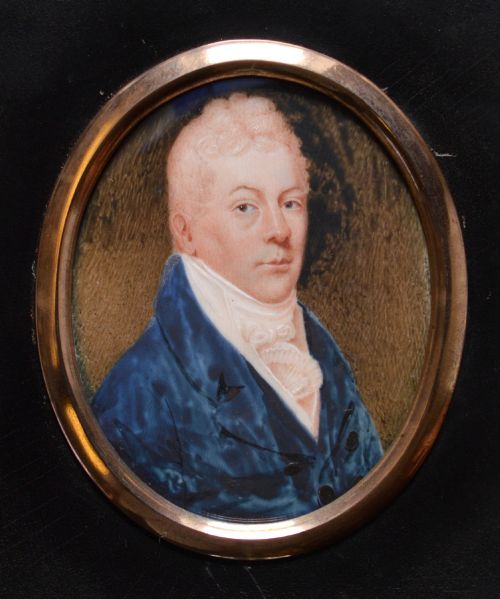
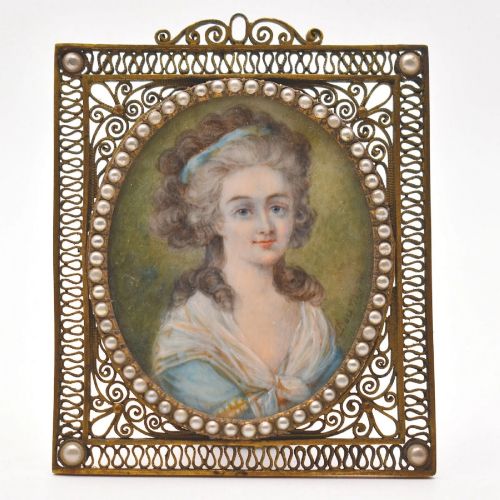
A watercolour on ivory portrait brings the intense intimacy of Georgian and Regency faces right into the palm of your hand.
Watercolour on Ivory Portrait
A watercolour on ivory portrait is a delicate miniature painting executed on a thin slice of ivory, capturing the likenesses of gentlemen, ladies, and officers from the eighteenth century and the Regency period. These small works serve as personal mementoes, often created as pendants or framed pieces to be worn or kept close.
The pieces appearing on this page span from the eighteenth century into the early nineteenth century, including specific dates around eighteen hundred and the eighteen twenties. They frequently depict subjects in period dress, such as white dresses with blue sashes or coral beads, rendered with remarkable precision on their ivory grounds.
Makers and artists represented in these listings include established names such as Charles Hayter, Nicolas Freese, Frederick Buck, George Engleheart, Archibald Skirving, William Grimaldi, Henry Jacob Burch, Edward Pugh, Samuel Cotes, Jeremiah Steele, and Dumont. Their works appear in various formats, from simple frames to elaborate gilt metal and gold settings.
Materials and construction
The primary ground for these works is a thin slice of ivory, which provides a luminous, translucent base that imparts a natural glow to the skin tones in the painting. Artists applied watercolour pigments delicately over this smooth surface, often utilising the natural grain and brightness of the ivory to enhance the depth of the portrait.
Frames and housings for these miniatures incorporate glass to protect the fragile paint surface, alongside materials such as gold, gilt metal, brass, and ebonised wood. Some examples feature specialised surrounds like seed pearl gilt frames or piano key frames, reflecting the craftsmanship of the period.
An officer painted in 1798 shares space with ladies wearing coral beads and wide blue sashes, all staring steadfastly past the edge of time.
Elements of quality
The quality of the housing contributes significantly to the piece, distinguishing standard ebonised wood or simple brass frames from elaborate gold pendant mounts set with seed pearls. The integrity of the protective glass and the preservation of the delicate watercolour pigments also mark the distinction between average survivals and superior works.
Charles Hayter·Nicolas Freese·Frederick Buck·George Engleheart·Archibald Skirving·William Grimaldi·Henry Jacob Burch·Edward Pugh·Samuel Cotes·Jeremiah Steele·Dumont
The Watercolour on Ivory Portrait Glossary
- Ivory
- A hard, white material derived from animal tusks, sliced thin to serve as a luminous painting surface for miniature portraits. Its natural translucence allows light to reflect back through the watercolour washes.
- Pendant
- A piece of jewellery designed to be suspended from a neck chain or ribbon, frequently utilised for portrait miniatures so the wearer could keep the likeness of a loved one against their heart.
- Ebonised wood
- Timber treated to resemble ebony, providing a dark, contrasting border that was commonly used for framing small works during the Georgian and Regency periods.
- Gilt metal
- Base metal treated with a thin layer of gold or gold-coloured wash to simulate solid gold framing on miniature paintings.
- Seed pearl
- Very small natural pearls often sewn or set into decorative jewellery frames, frequently seen on French and English portrait miniature mountings of the period.
Watercolour on Ivory Portrait: Frequently Asked Questions
How were these miniature portraits originally worn or displayed?
These small portraits were frequently mounted as pendants to be worn around the neck or pinned to clothing as personal tokens of affection. They were also kept on desks or hung in private chambers.
Their intimate scale allowed family members to carry the likenesses of relatives, military officers, or children during travel.
How can I tell a Georgian miniature from a Regency one?
Georgian miniatures often feature powdered hair and heavier fabrics, reflecting the fashions of the late eighteenth century. Regency examples tend to show softer hairstyles, simpler classical draping, and lighter colour palettes.
Examining the style of the clothing, such as the cut of a gentleman's coat or a lady's high-waisted dress, provides the clearest indication of the period.
Why is watercolour painted on ivory instead of paper?
Ivory possesses a natural translucence that paper lacks, allowing light to pass through the thin paint layers and reflect back. This creates a luminous, skin-like glow that enhances the realism of human portraits.
Painters capitalized on this property to achieve lifelike depth in flesh tones.
What frames are typical for these portraits?
Frames range from simple ebonised wood and brass surrounds to ornate gold pendant settings decorated with seed pearls. Some examples utilise piano key frames, which incorporated sections of polished ivory or bone.
The choice of frame often reflects the status of the sitter and the intended use of the piece as jewellery or cabinet art.