

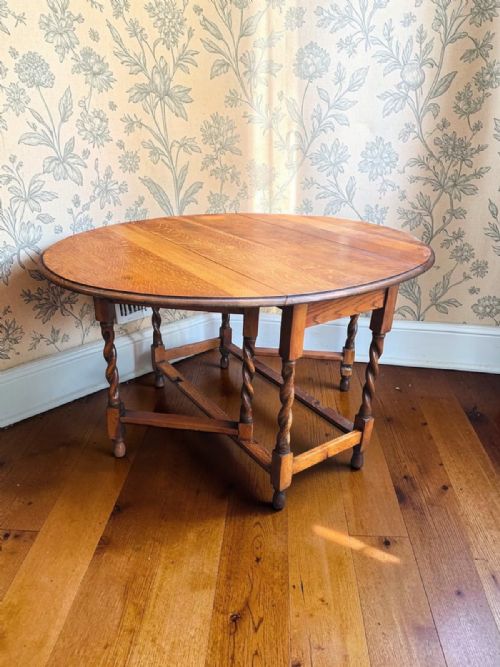


Warm Oak Oval Table
A warm oak oval table brings tactile depth and versatile proportions to a room, offering the welcoming curves characteristic of traditional dining and centre tables.
Warm Oak Oval Table
When you search for a warm oak oval table, you encounter a selection of dining tables, centre tables, dressing tables, and coffee tables shaped with curved perimeters. These pieces draw on historical forms ranging from seventeenth century gateleg designs to nineteenth century refectory and centre tables.
You are most likely to meet solid oak gateleg dining tables from the nineteen twenties or earlier periods on this page. These examples utilise drop leaves supported by swinging legs to alter their footprint, combining practical utility with traditional timber construction.
The aesthetic spans English country and French provincial traditions, alongside Jacobean revival styles and art deco interpretations. Each object displays the distinctive grain and rich colouration associated with aged timber.
How they were made
The construction relies heavily on solid oak and general timber framing, occasionally incorporating fruitwood or walnut details alongside iron hardware. Artisans shaped these materials using traditional joinery methods suited to gateleg actions and sturdy refectory frames.
Surface decoration appears through timber inlay and wood inlay techniques, adding subtle contrast to the primary oak grain. Tables from the Victorian era demonstrate finer marquetry work, including burr walnut veneers applied to the top surfaces.
Warm Oak Oval Table Retail Price Guide 2026
Typical asking prices for warm oak oval table among the pieces listed under this phrase on Sellingantiques today, from the lower quarter to the upper quarter. They describe what is for sale here now, not the wider market.
Current listings span from the seventeenth century through to the nineteen thirties, featuring oak, walnut, and fruitwood.
What varies in quality
The distinction between tiers of quality rests upon the selection of timber and the integrity of the structural joins. Pieces fashioned from solid oak with substantial gateleg mechanisms demonstrate superior craftsmanship compared to lighter, purely decorative iterations.
Refinement in surface ornamentation also sets examples apart, as seen in the precision of timber inlay and the depth of the grain. Tables that retain their original colour and patination without excessive restoration command greater appreciation among collectors.
The Warm Oak Oval Table Glossary
- Gateleg table
- A table with hinged leaves that are supported by swinging legs when raised. This mechanism allows the surface area to be reduced when space is required.
- Refectory table
- A long, narrow dining table traditionally used in communal dining halls. These sturdy forms typically feature strong stretcher bases and solid timber tops.
- Centre table
- A freestanding table designed to be viewed from all sides, placed in the middle of a room rather than against a wall.
- Timber inlay
- The technique of embedding pieces of wood into a contrasting background to create decorative patterns. This method enhances the visual texture of tabletops.
Warm Oak Oval Table: Frequently Asked Questions
How do I date an oak table?
Dating relies on examining construction marks, timber preparation methods, and style indicators such as leg turnings. Tool marks left by hand saws and trammel points point towards earlier centuries, whereas twentieth century pieces show standardised fixings and machine finishing.
Hardware components like hinges and screws also provide chronological clues. Hand-forged iron elements support older attributions, while brass or modern steel screws suggest later Victorian or twentieth century production.
What is a gateleg table?
A gateleg table is a form featuring hinged drop leaves supported by pivoting legs that swing out like a gate. This design provides an adaptable surface that expands for dining and folds away for compact storage.
The swinging action requires sturdy pivot joints and balanced framing to support the weight of the leaves when extended. This mechanism makes these tables practical for smaller rooms while maintaining traditional character.
Are these tables suitable for daily dining?
Most solid oak and refectory tables are constructed for heavy daily use, offering robust frames and resilient timber surfaces. Gateleg versions accommodate everyday meals provided the swinging leg supports are properly aligned.
Maintenance involves using coasters and placemats to protect the polished oak finish from moisture and heat. Regular waxing preserves the natural timber patination against daily wear.
How do I care for antique oak?
Caring for antique oak involves maintaining stable indoor humidity levels to prevent the timber from splitting or warping. Dusting with a soft, dry cloth removes abrasive particles without harming the surface.
Applying traditional beeswax periodically nourishes the wood and enhances its natural lustre. Avoid placing these pieces in direct sunlight or near heat sources, which can dry out the historic timber.