
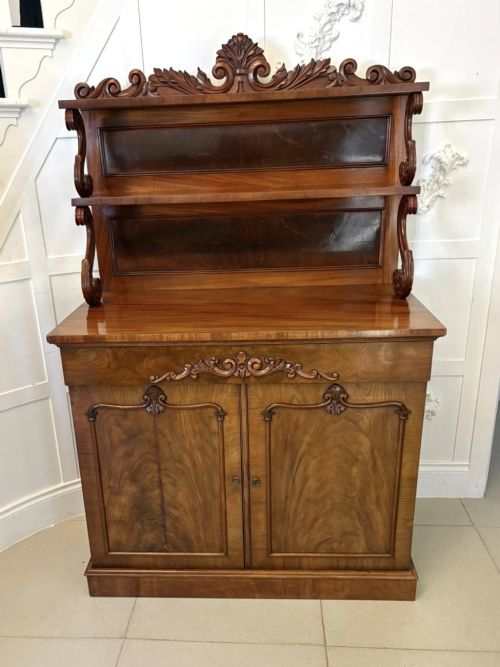
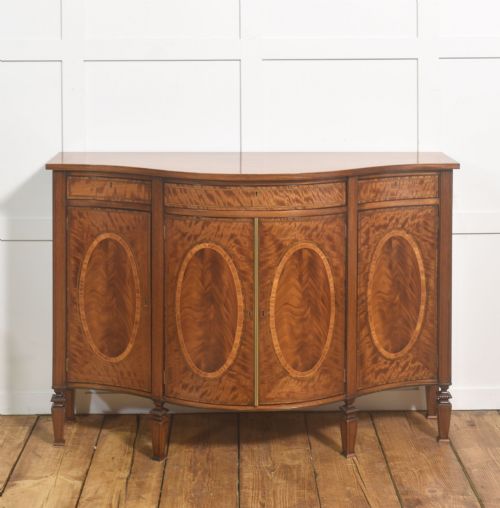
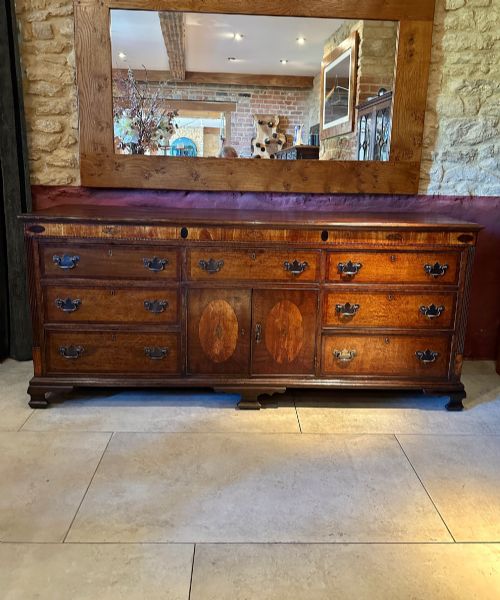


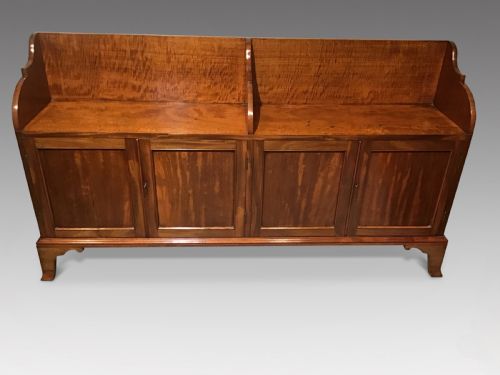


Warm Brown Mahogany Server
A warm brown mahogany server brings rich timber depth and practical dining room storage to an interior through time-honoured British craftsmanship.
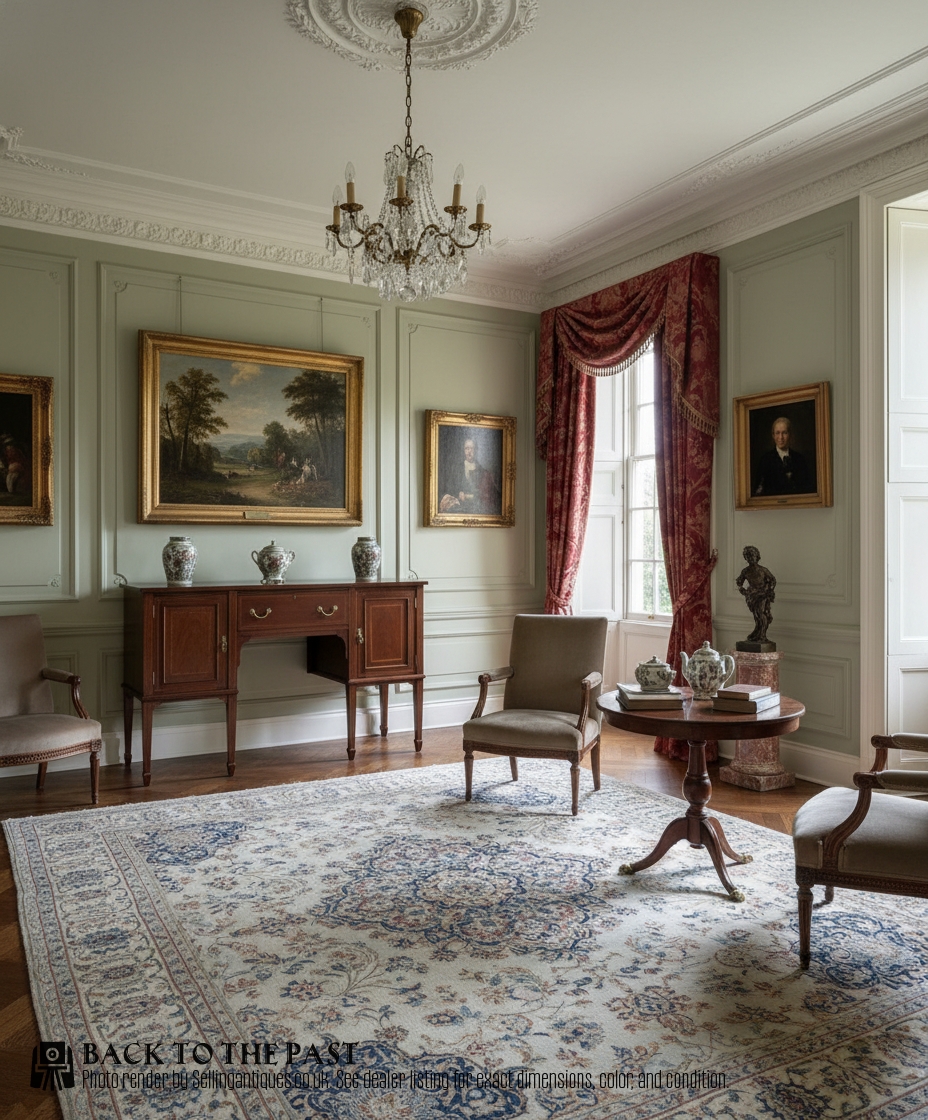
Warm Brown Mahogany Server
When you search for a warm brown mahogany server, you are looking at substantial dining room furniture designed for serving food and storing tableware. The pieces listed under this category span the Georgian, Victorian, and Edwardian periods, encompassing sideboards, chiffoniers, console tables, and buffets.
You are most likely to encounter nineteenth-century Victorian and eighteenth-century Georgian examples on this page, alongside Edwardian interpretations such as Sheraton Revival designs. These items frequently incorporate cupboards, drawers, or tiered shelving in formats ranging from breakfront bases to bow-front shapes.
Materials and construction methods
Construction relies heavily on solid mahogany and flame mahogany veneer, often underscored by secondary woods like oak and pine for drawer linings and internal framing. Timber selection determines the visible grain pattern, ranging from plain dark surfaces to highly figured flame effects.
Decorative detailing is achieved through contrasting stringing and banding using satinwood and boxwood inlay, whilst hardware is typically fashioned from brass. Cabinetmakers applied these techniques across varying regional styles, from Lancashire dresser bases to refined metropolitan side cabinets.
Listings span the 18th century, 19th century, Georgian, Victorian, and Edwardian periods, utilising mahogany, brass, satinwood, boxwood, flame mahogany veneer, oak, and pine.
Distinguishing quality in mahogany servers
The upper tier of the range is distinguished by superior timber selection, such as richly figured flame mahogany veneer and crisp, precise satinwood or boxwood inlay. Superior pieces exhibit harmonious proportions and careful alignment of drawer fronts and cupboard doors.
Simpler or more utilitarian items display plain mahogany surfaces with minimal secondary wood embellishment and straightforward structural carpentry. Quality resides in the depth of the timber polish and the integrity of the original joints rather than ornate ornamentation alone.
The Warm Brown Mahogany Server Glossary
- Mahogany
- A durable tropical hardwood prized for its deep reddish-brown colour and stability in furniture construction.
- Flame mahogany veneer
- A thin slice of timber cut from the fork of a mahogany tree to create a distinctive, flickering grain pattern across drawer fronts and doors.
- Breakfront
- A cabinet design where the central section projects forward from the flanking outer sections.
- Chiffonier
- A compact sideboard or low cabinet popular during the nineteenth century, often featuring a raised shelf or tier on top.
- Stringing
- Thin lines of contrasting lighter wood, such as satinwood or boxwood, inlaid into the mahogany surface as a decorative border.
Warm Brown Mahogany Server: Frequently Asked Questions
What is a warm brown mahogany server used for?
These pieces function primarily as dining room furniture designed for serving dishes, organising tableware, and storing linens. They provide durable flat surfaces alongside enclosed cupboard or drawer space.
Historically, they sat against dining room walls to assist hosts during formal meals, while today they serve comparable practical and display purposes in modern homes.
How do I tell Georgian servers from Victorian ones?
Georgian pieces, including George III designs, typically feature restrained classical proportions, fine mahogany solids, and subtle stringing or inlay. They prioritize architectural balance and understated elegance.
Victorian examples often display heavier proportions, figured plum pudding or flame mahogany veneers, and more robust construction. Edwardian revivals later combined these earlier motifs with lighter satinwood banding.
Where should I place a server in my home?
A mahogany server fits naturally in a dining room or living space where its surface and storage capacity are easily accessible. They suit positioning against long interior walls.
Because many examples include mirrors, backboards, or tiered shelves, placement should consider surrounding wall height and natural light to properly showcase the wood grain.
What woods are used besides mahogany?
Whilst mahogany forms the primary exterior structure, cabinetmakers utilised secondary timbers like oak and pine for internal drawer linings and structural framing. Satinwood and boxwood appear frequently as contrasting inlay materials.
These contrasting timbers were chosen for their ability to create crisp decorative borders and banding against the darker mahogany background.