

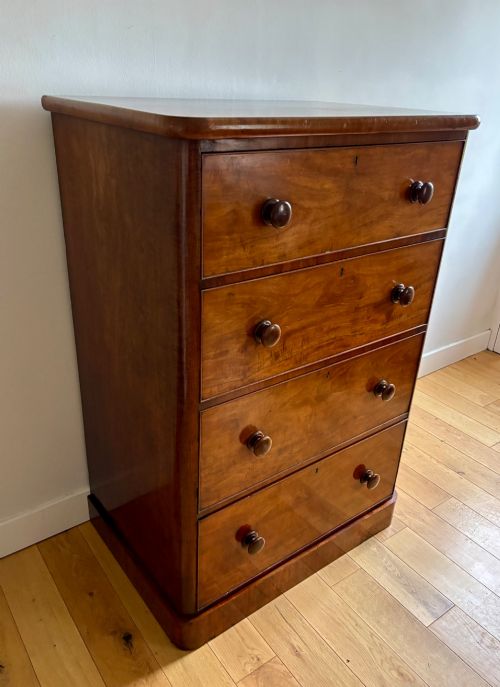
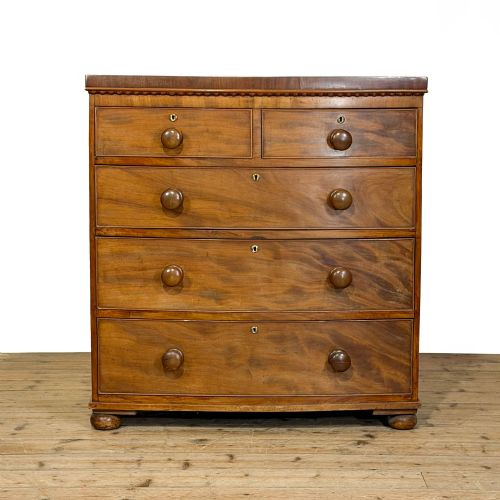
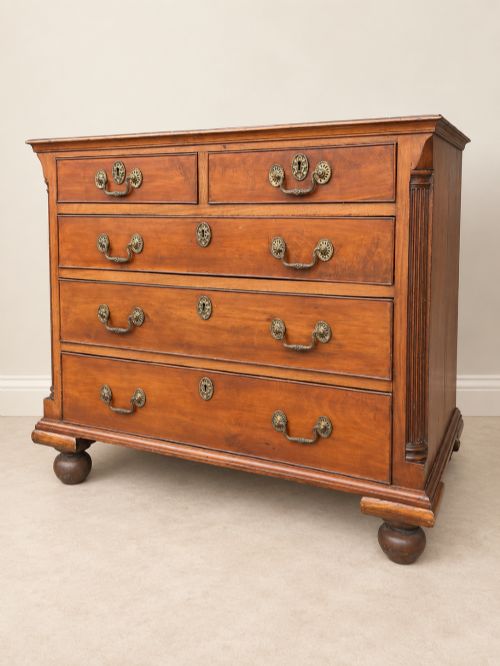
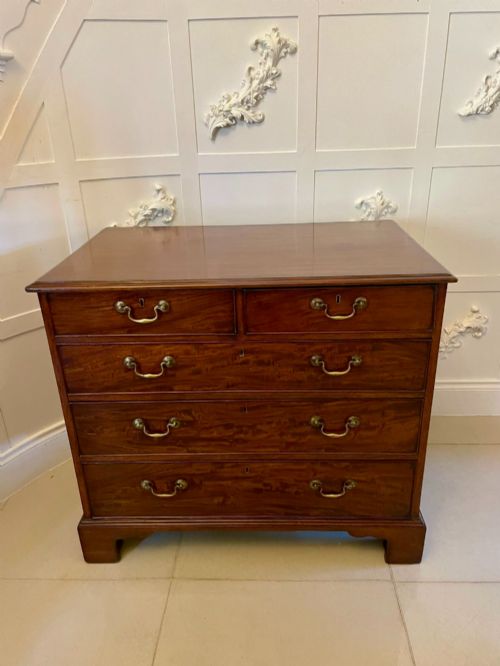
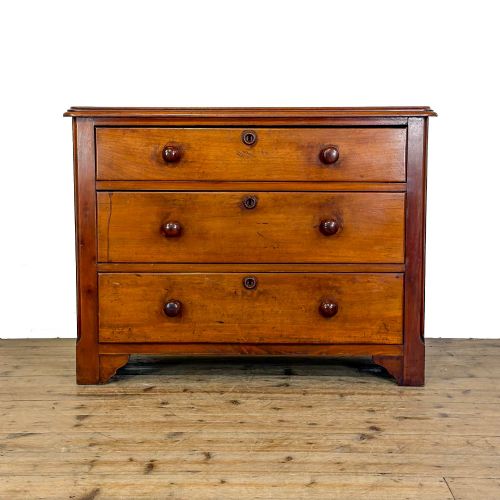
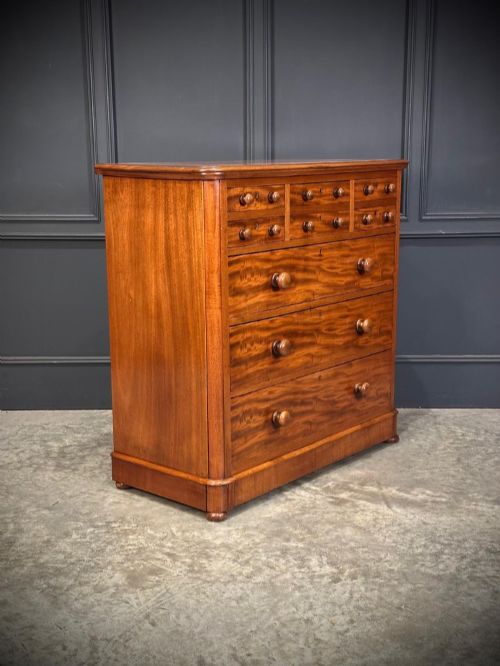
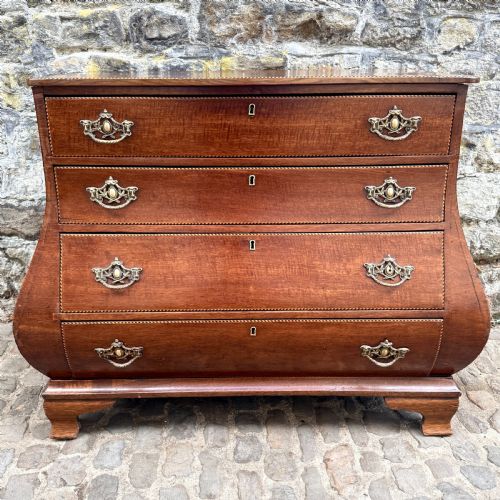
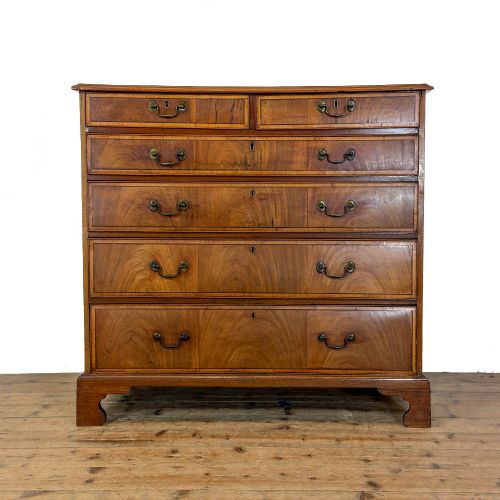




Warm Brown Mahogany Commode
These pieces of warm brown mahogany commode furniture offer deep timber grain and practical storage, drawing collectors with their rich domestic history.
Warm Brown Mahogany Commode
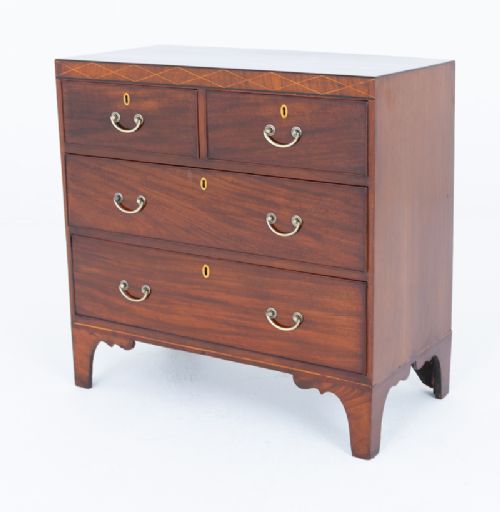
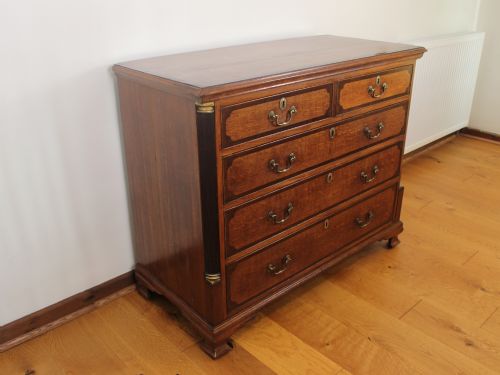
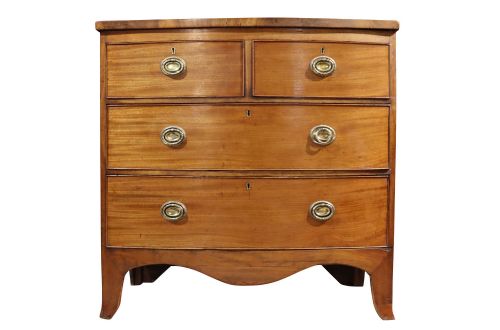
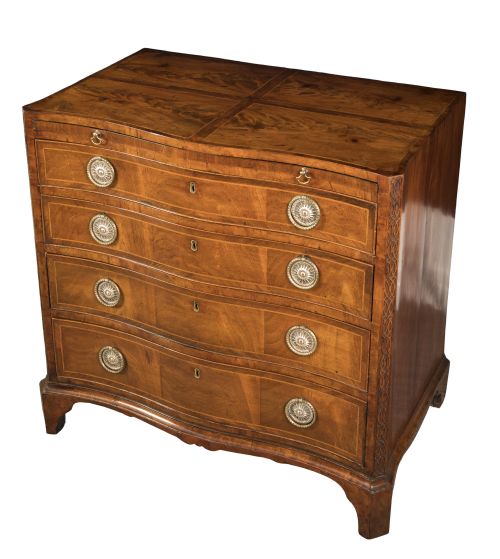
A warm brown mahogany commode brings robust timber construction and functional storage to a room, taking forms such as chests of drawers, bedside cabinets, and serpentine side cabinets. When searching for this phrase, buyers encounter examples spanning the Georgian, Regency, and Victorian periods, alongside specific formats like bow fronts and miniature chests.
The pieces listed on this page appear most frequently as Georgian and Victorian chests of drawers and bedside tables, constructed in solid mahogany or oak with mahogany veneers. Cabinet makers across the eighteenth and nineteenth centuries shaped these utilitarian forms with varying drawer configurations, from two-over-three arrangements to compact bedside commodes.
Assessing quality
Timber selection dictates the visual impact of each piece, distinguishing simple utility items from finely figured mahogany and decorative marquetry work. Grain movement, harmonious colour matching across drawer fronts, and the crisp execution of crossbanding demonstrate superior cabinet making.
Structural integrity and the retention of original hardware, such as brass handles and period locks, elevate the standing of a commode. Proportions also matter, with neat-sized bow fronts, serpentine silhouettes, and miniature scales reflecting greater technical skill from the workshop.
Warm Brown Mahogany Commode Retail Price Guide 2026
Typical asking prices for warm brown mahogany commode among the pieces listed under this phrase on Sellingantiques today, from the lower quarter to the upper quarter. They describe what is for sale here now, not the wider market.
Listings feature woods including mahogany, oak, pine, walnut, and boxwood across Georgian, Regency, and Victorian periods.
The Warm Brown Mahogany Commode Glossary
- Crossbanding
- A strip of veneer laid perpendicular to the surrounding grain along the edges of a drawer front or top. This decorative border frames the central timber panel.
- Bow front
- A convex, outwardly curved front elevation typical of many Georgian and Regency chests. It softens the linear profile of the cabinet.
- Serpentine
- A front outline that curves inward centrally and outward at the ends in an S-shape. This contour requires precise timber shaping and fitting.
- Brushing slide
- A pull-out shelf positioned above the top drawer used for folding linen or grooming. It slides flush into the cabinet frame when not in use.
- Marquetry
- Patterns formed by fitted pieces of veneer applied to a carcase structure. Floral or pictorial designs often utilise contrasting woods like boxwood.
Warm Brown Mahogany Commode: Frequently Asked Questions
How do I date a mahogany commode?
Examine the construction methods, drawer linings, and overall style of the piece to establish its period. Georgian pieces often display hand-cut dovetails and oak secondary timbers, while Victorian examples tend to feature machine-sawn elements and pine carcases.
Hardware styles and wood finishes also shift across decades, moving from eighteenth-century brass drop handles to mid-nineteenth-century knob pulls and heavier polished surfaces.
What is the difference between a chest and a commode?
Historically, the term commode applied to low cabinets or chests fitted with doors or drawers designed for bedroom or parlour use. In modern trade terminology, the phrase often encompasses various drawer configurations and bedside tables.
Many listings on this page use the terms interchangeably for pieces providing enclosed storage and flat top surfaces.
Where should I place a mahogany commode?
These cabinets suit bedrooms, hallways, and living rooms where surface display space and drawer storage are useful. Keep them away from direct heat sources and strong sunlight to protect the mahogany polish and prevent timber splitting.
Their compact proportions, particularly neat-sized bow fronts and bedside tables, allow them to fit easily into smaller interior spaces.
Are these pieces suitable for daily use?
Solid timber construction and sturdy drawer boxes make these items practical for storing clothing, linens, or household goods. Routine dusting and occasional wax polishing maintain the condition of the mahogany surfaces.
Careful handling of original drawers and antique hardware ensures the mechanisms continue to function smoothly during everyday life.