



Warm Brown Chest on Stand
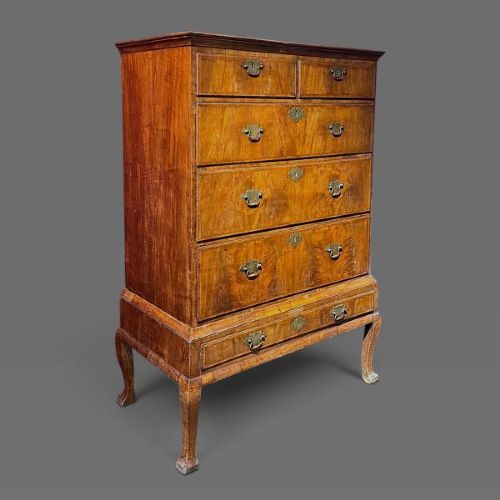
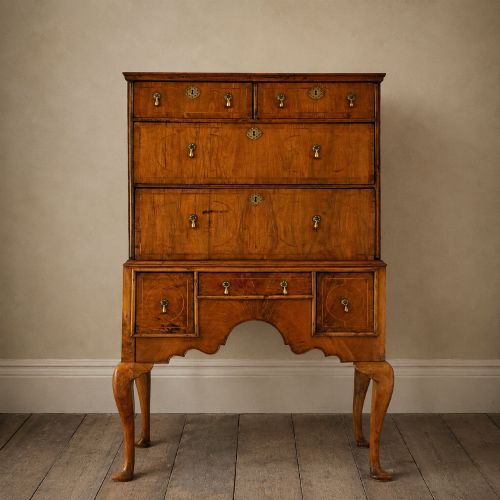
A warm brown chest on stand is a dual-tier storage piece combining a drawer section with a raised base, offering rich timber tones and elevated stature.
Warm Brown Chest on Stand
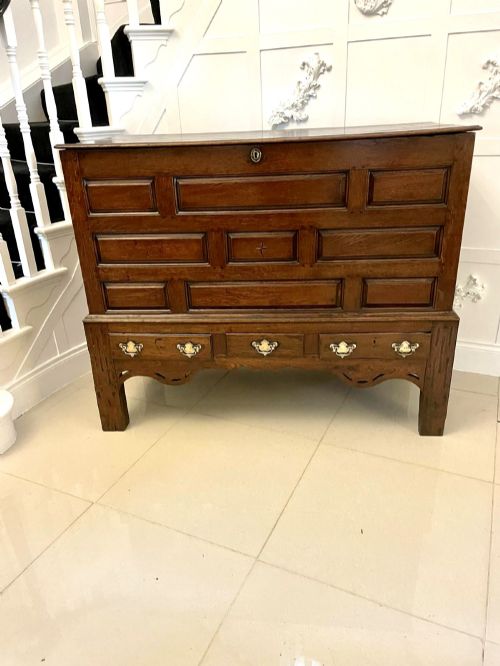
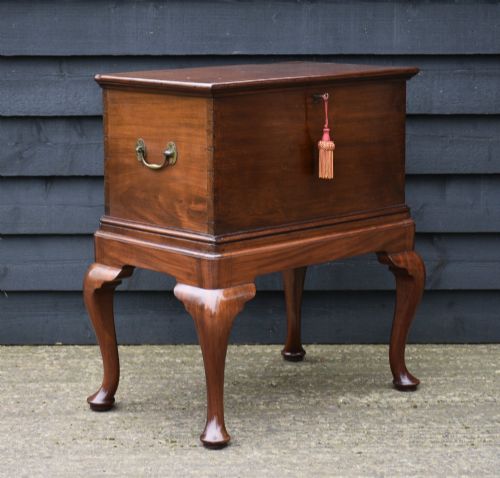
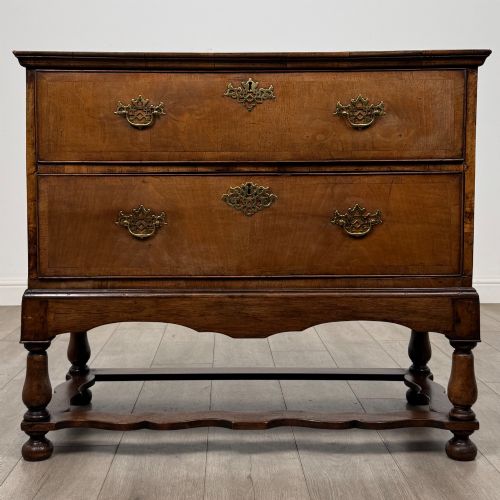
The core of what buyers seek under this phrase spans walnut, oak, and mahogany constructions, with several pieces displaying crossbanding and figured grain patterns. These items vary from formal early eighteenth-century designs to later provincial interpretations.
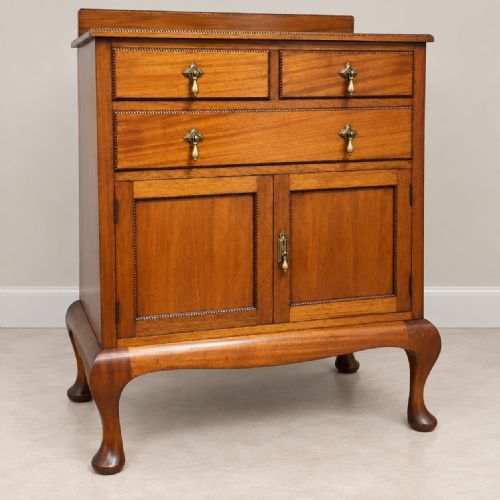
While the classic configuration pairs a multi-drawer upper chest with a stand featuring cabriole or straight legs, the inventory also accommodates related bedside cabinets, dough bins, and campaign trunks. Each variant delivers the characteristic elevated profile and deep brown timber hues.
Materials and construction methods
Cabinetmakers constructed these pieces predominantly using solid walnut, oak, and mahogany, frequently applying burr walnut or figured veneers to drawer fronts to create decorative contrast. Crossbanding and brass hardware complete the primary structural and decorative vocabulary across the periods.
The joinery involves precise dovetailing for the drawer boxes and mortise and tenon joints for the supporting stands. Stands range from integrated designs to associated or later bases fitted to older upper sections.
Warm Brown Chest on Stand Retail Price Guide 2026
Typical asking prices for warm brown chest on stand among the pieces listed under this phrase on Sellingantiques today, from the lower quarter to the upper quarter. They describe what is for sale here now, not the wider market.
Some nineteenth-century dough bins found a second life as stylish country stands for household storage.
Factors of distinction
Quality rests upon the preservation of the original timber surfaces, the crispness of any crossbanding, and the integrity of the joinery between the upper chest and its stand. Cohesion between components elevates an example, particularly where stands are associated or later replacements.
The selection of figured timbers, such as burr walnut or richly grained mahogany, together with patination developed over centuries, distinguishes the more accomplished pieces from simpler utilitarian variants.
The Warm Brown Chest on Stand Glossary
- Chest on stand
- A storage cabinet or set of drawers elevated on a separate framework of legs or a low base. This form reduces the floor footprint and provides distinct architectural proportions.
- Crossbanding
- A narrow strip of veneer laid around the border of a drawer front or top panel with the grain running at right angles to the surrounding wood. It creates a neat framing effect.
- Cabriole leg
- A furniture leg that curves out at the knee and tapers inward to an ankle or foot, typical of Queen Anne and early Georgian design. This shape derives from animal limbs.
- Tallboy
- A tall chest of drawers standing upon another chest or a base, creating an imposing vertical storage unit. They became popular in the eighteenth century for maximising bedroom storage.
- Dough bin
- A trough-like container traditionally used for kneading bread, often mounted on a stand in country settings. In later periods, these evolved into decorative household storage items.
- Campaign cabinet
- Portable furniture constructed in sections with brass mounts and recessed handles for military transport. They are built for resilience and ease of travel.
Warm Brown Chest on Stand: Frequently Asked Questions
What is a warm brown chest on stand?
It is a piece of furniture featuring a drawer section or cabinet elevated on a raised base or stand. These items combine deep timber tones with practical compartmentalised storage.
Originating largely from the eighteenth and early twentieth centuries, they serve as focal points in hallways, living rooms, and bedrooms while offering versatile storage space.
How do I date a chest on stand?
Dating relies upon examining the timber species, joinery techniques, and hardware used in construction. Earlier pieces from the Queen Anne or Georgian periods often display walnut veneers, oak secondary woods, and hand-cut dovetails.
Later Edwardian or reproduction items show distinct machine-cut elements and different handling of internal drawer linings. Comparing the style of the legs and the stand to known historical periods aids precise attribution.
Where should I place one at home?
These pieces suit spaces where vertical storage is required without occupying a large floor area. They function effectively in living rooms, hallways, or dining areas as statement display and storage units.
Keep them away from direct heat sources and strong sunlight to protect the fragile walnut and mahogany veneers from drying out or fading.