



Walnut Writing Slope Cabinet
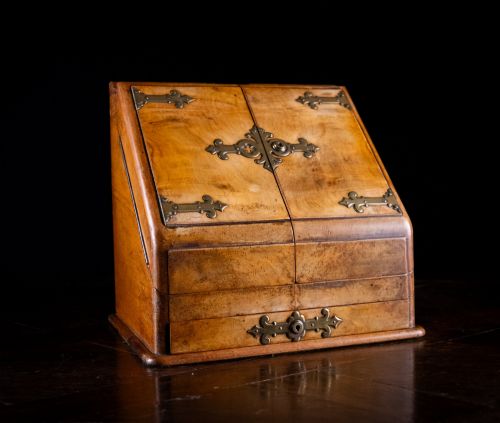
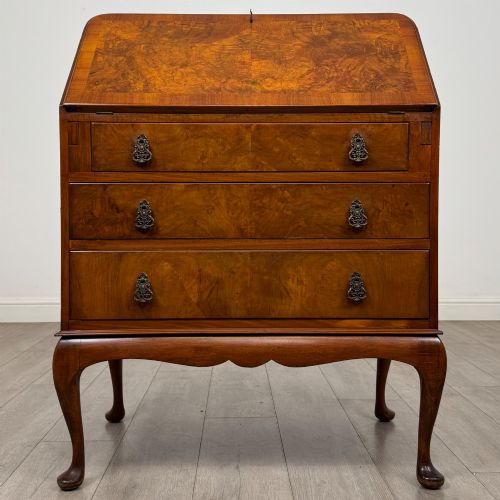
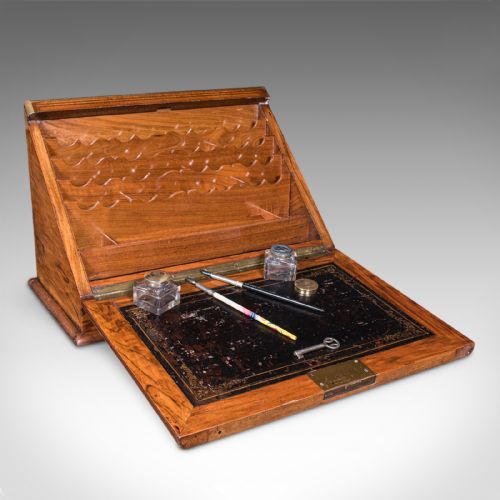
These walnut writing slope cabinet pieces offer fitted compartments and sloped lids for correspondence, combining fine timber surfaces with practical storage.
Walnut Writing Slope Cabinet
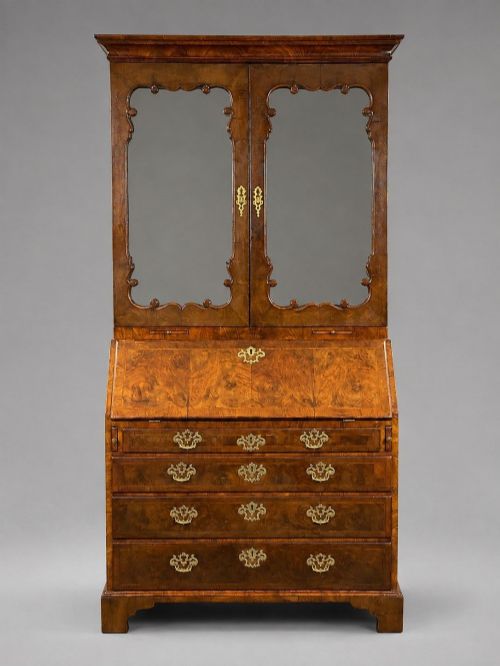
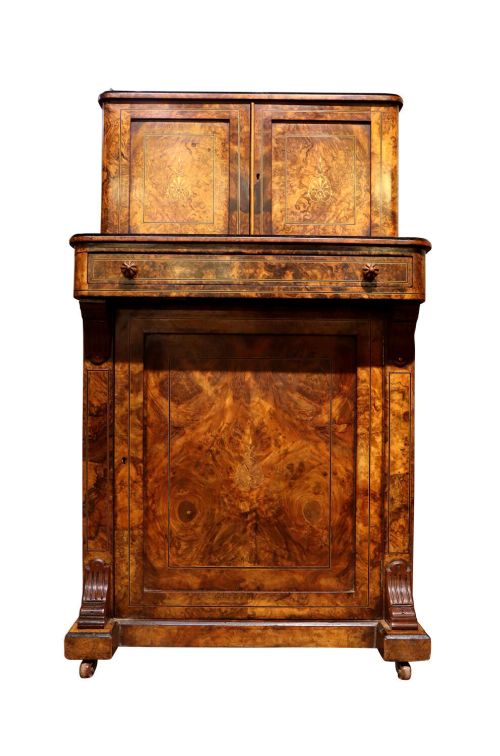
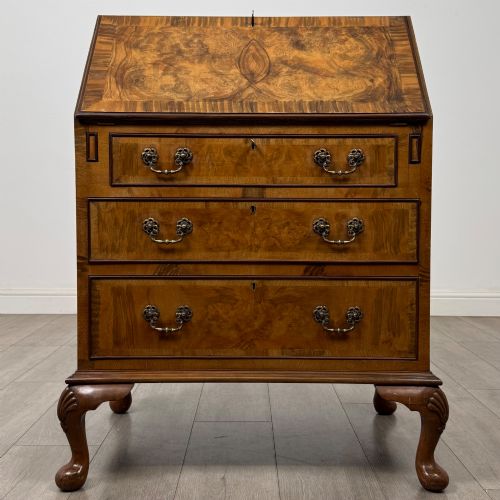
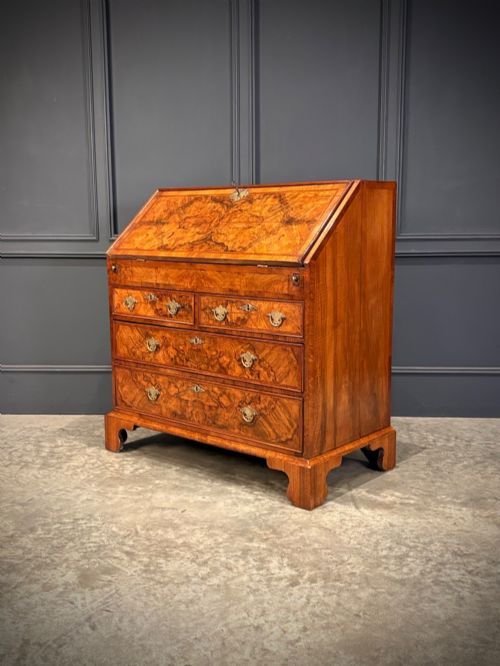
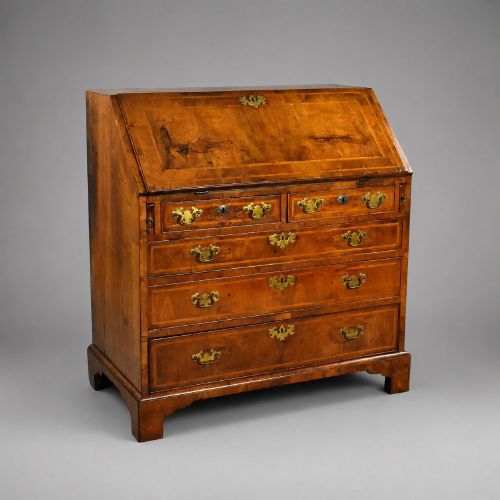
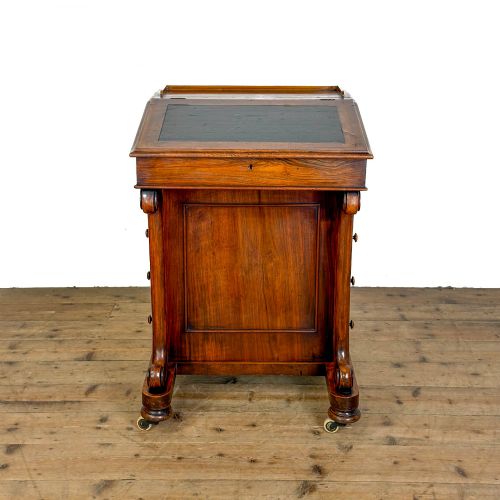
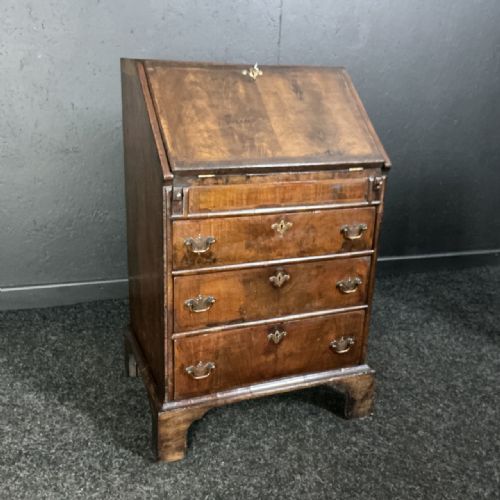
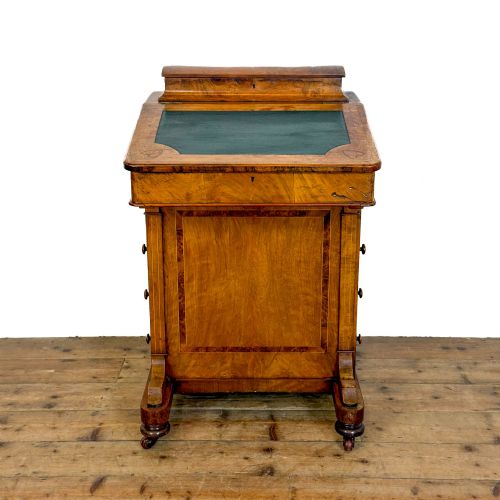
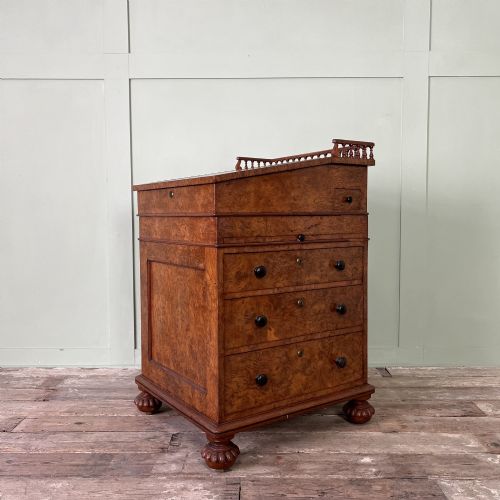
A walnut writing slope cabinet brings together several forms designed for correspondence and storage, ranging from compact desktop stationery cases to larger bureau bookcases. When searching for a walnut writing slope cabinet, buyers encounter diverse formats including Victorian davenport desks, Georgian bureaux, and dedicated stationery boxes.
The selections span multiple eras, showing particular strength in Victorian and Georgian examples alongside 18th century and Edwardian pieces. These items serve both functional writing needs and decorative display within a room, utilising the rich grain patterns inherent in walnut timber.
How they were made
Cabinet makers utilised solid walnut and decorative veneers like burr walnut to cover primary carcases made from secondary woods such as oak. Surfaces were frequently enhanced with boxwood inlay, ebonised wood details, and crossbanding to create geometric patterns along drawer fronts and slant lids.
Hardware played a functional and decorative role, incorporating brass for handles, hinges, and lock escutcheons. Interior fittings often included leather writing surfaces, small pigeonholes, and secret compartments accessed through hidden mechanisms.
Several Victorian davenports conceal ingenious pop-up stationery compartments that spring upward when a secret drawer catch is gently pressed.
What varies in quality
Quality in these pieces depends heavily on the selection and matching of timber veneers, particularly the liveliness of the burr walnut grain across large surfaces. Finer examples display meticulous attention to interior secondary woods, dovetail joinery, and the integration of brass mounts or inlay work.
Proportion and structural balance also separate standard items from superior works, such as an 18th century bureau bookcase or an elaborate Victorian davenport. The complexity of internal stationery fittings and the retention of original leather writing surfaces contribute to a higher standard of manufacture.
Gillow & Co
The Walnut Writing Slope Cabinet Glossary
- Bureaux
- A writing desk with a sloping hinged lid that opens to reveal fitted drawers and pigeonholes. These items often sit upon chest bases or sturdy legs.
- Davenport
- A compact form of small desk featuring a sloped writing surface above a pedestal of drawers. Many Victorian examples include pop-up stationery compartments.
- Crossbanding
- A decorative border technique where veneer strips are laid perpendicular to the grain of the central panel. This frames drawer fronts and desk lids.
- Escutcheon
- A protective plate surrounding a keyhole, usually made of brass. It prevents the surrounding wood from sustaining damage during daily use.
Walnut Writing Slope Cabinet: Frequently Asked Questions
What is a davenport desk?
A davenport is a compact writing desk featuring a sloped, often leather-lined writing surface that lifts to reveal storage. The main body typically incorporates a pedestal of drawers on one side.
First appearing in the Georgian era and remaining popular through the Victorian period, these pieces were designed for domestic correspondence where floor space was limited.
How do I identify a bureau bookcase?
A bureau bookcase combines a lower writing bureau with an upper shelved cabinet enclosed by doors. The doors frequently feature glass panels to display books.
These taller pieces date predominantly from the 18th century and Georgian periods, offering substantial storage for both writing materials and a library.
What is burr walnut?
Burr walnut is a veneer taken from a tree growth or knot where the grain has swirled into intricate, mottled patterns. Cabinet makers prized this wood for its decorative visual impact.
It appears frequently on the exterior surfaces of Victorian and Georgian cabinets, often framed by straight-grained walnut borders or crossbanding.
How should I care for an antique walnut surface?
Antique walnut requires protection from direct sunlight and extreme humidity fluctuations to prevent the timber and veneer from drying out or splitting. Gentle cleaning with a soft, dry cloth maintains the finish.
Applying occasional appropriate wax preserves the polish without building up excessive residue on the historical timber.