

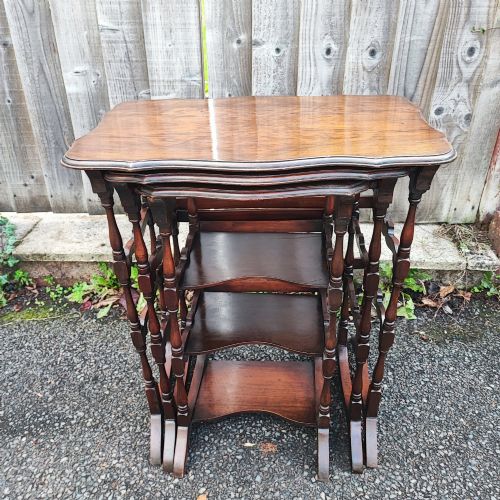
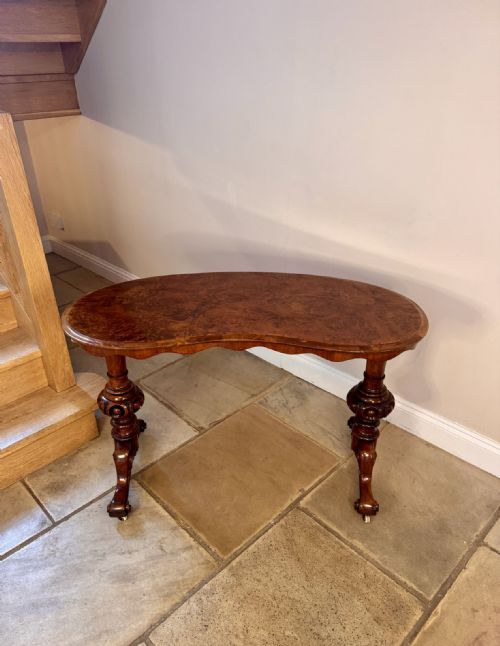
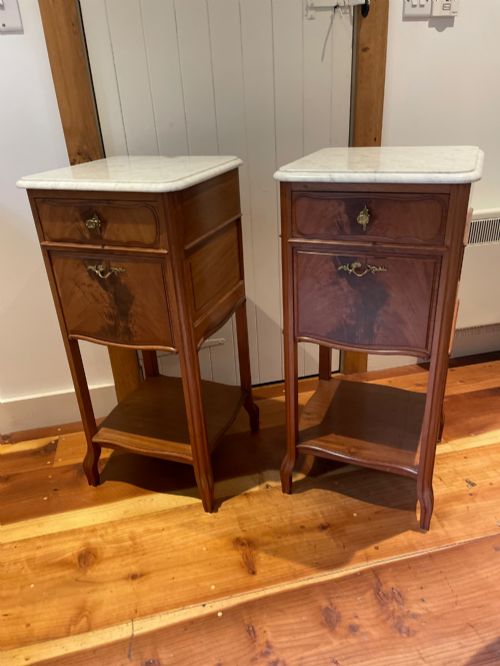
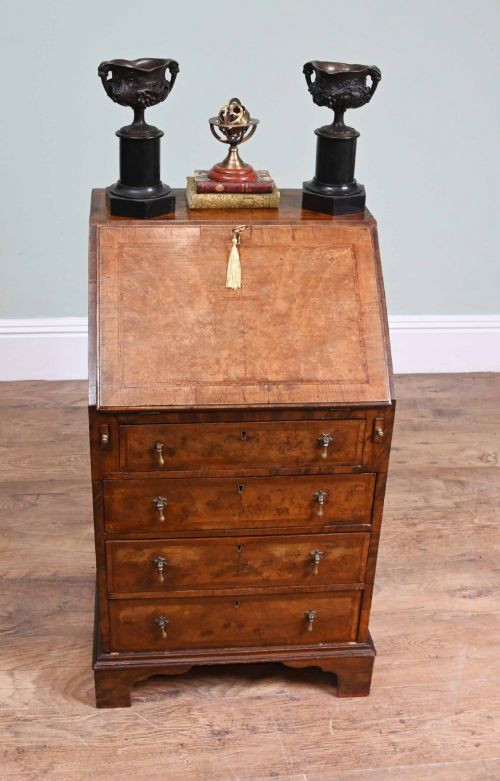

Walnut Wood Table
These walnut wood table examples span the nineteenth century to the Art Deco period, offering practical surfaces in rich timbers.
Walnut Wood Table
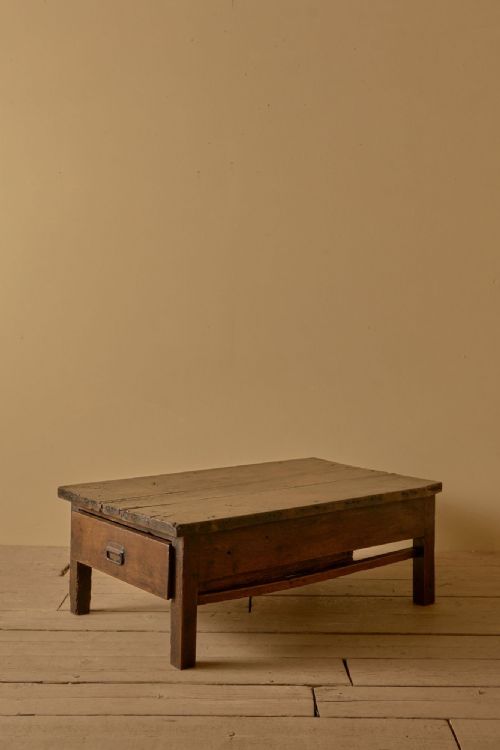
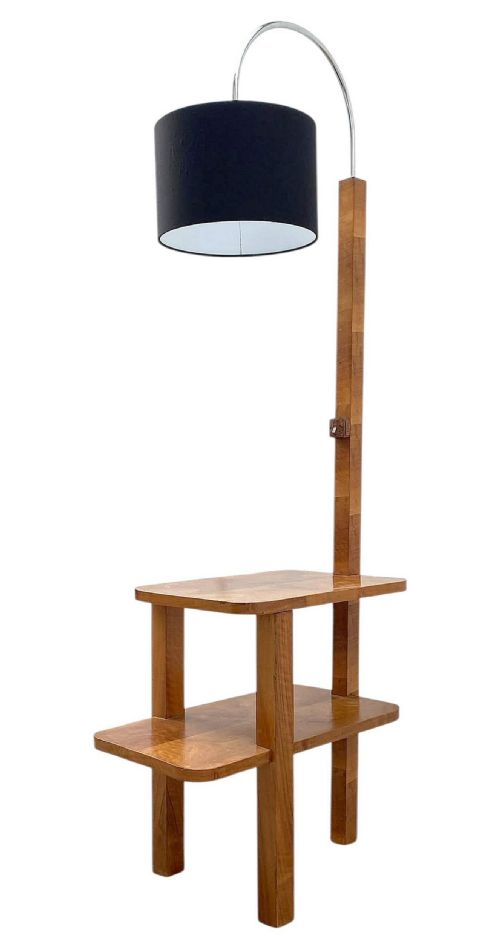
A walnut wood table encompasses a wide variety of domestic forms, from side and occasional tables to larger centre and writing tables. Buyers seeking these pieces encounter items originating across the nineteenth and early twentieth centuries, alongside distinct revival styles.
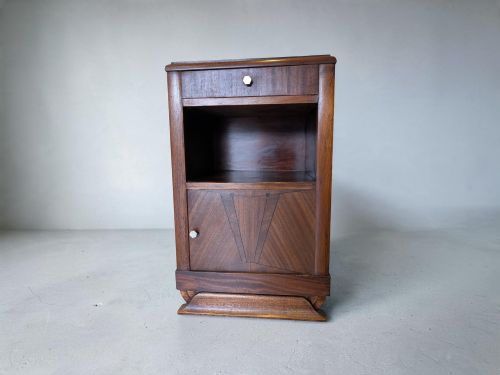
The selection on this page relies heavily on Victorian and Edwardian examples, complemented by Art Deco designs from around nineteen thirty. Side tables and occasional pieces dominate the formats, though desks, writing tables, and bedside cabinets also appear frequently.
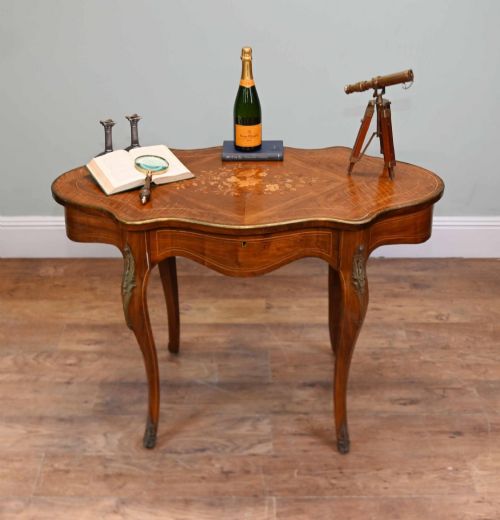
Origins stretch from English workshops to French, Italian, Dutch, and Kashmiri makers, demonstrating diverse regional interpretations of the timber. Period styles range from simple bobbin turned legs to elaborate marquetry inlay and Louis XV influences.
Materials and construction
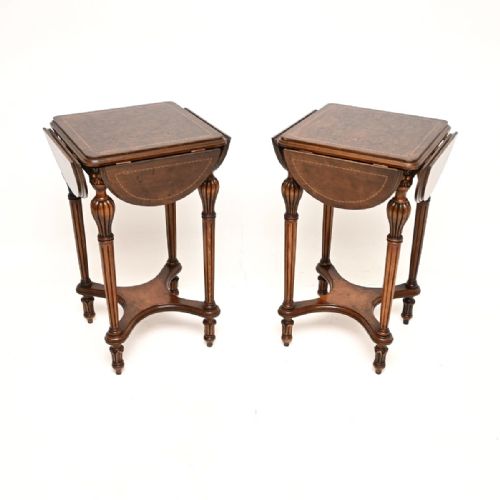
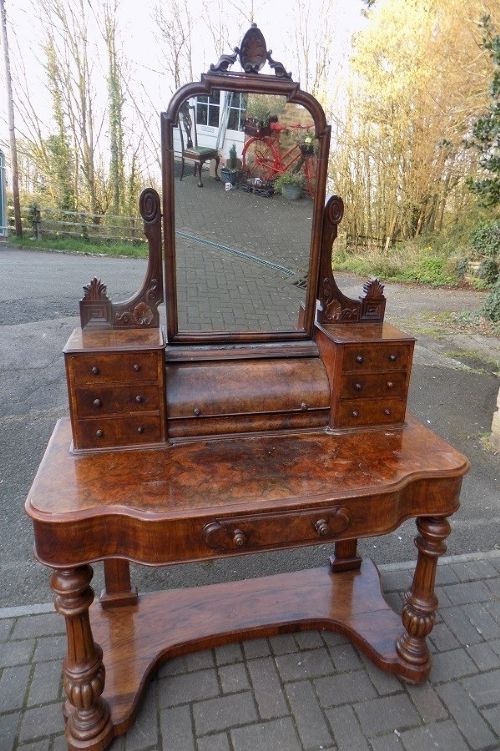
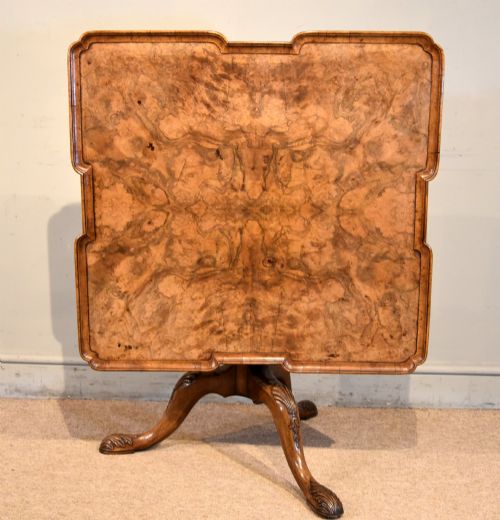
Makers utilised solid walnut and figured burr walnut veneers over secondary woods, often applying intricate marquetry patterns or brass mounts. Glass and marble tops appear on specific pieces like dressing tables and bedside cabinets, adding contrasting surface textures.
Structural elements frequently incorporate carved hardwood, with details shaped by hand or turned on a lathe. French polishing or traditional oil finishes protect the timber while accentuating the natural grain and warm tones of the walnut.
Walnut Wood Table Retail Price Guide 2026
Typical asking prices for walnut wood table among the pieces listed under this phrase on Sellingantiques today, from the lower quarter to the upper quarter. They describe what is for sale here now, not the wider market.
Listings feature periods spanning from the seventeenth century through the Victorian and Edwardian eras, up to Art Deco designs of nineteen thirty.
Assessing the pieces
Distinction across the range rests upon the selection of timber and the precision of the cabinetwork. Pieces utilising highly figured burr walnut veneer or detailed floral marquetry demand greater skill from the maker than plain timber surfaces.
Construction integrity governs the longevity of each table, visible in the tightness of joints and the smooth operation of drawers. The refinement of carved details and the preservation of original mounts or castors distinguish standard utility items from superior examples.
Gabriel Viardot·James Shoolbred·Shapland and Petter
The Walnut Wood Table Glossary
- Burr walnut
- A specialised timber cut from the warted growths on walnut trees, yielding highly decorative swirling grain patterns. It was frequently utilised for veneering the top surfaces of high-status Victorian and Edwardian tables.
- Marquetry
- The art of applying pieces of veneer to a structure to form decorative patterns or pictures. This technique often employs contrasting woods and fruitwoods set into a walnut ground.
- Cabriole leg
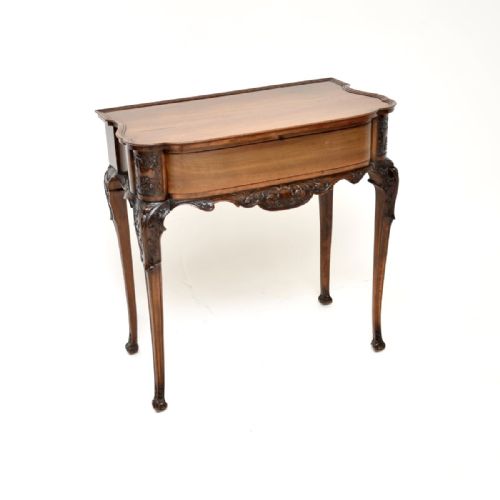
- A furniture leg that curves outward and then tapers inward, popular in various revival styles seen on this page. It mimics the shape of an animal's hind leg.
- Bobbin turned
- A method of turning wood on a lathe to produce a series of rounded, spool-like shapes. This turned detail is characteristic of certain nineteenth-century side tables.
- Centre table
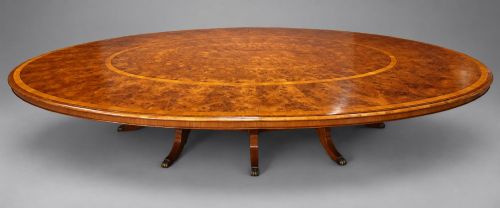
- A freestanding table designed to be viewed from all sides rather than placed against a wall. These pieces often feature circular or octagonal tops supported by a central pillar or decorative legs.
Walnut Wood Table: Frequently Asked Questions
What is a walnut wood table used for?
These tables serve multiple domestic functions depending on their specific form, ranging from bedside storage to writing desks and parlour display surfaces. Smaller occasional and wine tables easily move around a room to hold lamps, drinks, or decorative objects.
Larger centre and writing tables provide dedicated workspaces or central decorative focal points within a room. Their sturdy construction suits daily use while displaying the decorative qualities of the timber.
How do I identify a Victorian walnut wood table?
Victorian examples often display dark, rich walnut timbers, sometimes enhanced with elaborate marquetry inlay or bobbin turned legs. Many of these nineteenth-century pieces include practical additions like hidden drawers or original brass castors.
Stylistic influences from the period range from plain functional designs to ornate Gothic or French revival forms. Examining the construction methods underneath usually confirms the nineteenth-century origin.
How do I care for a walnut wood table?
Protect the timber by keeping the table away from direct sunlight and sudden temperature changes that can dry out the wood. Regular dusting with a soft cloth maintains the finish without needing harsh modern polishes.
Applying a traditional beeswax occasionally helps nourish the grain and preserve the polish. Avoid placing wet glasses or hot items directly onto the surface to prevent ring marks.
What is the difference between side tables and centre tables?
Side tables typically feature a flat back or straight edge intended for placement against a wall in a hallway or parlour. They are generally smaller and built to occupy minimal floor space.
Centre tables are finished on all sides because they stand independently in the middle of a room. They often feature elaborate pedestal bases or all-round marquetry to reward viewing from any angle.