
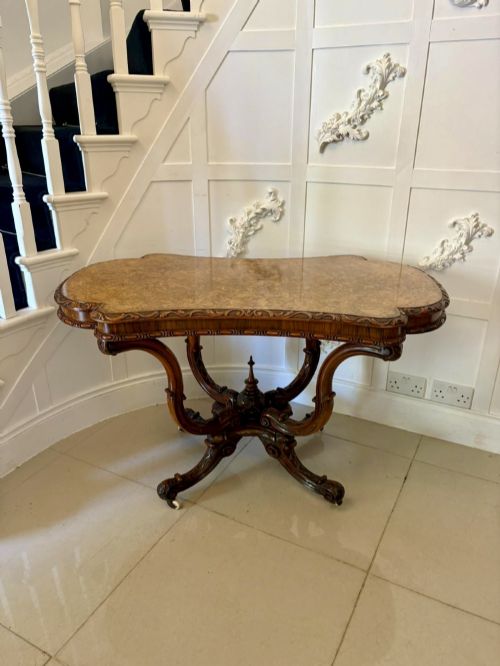
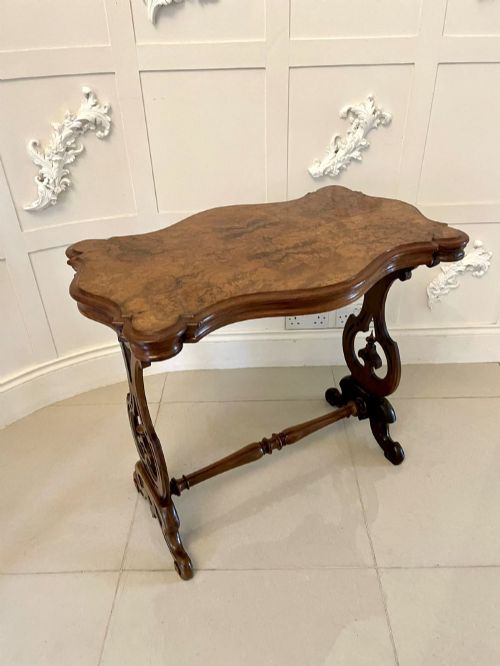


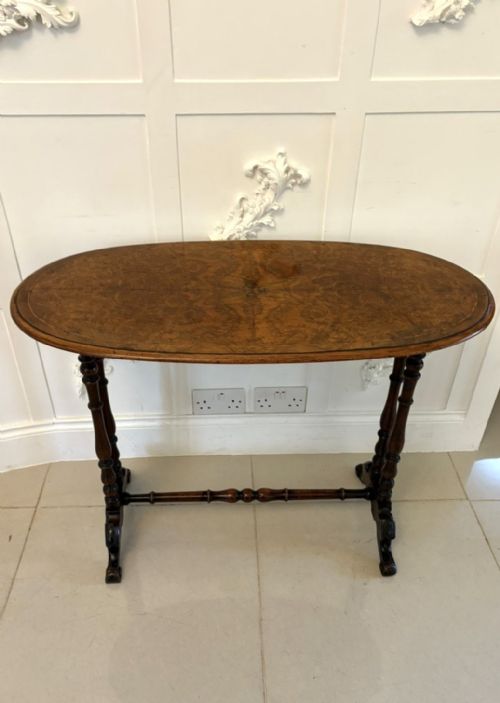


Walnut Window Table
These walnut window table pieces bring rich timber figures and compact proportions to bay spaces and light-filled corners.
Walnut Window Table
A walnut window table provides a sturdy yet graceful surface designed specifically to sit within a bay or light-filled recess without blocking the view or the light. These pieces typically function as versatile occasional, lamp, or centre tables depending on their exact height and tabletop shape.
The version most commonly encountered on this page is the Victorian or Edwardian model, often shaped with an octagonal, oval, or serpentine top. These forms suit tighter residential spaces while offering ample surface area for plants, lamps, or small display objects.
Makers designed these items from the mid-nineteenth century onwards, matching the domestic demand for specialised furniture that suited large bay windows. Their proportions remain remarkably adaptable to modern interiors that require compact yet decorative timber furniture.
How they were made
Cabinet makers utilised solid walnut frames alongside highly figured burr walnut veneers to achieve rich surface patterns on the tabletops. Secondary timbers such as oak and fruitwood sometimes provided structural stability beneath the decorative exterior veneers.
Decoration frequently involved detailed wood inlay, satinwood detailing, and geometric parquetry work set directly into the primary walnut ground. Brass fittings and components occasionally appear on castors or structural mounts, adding both mobility and refined contrast to the dark timber.
Several tables conveniently double as indoor plant stands, letting ferns thrive right where the sunlight hits.
What varies in quality
Quality rests primarily in the choice and application of the timber veneers, where intensely figured burr walnut commands greater visual depth than plain stock. The crispness of hand-carved details and the precision of inlaid marquetry further separate standard examples from finer commissions.
Structural integrity and timber seasoning dictate how well the piece survives over generations, particularly across wider tabletops prone to seasonal movement. Fine examples maintain tight joinery and well-balanced proportions without heavy structural alterations.
Heals
The Walnut Window Table Glossary
- Burr walnut
- A specialised wood veneer taken from the growth warts of walnut trees, prized for its swirling, highly figured grain patterns. Cabinet makers reserved this material for the most prominent display surfaces.
- Marquetry
- The art of applying decorative pieces of veneer to a structural structure to form pictorial or geometric designs. This technique often incorporates lighter woods like satinwood against a dark walnut background.
- Parquetry
- A geometric mosaic of wood pieces used for decorative floors and tabletops. Pieces on this page frequently display these patterns across octagonal and rectangular surfaces.
- Aesthetic Movement
- A late nineteenth-century design style that emphasised visual beauty and craftsmanship over heavy historicism. Tables from this period often display cleaner lines and subtle decorative elements.
- Jardiniere
- A decorative stand or container designed to hold plants or floral arrangements. Certain examples on this page double as these specialised plant tables.
Walnut Window Table: Frequently Asked Questions
What is a walnut window table?
A walnut window table is a compact occasional or centre table specifically proportioned to fit in front of a bay or standard window. They provide a sturdy surface for plants, books, or lamps while complementing traditional room layouts.
These pieces emerged during the nineteenth century as homes began featuring larger architectural windows designed to capture natural light. Their versatile heights and shapes allowed them to double as lamp tables or small display stands.
How do I date a walnut window table?
Dating relies on examining the primary timber selection, the style of inlay, and the general construction methods. Victorian examples often feature rich burr walnut veneers and heavy carvings, whereas Edwardian pieces lean towards lighter satinwood stringing and simpler geometry.
Makers also utilised specific edge profiles and leg turns that shifted from heavy Victorian bulbous supports to slender Edwardian tapering legs. Comparing these physical traits against documented period styles provides a reliable timeline.
Where should I place a window table?
These tables naturally suit bay windows, narrow hallways, or empty corners where standard dining or writing desks prove too large. Their finished tabletops allow them to be viewed from multiple angles within an open room layout.
Placing them in indirect natural light highlights the natural figure and grain of the burr walnut veneer. Avoid positioning antique timber furniture in direct, harsh sunlight to protect the polish and prevent timber dryness.
How do I care for burr walnut furniture?
Burr walnut requires gentle dusting with a soft, dry cloth to prevent micro-abrasions on the polished surface. Maintaining stable indoor humidity prevents the delicate decorative veneers from lifting or cracking over time.
Applying a traditional beeswax polish occasionally helps nourish the wood and preserve its deep lustre. Avoid using modern silicone sprays or placing damp items directly onto the vulnerable polished timber surface.