




Walnut Window Bench
A walnut window bench offers a low, slender seat for alcoves and hallways, combining rich timber frames with varied textile upholstery.
Walnut Window Bench
A walnut window bench provides compact seating designed for placement beneath casements or in narrow circulation spaces. These pieces appear in numerous forms across the nineteenth and early twentieth centuries, spanning Victorian, Edwardian, and continental revival aesthetics.
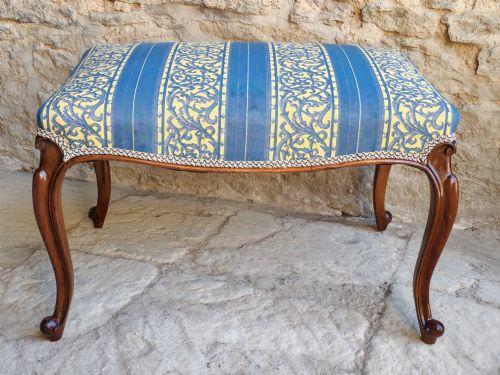
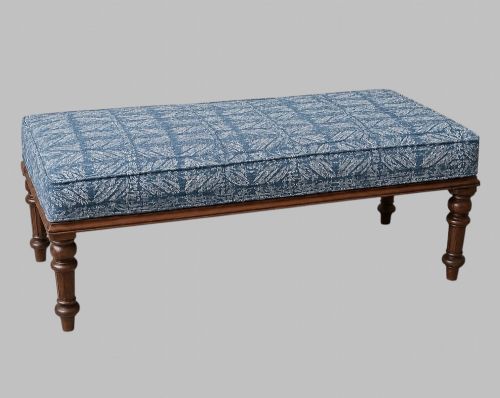
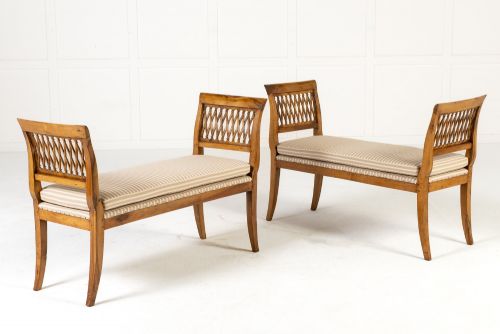
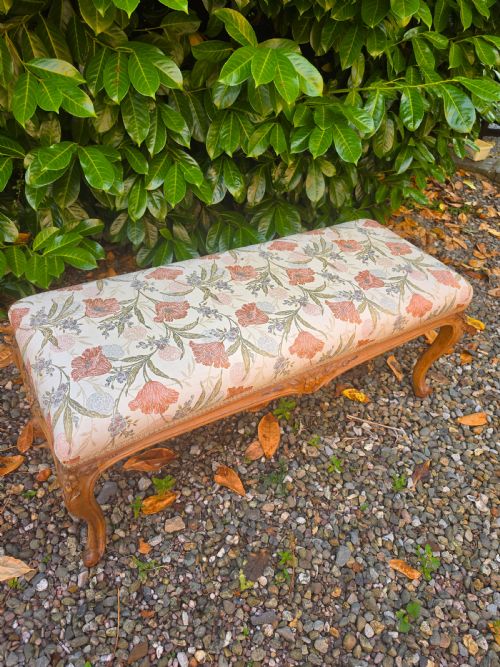
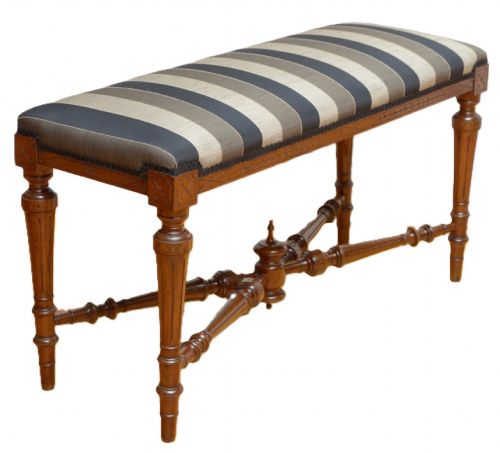
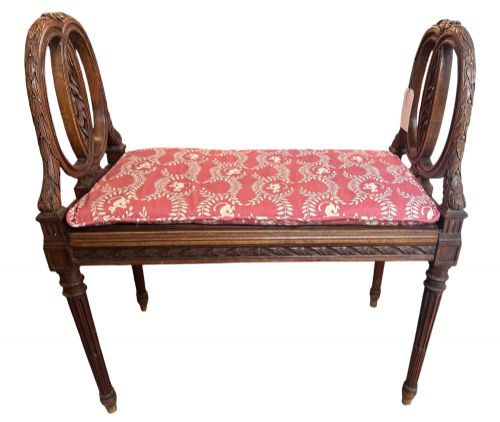
The most common examples on this page are Victorian and nineteenth-century French window seats featuring carved walnut frames and upholstered tops. Buyers also encounter duet stools, hall benches, and occasional daybeds executed in the same dense hardwood.
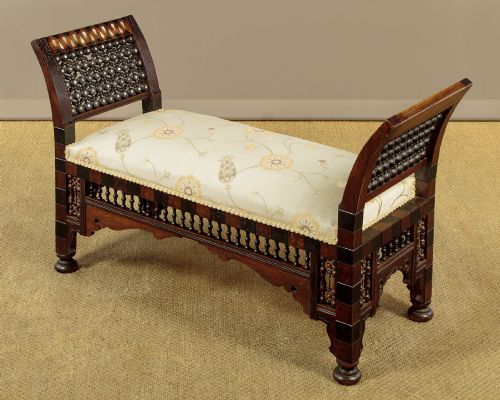
Makers and workshops produced these seats in various regional interpretations, from English country house designs to ornate Syrian pearl inlaid examples and Venetian carved pieces. Their primary function remains straightforward, serving as practical low seating positioned near light sources.
Evaluating Quality
Quality rests primarily on the depth and definition of the timber carving and the architectural integrity of the frame. Superior pieces display hand-carved details executed by skilled hands rather than mechanical replication, offering crisp lines and balanced proportions.
The choice and execution of the upholstery contribute significantly to the overall standard of the piece. Top-tier examples feature hand-stitched traditional interiors and high-grade period or designer textiles that complement the age of the walnut structure.
Listings demonstrate a strong prevalence of Victorian and 19th-century French aesthetics, executed primarily in solid walnut with diverse fabric coverings.
Morris and Co·Shoolbred and Co
The Walnut Window Bench Glossary
- Duet stool
- A wide stool designed to seat two people simultaneously, commonly utilised beside musical instruments or in dressing rooms. These double seats often feature long upholstered pads supported on cabriole or fluted walnut legs.
- Cabriole leg
- A furniture leg that curves outward in a convex arc at the top and inward in a concave arc below, mimicking an animal limb. This classical form appears frequently on Victorian and revival walnut frames.
- X-frame
- A structural furniture base formed by intersecting diagonal members resembling the letter X. This configuration provides robust support for low stools and window seats without requiring heavy side rails.
- Bergere
- An enclosed upholstered armchair or seat featuring wooden framing and cane or upholstered sides. Walnut versions present a refined profile suitable for formal reception rooms and bedroom alcoves.
- Tapestry
- A heavy hand-woven or machine-woven textile depicting pictorial scenes or repeating geometric patterns. These durable fabrics often serve as decorative top covers on nineteenth-century French and English seats.
Walnut Window Bench: Frequently Asked Questions
What is a walnut window bench?
A walnut window bench is a low, elongated seat designed to fit beneath window sills without blocking natural light. These pieces combine a solid wooden frame with an upholstered upper pad for comfortable seating in domestic interiors.
Craftsmen built them in various revival styles during the nineteenth and early twentieth centuries. They function equally well in hallways, bedrooms, and reception rooms as occasional seating.
How do I date a walnut window bench?
Dating relies upon stylistic markers, construction methods, and the specific revival movement reflected in the carved details. Victorian and Edwardian examples often exhibit distinct leg forms, such as cabriole supports or fluted styling.
Reference points include documented workshop labels and regional upholstery techniques. Comparing the secondary timbers and joinery helps confirm the era of manufacture.
Are these benches comfortable for daily use?
Most pieces provide firm, supportive seating due to traditional internal webbing and dense padding materials. Their low height and shallow depth suit brief periods of rest rather than lounging.
Many surviving examples have undergone professional reupholstery to ensure modern comfort levels while retaining their antique wooden frames. Fabric choices range from durable linen to decorative velvet.
How should I care for the walnut frame?
Maintain the timber by keeping the piece away from direct heat sources and strong sunlight to prevent wood splitting. Regular dusting with a soft, dry cloth preserves the natural lustre of the polished surface.
Avoid applying silicone-based polishes which can build up over time. Occasional application of a quality furniture wax nourishes the grain without harming historical patination.