



Walnut Veneer Chest Drawers
These walnut veneer chest drawers bring rich timber figure and historic craftsmanship into a room, offering both practical storage and deep period character.
Walnut Veneer Chest Drawers
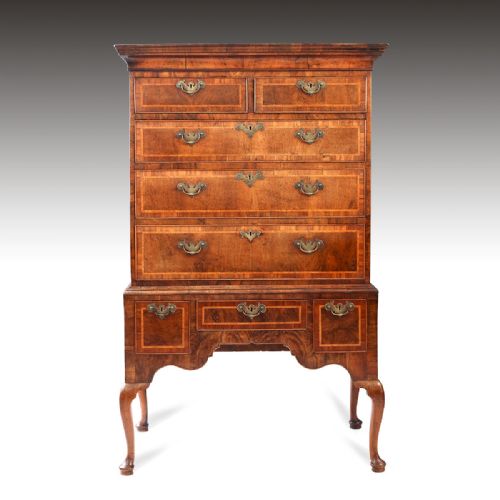
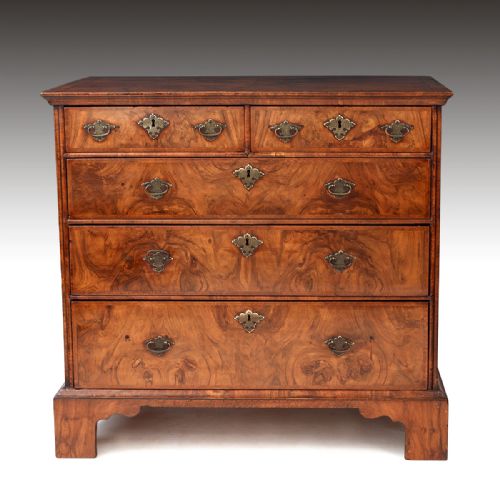
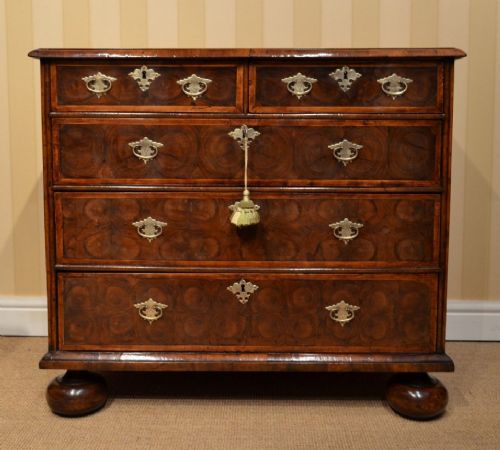
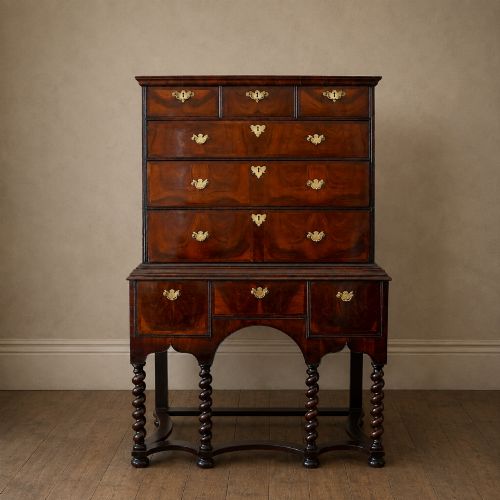
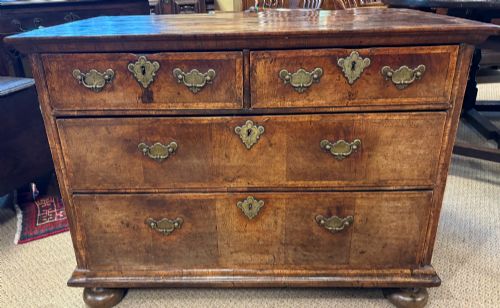
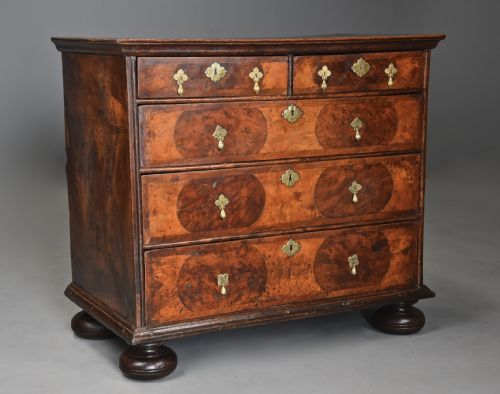
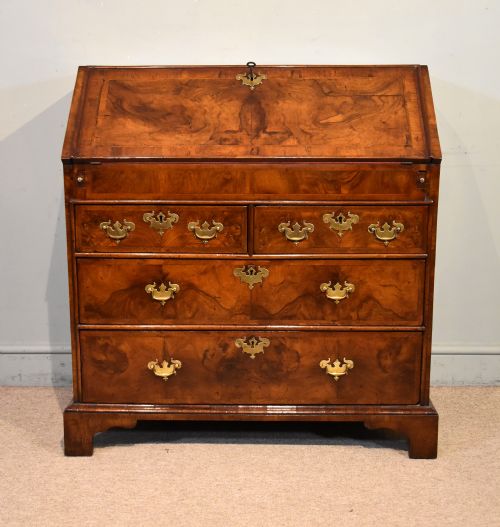
A walnut veneer chest drawers brings together centuries of cabinetmaking tradition, spanning from late seventeenth-century William and Mary examples through Georgian, Victorian, and Art Deco periods. When searching for a walnut veneer chest drawers, buyers encounter various forms including standard chests of drawers, elevated chests on stands, and compact bedside cabinets.
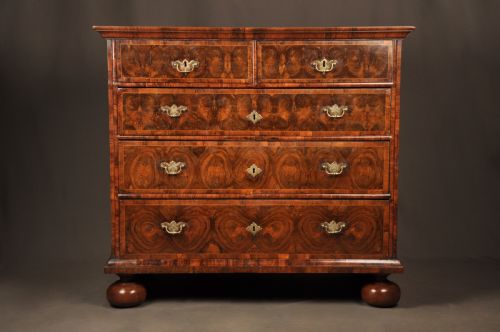
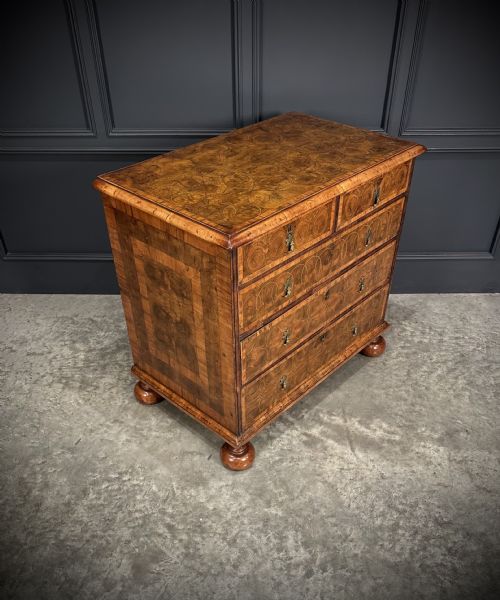
The material vocabulary ranges from straight-grained walnut and burr walnut to intricate oyster veneer cut from small branches. Pieces often incorporate secondary timbers such as oak alongside decorative accents like boxwood stringing and brass hardware.
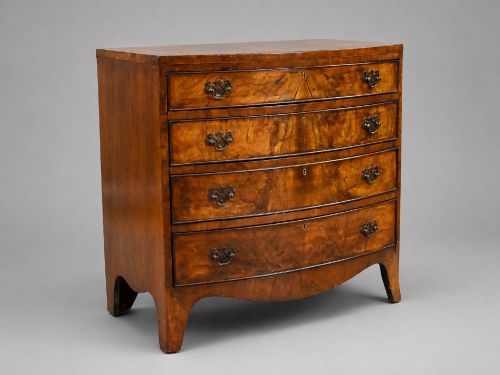
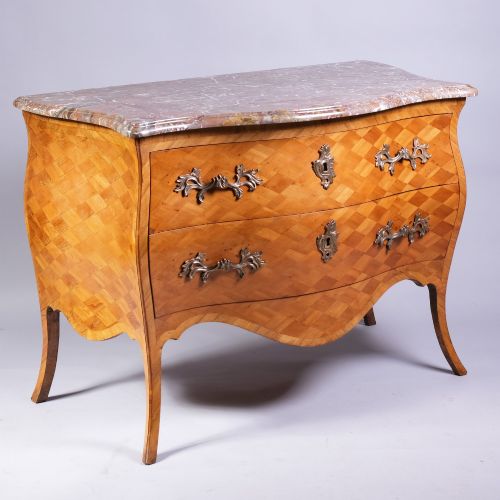
Early periods favour raised stands and geometric oyster patterns, whilst later nineteenth-century examples and twentieth-century Art Deco and Biedermeier pieces introduce clean lines, bow fronts, and French marble tops.
Materials and construction methods
Cabinetmakers applied thin slices of figured walnut, burr walnut, or olivewood onto stable secondary carcase timbers like oak, securing the decorative surfaces with animal glue. This technique allowed workshops to display dramatic grain patterns, quarter-veneered layouts, and contrasting cross-banding without risking the warping inherent in solid boards of such width.
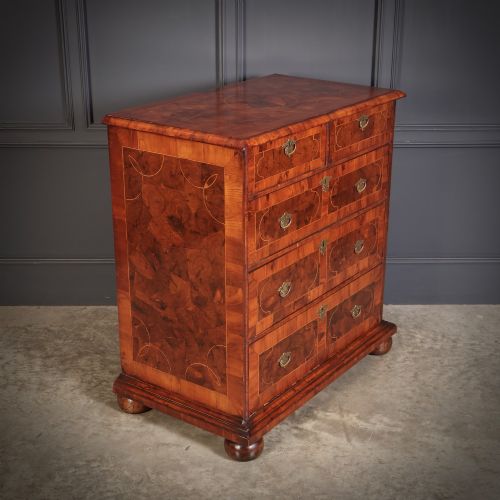
Specialised cutting methods produced distinct visual effects, such as circular oyster pieces arranged across drawer fronts or marquetry and parquetry inlays combining walnut with boxwood and other contrasting woods. Brass drop handles, escutcheons, and hinges were fastened to complete the carcase.
The listings span from the late 17th century through the Georgian and Victorian eras up to 1930, utilising walnut, burr walnut, olivewood, and oak.
Assessing quality in walnut furniture
The merit of a walnut veneer chest drawers rests primarily on the integrity and visual depth of the timber surface. Superior examples display carefully matched grain patterns across the top and drawer fronts, maintaining harmonious tones without distracting repairs or lifting veneer.
Structural refinement also separates standard pieces from the finest works, seen in the precision of the drawer linings, the retention of original brass hardware, and the crisp execution of underlying stands or bracket feet.
The Walnut Veneer Chest Drawers Glossary
- Oyster veneer
- Slices cut transversely across small branches or roots to reveal circular growth rings. Workshops arranged these to form repeating patterns on seventeenth-century drawer fronts.
- Burr walnut
- A prized timber growth featuring swirling, knotty figures. It creates highly textured surfaces on drawer fronts and tops.
- Chest on stand
- A two-part form consisting of a drawer section elevated on a separate framework with legs. This configuration is typical of seventeenth and early eighteenth-century pieces.
- Marquetry
- Elaborate decorative inlay using various wood veneers to form pictorial or geometric designs. It appears on select pieces from the William and Mary period.
Walnut Veneer Chest Drawers: Frequently Asked Questions
How do I care for walnut veneer?
Keep these pieces away from direct sunlight and steady heat sources to prevent the timber from drying out. Dust regularly with a soft, dry cloth and avoid modern silicone polishes.
Maintaining stable room humidity protects the underlying glue from failing and stops the veneer from lifting over time.
Are these drawers suitable for daily use?
Most pieces function well for modern storage provided the drawer runners operate smoothly. Solid construction and traditional dovetailing allow these chests to handle everyday items.
Care should be taken not to overload deep drawers, ensuring the historic carcase remains balanced and undamaged.
How do I date a walnut chest?
Dating relies on examining the construction methods, handle hardware, and foot styles. Seventeenth-century examples often feature geometric banding and stands, while Georgian pieces show cleaner rectangular proportions.
Secondary woods inside the drawers, such as oak, also provide clues to the period of manufacture.