



Walnut Toilet Glass Drawers
Walnut toilet glass drawers offer a neat surface and adjustable glass, prized for bringing rich figured grain and compact storage to a bedroom.
Walnut Toilet Glass Drawers
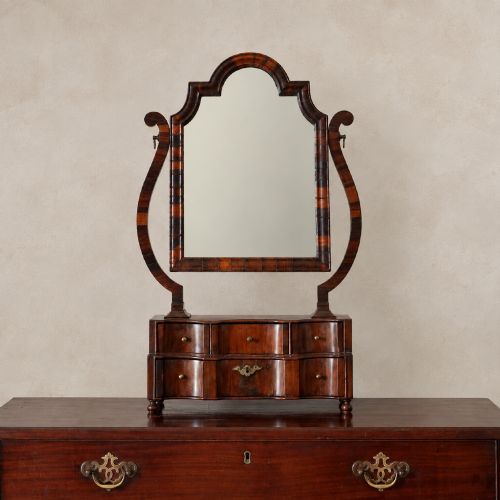
When you search for walnut toilet glass drawers, you are looking at tabletop dressing mirrors equipped with small drawer bases designed to sit upon chests or dressing tables. These pieces range from early Georgian and Queen Anne examples to later Victorian and Dutch Neo-Classical iterations, spanning walnut, laburnum, and mahogany.
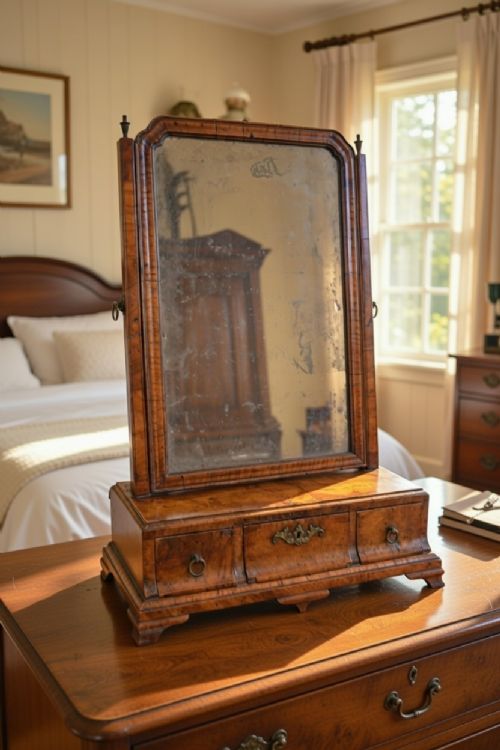
The versions you are most likely to meet on this page date from the eighteenth century, featuring swing frames mounted on upright arms above a box base fitted with small drawers. Object types appear variously as dressing table mirrors, toilet mirrors, dressing glasses, and box mirrors, united by their combination of adjustable glass and concealed compartment storage.
How they were made
Cabinetmakers constructed these frames using rich walnut veneers and solid timbers, often incorporating laburnum and boxwood inlay to create decorative contrasts on the drawer fronts and bezels. Grain selection was paramount, with figured walnut chosen to catch the light across the sloping desk fronts, bureau fitments, and box bases.
The mirror plates themselves consist of historic glass set into pivoting frames, held by brass sconces or side pins that allow the glass to tilt to the user's preferred angle. Marquetry techniques also appear on continental examples, utilising complex floral inlay patterns across the surfaces.
Walnut Toilet Glass Drawers Retail Price Guide 2026
Typical asking prices for walnut toilet glass drawers among the pieces listed under this phrase on Sellingantiques today, from the lower quarter to the upper quarter. They describe what is for sale here now, not the wider market.
What varies in quality
Quality reveals itself in the selection of the timber and the subtlety of the grain patterns visible across the drawer fronts and mirror frames. Highly figured walnut and intricate boxwood stringing or marquetry distinguish more ambitious pieces from plain, utilitarian boxes.
Construction details such as the joinery of the small drawers, the retention of original brass hardware, and the character of the mirror glass separate standard examples from finer works of the period.
The Walnut Toilet Glass Drawers Glossary
- Toilet mirror
- A small mirror designed to stand on a dressing table or chest of drawers. These typically incorporate a set of small drawers in the base.
- Dressing glass
- An alternative term for a table mirror with or without storage drawers. The glass plate is usually adjustable via side pivots.
- Bureau fitment
- A small fitted interior inside the box base containing pigeonholes and miniature drawers. This adds complexity and utility to the standard table mirror design.
- Box mirror
- A compact table mirror where the supporting base forms a deep storage box. These often date from the eighteenth century.
Walnut Toilet Glass Drawers: Frequently Asked Questions
What is a walnut toilet glass?
A walnut toilet glass is a portable dressing table mirror mounted on a small timber base containing storage drawers. These pieces were used for personal grooming and sat atop larger chests or tables.
They combine a tilting mirror plate with compartments for small valuables, cosmetics, or writing materials, reflecting the domestic habits of the eighteenth and nineteenth centuries.
How do I date an old toilet mirror?
Dating relies on observing the construction of the drawer framing, the profile of the mirror supports, and the timber species used. Eighteenth-century examples often feature finely figured walnut veneers and specific bracket feet.
Later Victorian and continental pieces introduce different inlay techniques, such as Dutch marquetry, alongside distinct framing proportions that mark them out from earlier Georgian work.
Where should I place a dressing mirror?
These mirrors suit dressing tables, low chests of drawers, or sideboards where their compact footprint and functional storage can be fully appreciated. They add height and reflective light to a surface.
Ensure the supporting furniture is deep enough to accommodate the box base safely, allowing the adjustable glass to tilt without obstruction.
Are the mirror plates original?
Mirror glass frequently saw replacement over the centuries due to wear or silvering degradation. Surviving early glass often exhibits subtle distortions and age characteristics.
Examining the rebate and the backing boards helps determine whether the glass plate has been retained from the period of manufacture.